For years, illiteracy has locked many adults in South Karamoja out of opportunities, leaving them unable to read medical instructions, manage their businesses, understand official communication or fully participate in decisions affecting their families and communities.
But a Functional Adult Literacy (FAL) project implemented by Compassion International Uganda in partnership with selected churches is giving hundreds of caregivers a second chance at education, and, in the process, helping to break a cycle of poverty, early marriage and limited opportunities.

Under the programme, caregivers undergo a one-year course in reading, writing, numeracy and financial literacy. They are also equipped with practical skills such as tailoring, beadwork and crafts to enable them to improve their livelihoods and manage their incomes and businesses. For some beneficiaries, the programme has opened a path they once thought was permanently closed.
One of them is Everline Cheptoo, a resident of Akorikeya Village in Abiliyep Sub-county, Amudat District, whose journey back to school began after a traumatic childhood marriage. Cheptoo says she was forced into marriage in 2021, at the age of 13, to a 50-year-old man who already had two wives. After becoming pregnant and giving birth, she fell sick frequently.
Her husband eventually sent her back to her father’s home, but her parents also rejected her and ordered her to return to her husband’s home so that the dowry negotiations could be completed. With nowhere to turn, Cheptoo stayed with a friend until she was connected to Compassion International Uganda. She initially approached the organisation seeking a scholarship but was told there was no scholarship programme for young people in her situation.
When the FAL project was introduced in 2022, however, she was contacted and enrolled. The programme became a turning point in her life. In 2023, Cheptoo transitioned into formal education, joining Primary Five. She progressed to Primary Seven, where she sat for her Primary Leaving Examinations, and is now in Senior One. She says she wants to become a nurse because there are currently no Pokot-speaking nurses in health facilities in her community, creating communication difficulties between health workers and patients.
Another beneficiary, Abraham Sogwol from Akokeya Village, says he also grew up without the opportunity to attend school because his parents deliberately kept him out of school to look after livestock. But his chance came when the FAL project was introduced. He enrolled in adult education, completed the course and has since joined Senior One.
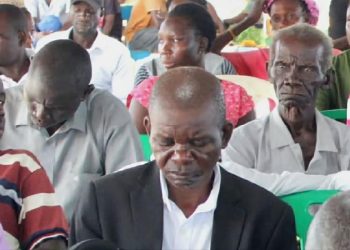
On Thursday, 257 adults from Amudat and Nakapiripirit districts graduated after completing the one-year FAL course. The graduation marked the third cohort since the programme was launched in 2024, bringing the total number of caregivers who have completed the programme to more than 695.
The graduands described the programme as a turning point, saying literacy had given them confidence, improved their livelihoods and changed how they viewed education. Elizabeth Nakiru, a resident of Loboin Village in Loreng Sub-county, Nakapiripirit District, said the programme had lifted them out of what she described as darkness by allowing them to learn. Nakiru said illiteracy had also created challenges for mothers seeking healthcare for their children.
She said mothers would often depend on translators when taking children for immunisation and sometimes missed immunisation dates because they could not read the information recorded on health cards. For Lochuman Morunaita, 64, learning English was an opportunity to participate more meaningfully in community meetings instead of depending on others to interpret what was being discussed. Another graduand, Zaitum Mayama, said the programme had given her both literacy skills and a source of income.
After learning tailoring, she now makes clothes for sale. “The programme has changed my mindset, and now I am thinking about how to transform economically, unlike before when I could just sit at home waiting for my husband to buy food,” she said. Julius Keem Meringolia, from Loroo Sub-county, described the programme as a timely intervention for adults who had spent most of their lives without basic literacy skills.
“At my age of 60 years, I was going to die without knowing how to write and read, but at least now I can also present something,” he said.
Martha Cherop, a mother of five, says that adult education has also become a means of rebuilding her life. Cherop dropped out of Primary Four after her parents pressured her into marriage. Her husband was later killed during raids, leaving her to raise their children. She joined the FAL programme and has since acquired skills in craft-making and tailoring, which she now uses to support her family.
Deborah Chelengat, the Project Director at PAG Namalu Church, said the programme’s broader objective is to ensure that caregivers keep their children in school after understanding the value of education. She revealed that Compassion International has provided scholarships to more than 3,000 children in the region.
Ben Paul Chapi, the Senior Education Officer for Nakapiripirit District, said the FAL programme has contributed to an improvement in literacy levels in the district, from about 12 per cent to approximately 30 per cent.
Gabriel Etesot, the Amudat Deputy Resident District Commissioner, challenged the graduands to become ambassadors for education in their communities. “We have long struggled to ensure children stay at school because of the poor mindset of parents. With parents also being introduced into education, they now understand and value education,” he said.
Joseph Lotum, the Amudat District Community Development Officer, said Compassion’s interventions have contributed to improvements in child protection and welfare. He said illiteracy remains a major challenge in the district, estimating the rate at 93 per cent, but expressed optimism that FAL interventions could help reduce it.
Lotum said the programme had particularly helped women gain confidence to participate in public discussions and community gatherings, where they were previously discouraged from speaking. For sustainability, he said the district government plans to link FAL graduates to government livelihood programmes, including the Parish Development Model (PDM).
Emmanuel Ahimbisibwe, the National Director at Compassion International Uganda, said Karamoja continues to face low literacy and school enrolment levels partly because many parents have not fully understood the value of education. According to Ahimbisibwe, educating parents could also help keep children, particularly girls, in school and reduce vulnerability to early marriage and defilement-URN. Give us feedback on this story through our email: kamwokyatimes@gmail.com