The expected El Niño rains have been slow to establish, with September recording below-average rainfall in parts of the country and limited rainy days that did little to support agricultural activities, according to a senior meteorologist.
William George Omony, a principal meteorologist at the Department of Meteorological Services, says the delayed onset was anticipated in the September-December seasonal forecast, but the public had expected the El Niño phenomenon to translate into immediate heavy rainfall.
Speaking at a dialogue between scientists and journalists organised by the IGAD Climate Prediction and Applications Centre (ICPAC) to discuss the October-December 2026 rainfall season across East Africa, Omony said widespread rainfall was observed across much of Uganda on October 9, after a largely disappointing September.

“People are complaining, where is El Niño? Where is the rain? It is very true. That kind of outcry was also massive over Uganda,” he said.
Omonyi acknowledged that meteorologists had not adequately explained how El Niño could influence rainfall differently at different stages of the season, leaving many people expecting heavy rains as soon as the phenomenon was declared.
“We are not communicating well to the public. That is, we the scientists, we are not communicating well to the public,” he said.
His explanation comes as Uganda enters the October-November rainfall period, when the department expects more consistent rains to develop, with the season reaching its peak between late October and mid-November.
However, the experience in September illustrates a distinction that climate scientists say the presence of El Niño does not guarantee that every location will immediately receive above-average rainfall.
Omony said the department had anticipated a delayed onset of the September-December rains following dry conditions that persisted from June through August.
The seasonal forecast had projected near-normal rainfall, with a slight tendency towards above-normal conditions, in southwestern Uganda and Karamoja.
Much of the rest of the country was expected to receive near-normal to above-normal rainfall.
But September rainfall observations showed below-average performance in southwestern Uganda and Karamoja.
Much of the remaining country recorded near-average rainfall, with only small areas receiving above-average amounts.
Omony said the limited number of rainy days meant that even where rainfall eventually occurred, it was insufficient to support agricultural activities adequately.
“The rain came in the last days of September and also very few, then the few number of rainfall also did not really do much to support agricultural activities,” he said.
The delay had devastating effects on farmers who depend on seasonal rainfall to prepare land, plant crops and establish seedlings.
According to Omony, a forecast of adequate rainfall over an entire season does not necessarily mean that farmers will receive sufficient water at the time required for planting.
He said the department had expected intermittent rainfall from mid-to-late September to signal the onset of the season, followed by more stable rainfall from mid-October.
By October 15, he said, the widespread rainfall observed on October 9 was broadly consistent with the department’s expectation that the season would begin stabilising around the middle of the month.
The rains are expected to continue into November, with their retreat varying across the country.
According to Omony, rainfall in northern Uganda was expected to end towards late December, while parts of southwestern Uganda could continue receiving rain into early January.
These are seasonal expectations, however, and do not guarantee that every district will receive adequate rainfall or avoid dry spells.
Omony said one of the public misconceptions was that El Niño was synonymous with heavy rainfall throughout the season.
He said the department’s analysis of historical El Niño years showed that the phenomenon could initially suppress rainfall during June, July, August and September before influencing a different rainfall pattern later in the year.
“We realized that during June, July, August, September, when El Niño picks up, it suppresses rainfall completely,” he said.
He explained that the impact is particularly significant in areas that ordinarily receive rainfall during June-August, including parts of northern and eastern Uganda.
Meanwhile, central and western areas that are usually drier during that period can experience even drier conditions.
Omony said meteorologists had monitored the development of the El Niño signal from March before the phenomenon was formally declared in June 2026.
He argued that communicating this sequence of dry conditions followed by the possibility of enhanced rainfall would help the public understand why the presence of El Niño did not immediately translate into heavy rain.
El Niño is a large-scale climate phenomenon, not a direct forecast of how much rain a particular district will receive.
Its influence depends on the season, regional atmospheric circulation and interactions with other climate systems.
Omony said the department had also worked with partners, including ICPAC and the World Food Programme, to generate a drought forecast for Karamoja during June-August.
He said the forecast helped authorities anticipate the drought threat before it escalated, illustrating how seasonal climate information can be used to prepare for adverse conditions even when the expected impacts are not immediately visible to the public.
Eunice Koech, a climate modelling assistant at ICPAC, told the dialogue that the rainfall response to El Niño depends partly on what happens in the Indian Ocean.
El Niño is the warm phase of the El Niño-Southern Oscillation (ENSO), a climate pattern associated with changes in sea-surface temperatures in the central and eastern equatorial Pacific Ocean.
These changes influence atmospheric circulation and can alter rainfall patterns in distant regions.
Koech cautioned against treating the strength of El Niño as a direct measure of expected rainfall.
“Let me begin by clarifying that El Niño doesn’t mean heavy rainfall. It is simply one of many features that modulate rainfall in Kenya,” she said while explaining the phenomenon’s influence on the region.
She also challenged the description of the developing event as a “Super El Niño”, arguing that such language could create unrealistic expectations about rainfall.
“I think the communication should shift away from Super El Niño, because the strength of El Niño does not imply that we are expecting extremely high rainfall,” Koech said.
One of the other climate drivers she identified was the Indian Ocean Dipole (IOD), which describes differences in sea-surface temperatures between the western and eastern tropical Indian Ocean.
When the western Indian Ocean, closer to East Africa, is warmer than the eastern part, the resulting positive IOD can favour enhanced rainfall over parts of the region.
Warmer sea-surface temperatures promote rising air and atmospheric convection, which can contribute to cloud formation and rainfall.
Koech said El Niño often coincides with a positive IOD, but the relationship is not automatic.
“If you have both El Niño and a positive Indian Ocean dipole, you tend to have wet signals or enhanced rains over most parts of the region during October to December,” she said.
“But if you have El Niño and the Indian Ocean is neutral, the wet is only concentrated over a few areas over the coast, but you only have the central and other areas being quite dry.
”The distinction offers a possible explanation for why the expected rainfall response may be uneven across East Africa. Even when El Niño is strong, the absence of a reinforcing positive IOD can change the distribution of rainfall.
At the time of the dialogue, Koech described the IOD as neutral but developing towards a positive phase.
She gave a weekly index of 0.88 and said the positive classification required the index to remain above the specified threshold for eight weeks.
She said the condition had persisted for about five weeks at the time, meaning further monitoring was needed before a formal declaration.
The third driver she highlighted was the Madden-Julian Oscillation (MJO), a pattern of moving pulses of enhanced and suppressed rainfall that travels eastwards through the tropics.
Koech explained that the MJO can influence the timing of rainfall by changing atmospheric conditions as it moves across the Indian Ocean and towards East Africa.
“These are basically moving pulses of enhanced or repressed rains that moves across the tropics from west to east and is able to complete a whole tropical cycle within 30 to 60 days,” she said.
The MJO is divided into eight phases, depending on the location of the active pulse. Koech said phases two and three, when the system is over the Indian Ocean, are associated with enhanced rainfall in East Africa.
At the time of the presentation, she described the MJO as weak but moving through phases two and three. Forecasts suggested it could strengthen later in October, potentially supporting renewed rainfall activity.
Koech said the three drivers needed to be monitored together because their interaction influences how a season develops. She also stressed that the forecast of El Niño continuing into early 2027 should not be confused with a forecast that rainfall would continue until February.
“The forecast that is being talked about in regard to next year is El Niño index itself being present until next year,” she said.
In other words, the projected persistence of El Niño does not, by itself, establish how long rains will last in Uganda or elsewhere in the region. Kenya expects above-average rainfall.
Kenya’s forecast provides a regional comparison with Uganda’s delayed rainfall onset.
Jemima Gacheru-Ongoma, a forecaster at the Kenya Meteorological Service, said the agency had maintained its September forecast for above-average rainfall across most of Kenya during October-December.
She said the forecast also expected near-normal to above-normal rainfall in parts of northwestern Kenya, including Turkana and areas of Samburu, West Pokot and Marsabit.
Gacheru-Ongoma explained that the forecast categories compare expected rainfall with what is normally recorded in a particular location. An above-average forecast therefore does not mean the same volume of rainfall in every county.
Using Meru as an example, she said the area’s normal rainfall during the October-December season was approximately 500 to 900 millimetres, with the forecast indicating the possibility of receiving more than 900 millimetres.
In Lodwar, in the northwest, the normal rainfall during the season is much lower, at approximately 40 to 70 millimetres.
The forecast expected rainfall there to remain around that range.The comparison illustrates why regional forecasts must be interpreted according to local climate conditions. Areas that normally receive little rain can remain relatively dry even during a season in which much of the region is expected to receive above-average rainfall.
Gacheru-Ongoma said Kenya had not changed its original seasonal forecast, which anticipated above-average rainfall across most of the country.
However, the forecast remains a projection, not confirmation that the anticipated rainfall has already occurred.
Koech similarly emphasised that El Niño was already established in the Pacific Ocean. The uncertainty concerned how the expected rainfall would develop in individual locations.
“What we are waiting for is for the short rains (OND) season to start in areas that it hasn’t,” she said.
She cited Taita Taveta as an example of an area where rainfall was expected to begin towards the end of October.
The implications of the regional outlook extend beyond farmers waiting to plant.
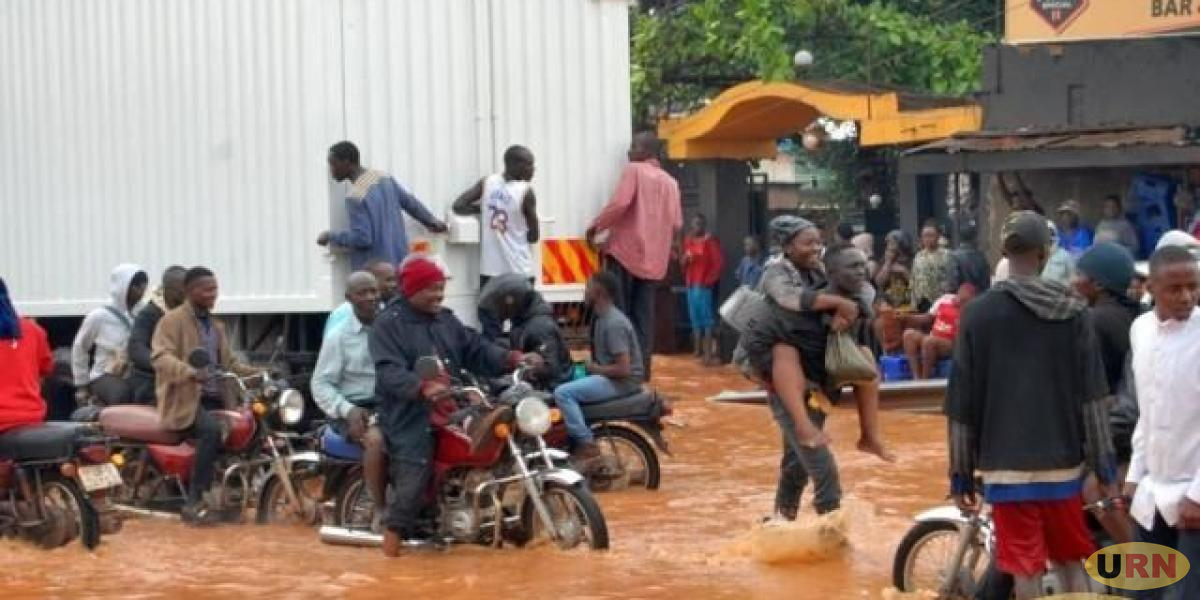
Above-average rainfall can replenish water supplies and support agriculture, but it can also increase the risk of flooding, waterlogging, landslides and disruption to transport and livelihoods.
During the dialogue, a participant from Rusinga Island in Lake Victoria asked how fishing communities in Homa Bay, Siaya and Kisumu should prepare for the forecast of above-average rainfall, given concerns about rising lake levels and water hyacinth.
That highlighted the need to translate seasonal forecasts into practical preparedness measures for lakeshore communities, including fishing groups and Beach Management Units.
The delayed onset has already raised concerns among people waiting for the rains.
A seasonal forecast may indicate a wetter-than-normal period, but the timing and distribution of rainfall determine whether farmers can establish crops and whether communities face dry spells or flood risks.
Omonyi said the experience had demonstrated the need for meteorologists to explain not only the expected rainfall totals, but also the timing of the onset, the possible dry phase and the period when rainfall is expected to become more established.
The immediate test is whether the rains that became widespread in early October will persist sufficiently to support agricultural activities through November. Scientists say the answer will depend not on El Niño alone, but on how the Pacific and Indian Ocean climate systems interact with atmospheric conditions in the weeks ahead-URN. Give us feedback on this story through our email: kamwokyatimes@gmail.com