The Local Governments, supported by the Local Government Finance Commission (LGFC), have appealed to the Ministry of Finance, Planning and Economic Development to ensure that ministries, departments and agencies clear their arrears to them.
By the end of the financial year 2025/26, local governments had raised a total of 442.64 billion shillings, while arrears by MDAs to the local governments amount to 68 billion shillings. LGFC Chairman Isaac Musumba says that the failure by MDAs to honour their financial commitments greatly affects the capacity of the LGs to meet their budgetary needs, calling on the ministry to use any means available to ensure the arrears are cleared.
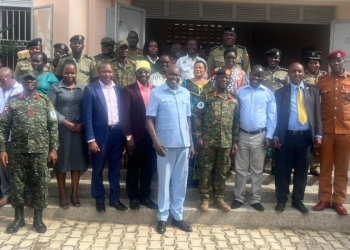
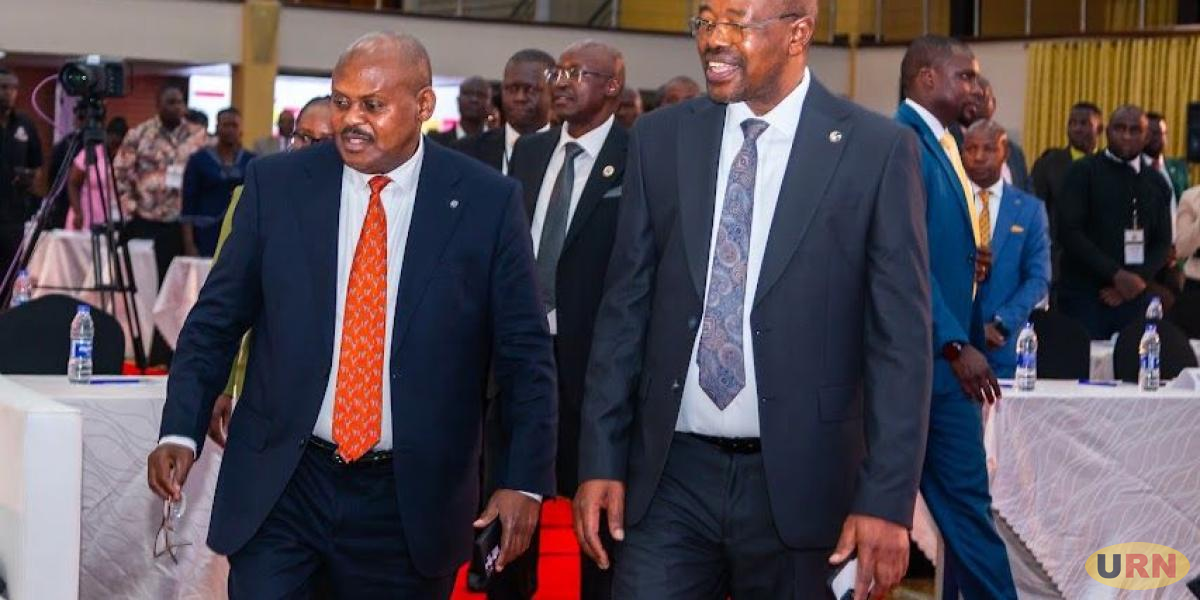
He was speaking at the inaugural annual Own Source Revenue Conference organised by the LGFC, which brought together Local Government political and technocrat leaders, MDAs and development partners, among others.

The State Minister for Planning at the Ministry of Finance, Amos Lugoloobi, admitted that MDAs were holding huge sums of money but attributed it to the accounting officers, not the ministry.
Lugoloobi said that his ministry was already implementing its planned of a phased clearance of all government arrears, including those to the Local Governments, and accused accounting officers of accumulating the arrears without government approvals.
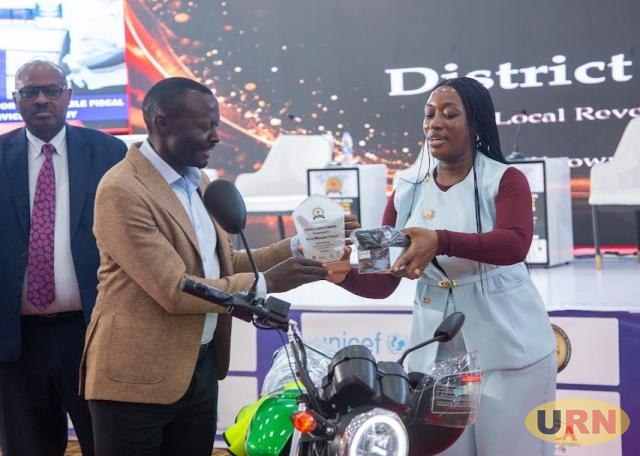
Going forward, he said, no accounting officer would be allowed to commit government funds before proving that the funds were available. The conference’s main objectives included discussing ways of enhancing revenue generation by local government, including recognizing those that have performed well so as to encourage others.
This is one of the approaches towards meeting the 1 trillion shilling target a year by the financial year 2028/29 set for the LGs by the finance commission.
The budget Parliament passed in April gives Local Governments 8.2 trillion shillings this financial year, including the Parish Development Model. With the LGs raising 442.64 billion of their own, the Speaker of Parliament, Thomas Tayebwa, says this is still very little.
“That is about five shillings in every hundred that a Local Government spends. It is 0.18 percent of our GDP, against an East African average of about 1.27 percent. The same budget sets out to lift national domestic revenue to 15.9 percent of GDP. Local revenue has a long way to travel,” he says in a statement.
He stressed the importance of raising local government capacity to generate more capital and contribute to the Tenfold GDP Growth Strategy if the ordinary person is to benefit from this strategy.
“That economy will be built in the trading centres, markets, farms and towns that Local Governments administer. A Local Government that cannot raise its own revenue cannot plan its own roads, its own markets or its own services, and cannot play its part in that growth,” said Tayebwa.
The LG Finance Commission is in charge of monitoring the financial management in 176 districts, municipalities and cities, including Kampala Capital City Authority (KCCA).
The total annual revenues generated by local governments have steadily improved, almost doubling since 2020/01, and the government and LGFC attribute this to the Integrated Revenue Administration System (IRAS), which was also rolled out at the conference to cover all 176 Local Governments.
IRAS holds 3,101,290 registered taxpayers.
LGs that have implemented it have seen their revenue collections rise significantly, with Gulu City reportedly collecting 108 percent of its budget last year, while Mbarara City grew its revenues from 2.4 billion to 10.76 billion shillings since it adopted the system.
Performance by revenue sources
The governments were given targets, with each expected to raise certain amounts from different revenue sources.
The government has listed about 36 revenue sources from which Local Governments can raise revenues.
Generally, the best-performing revenue source was Property Rates, from which 126.2 billion shillings was raised, representing a 171 percent performance.
This was also the biggest revenue source, accounting for 28.5 percent of the total LG revenues. It was followed by Business Licenses with a total of 65.5 billion shillings, though this performed at 94 percent.
Property-related duties and fees performed at 70 percent and raised 53.9 billion, while Local Service Tax, which posted a 100 percent performance, raised 49.1 billion.
At the bottom of the table were Market and Gate Charges and Inspection Fees at 37 percent and 35 percent, respectively, and raised 11.9 billion and 5.4 billion shillings, respectively.
The rest of the sources raised 56 billion shillings with an average performance of 49 percent.
KCCA alone accounted for 31.5 percent of national own source revenue, and together with Wakiso District, collected 159.56 billion or 36 percent. KCCA outperformed its target at 105.3 percent, while Municipal Councils generated 101.3 percent of the budgeted collections.
Other cities managed an 87.8 percent performance, while Districts performed at 79 percent. Adam Babale, the Secretary to the Commission, says that if all the measures suggested are put in place and with the full operationalisation of IRAS, the LGs will meet their target of 1 trillion shillings by 2028/29-URN. Give us feedback on this story through our email: kamwokyatimes@gmail.com