The decision by the government to name its crude oil “Pearl Sweet” has generated debate, with some questioning why the crude oil to be produced from the Albertine Graben needs a name as the country approaches first oil.
The debate has gained traction on social media sites as well as the mainstream media. Officials from the oil and gas companies as well as the petroleum sector regulators have particularly faced a hard time explaining.
But for the government, the naming of Uganda’s Crude is simply part of international marketing as part of global industry practice to which Uganda is preparing to join.

They have equally stated that the name is not simply a branding exercise. It is part of preparing Uganda’s crude for a market where oil is bought and sold as identifiable grades with specific physical and chemical characteristics.
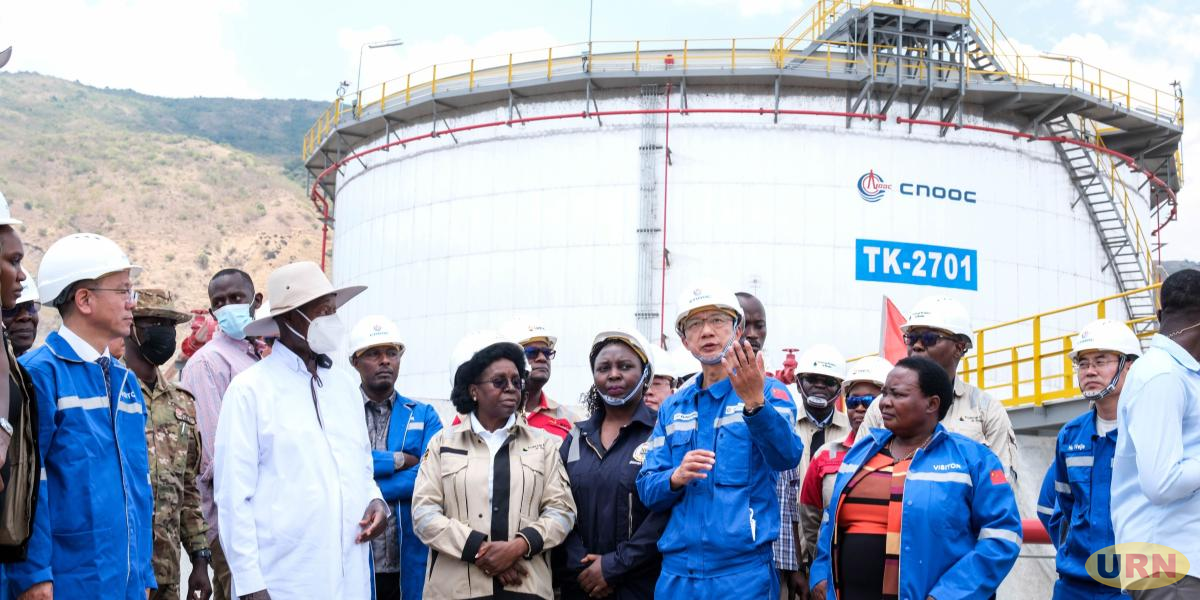
President Yoweri Museveni unveiled “Pearl Sweet” on September 2, 2026, at the Kingfisher Development Area in Kikuube District, as the sector moved closer to commercial oil production and exports.
The Ministry of Energy and Mineral Development said “Pearl” draws from Uganda’s long-standing identity as the “Pearl of Africa”, while “Sweet” describes the crude’s relatively low sulphur content. The government says the naming process involved technical assessment, stakeholder consultation and evaluation of commercial, cultural and international branding considerations before final approval.
The Petroleum Authority of Uganda’s Director of Legal and Corporate Affairs, Ali Ssekatawa, says the significance of the name becomes clearer when Uganda’s oil is viewed not simply as a natural resource, but as a product about to be sold in an international market.
“I come from a Matoke family. So, I am crossing from a background of a Matoke trader to a trader of crude on the world market,” Ssekatawa says. He says Uganda has traditionally understood how commodities such as coffee, bananas, milk and beans are sold, but crude oil enters a different commercial system with its own conventions.
“Conceptually, it’s very important that we place our minds that we have been literally selling coffee, selling Matoke, selling bananas, milk and so on. But now, as a country, we are going to sell a product on the international market,” he says.
“We are not selling that product here. Where we sell it there are rules that apply. So the naming of any crude that is coming on the market for the first time is an internationally regulated business, if I should say activity.”
International oil markets distinguish crude grades according to where they come from and characteristics that determine how they can be processed. Crude is not a uniform product.
Different grades can vary in density, sulphur content, wax content, acidity, metals, and the quantities of different petroleum products they can yield during refining. Crude assays are therefore used to give buyers detailed information about a particular crude. Major oil companies publish assays identifying grades by characteristics such as API gravity, crude type and sulphur content.
Ssekatawa says that when Uganda enters this market, buyers need to be able to identify the product and understand what they are being offered.
“The second is what they call API gravity or sulphur content. The sulphur content is very, very important. It’s like how we have a label for Coca-Cola, and they say you must put on how much sugar is inside, how much water is there, and you publicize it, or medicine,” he says.
He explains that the terminology used in the international crude market includes descriptions such as sweet, sour, light, medium or intermediate, and heavy.
“When you’re going to the international market for the first time, and I should emphasize this because the focus is not our market. It is the buyers, the other side,” Ssekatawa says.
“There are certain things they recognize. It’s like if you own a stall, who turns to your stall, all he sees is are you sweet, are you light, are you heavy? So you are advised by any international trader that if you’re entering the market for the first time, you must be able to say what label is yours.”
Technically, these descriptions should not be treated as interchangeable. “Sweet” and “sour” primarily refer to sulphur content, while “light”, “medium” and “heavy” relate to crude density, commonly expressed through API gravity.
The importance of those characteristics is practical. A refinery needs to know what kind of crude it is buying before determining whether the oil fits its configuration and what products it can economically produce from it.
Many have asked why “Pearl”? Others have asked how the naming was chosen.
Ssekatawa says the team considered whether to use a Ugandan local-language name but eventually favoured “Pearl” because Uganda’s identity as the “Pearl of Africa” is already widely established.
“We argued whether we could use a local language, a local name, but I think the considerations were that we have almost 52 tribes, maybe 40 languages,” he says.
“I mean, this product is for the whole country. It doesn’t belong to any community. And then if you take it to the market, you still have to explain.” He says a name drawn from Uganda’s established national identity would be easier for international buyers to associate with the country.
“Pearl is something that has, over years, historically gained that reputation, and we thought it will be easy to sell,” he says.
That is why “Pearl” serves two purposes: it carries a Ugandan identity while also giving international buyers a geographic association with the crude. Equally, some have asked why “Sweet”? The answer, according to the players, goes with the characteristics of the crude oil to be produced from Uganda’s Albertine Graben.
The crude in Uganda has low sulphur content and is waxy. “Sweet crude” generally refers to crude with relatively low sulphur, while crude with higher sulphur is described as sour. Uganda’s officials have emphasised the low sulphur content of the country’s crude as one of its favourable characteristics.
The government says this makes it less costly to process than higher-sulphur crude.
Ssekatawa explains that when crude has low sulphur, then you don’t need a lot of effort to refine it because ultimately you are going to take it to a refinery to clean it. “So when it has low sulphur, it is cheaper to refine, and therefore the market likes it. So that’s a very, very good question. When it has high sulphur, then it is harder to refine, and it is more expensive to refine.”
This does not mean that the word “Sweet” by itself determines the price of Uganda’s crude. Crude prices depend on several factors, including density, sulphur content, refining yields, location, transportation costs, refinery configuration, market demand and the prevailing international oil market.
The name therefore identifies the grade; the detailed crude assay provides the technical information that buyers use to assess its commercial value.
While Uganda’s low sulphur content is an advantage, the crude is also waxy. That characteristic creates a transportation challenge and helps explain one of the most distinctive features of Uganda’s oil infrastructure, the need for a heated export pipeline.
Ssekatawa says the same crude that has a favourable sulphur characteristic also presents difficulties because of its wax content.
“Ours, again, is waxy, that’s true, but again, the technology that has been, because when it’s waxy, it is hard to transport,” he says. “That’s why we have the longest heated pipeline because you need to heat that pipeline for it to be able to liquidify and move. So the moment it gets out of the pipeline, it solidifies.”
Uganda’s crude will therefore be transported through the 1,443-kilometre East African Crude Oil Pipeline to Tanga in Tanzania, with the pipeline heated to keep the waxy crude sufficiently fluid.
The government and EACOP say the crude is medium-to-heavy and waxy, with a high pour point requiring temperature management during transportation.
Ssekatawa says this creates both an advantage and a disadvantage for Uganda. “So because of its waxy nature, in terms of its transportation, it also becomes slightly disadvantageous,” he says.
“But generally, in terms of its sulphur content, it is very, very low, and therefore it’s very good. In terms of its commerciality, it is in a good space. It is a good product to sell.”
Also, Ugandans have asked how and who chose the name? Ssekatawa says Uganda National Oil Company, which will participate in marketing the crude, led a broader technical and branding process involving the government and the international oil companies developing the fields. “It’s a bottom-up approach,” he says.
“We chose a team of technical, branding, and so on from the industry led by Uganda National Oil Company because the national oil company is the one which is going to sell our crude.”
He says TotalEnergies and CNOOC were also involved because they are partners in the developments and will have an interest in marketing the crude.
“And by the way, that crude, as I said, once we share the crude, even Total and CNOOC, they are going to sell. So even them, they are concerned because it’s the same name they are going to sell under,” Ssekatawa says.
The team considered several names before one was taken through the approval process.
“It was a bottom-up kind of thing but consultative with the key players,” he says.
The process is also described by the Energy Ministry as having involved technical review of the crude, stakeholder consultation, branding evaluation and consideration of international appeal before presidential endorsement.
Is Pearl Sweet a benchmark like Brent?
Giving Uganda’s crude a recognised name does not automatically make “Pearl Sweet” an international price benchmark.
Brent and West Texas Intermediate, or WTI, have much broader roles in global oil pricing.
Other crude grades, such as Nigeria’s Bonny Light and the United Arab Emirates’ Murban, are identifiable grades traded in the international market without being equivalent to the role played by the major benchmarks.
Pearl Sweet is therefore better understood as Uganda’s crude grade identity, rather than a new global benchmark. Its name tells the market what to call Uganda’s crude. Its assay and trading history will tell buyers much more about what the crude is worth.
That distinction is important because a name cannot create a premium by itself. Pearl Sweet comes as Uganda approaches the final stages of developing Tilenga, Kingfisher and EACOP, the three projects required to move the country into commercial crude production and exports.
Tilenga is designed to reach peak production of about 190,000 barrels per day, while Kingfisher is designed for about 40,000 barrels per day. Combined peak production is expected to reach about 230,000 barrels per day.
The government expects commercial production to begin before the end of 2026. The crude from the two developments will be brought together before export through EACOP.
That means Uganda is moving beyond the question of whether it has oil. It is now preparing to answer a different question: what product will Uganda sell to the world?
Ssekatawa says that is why the naming represents an important psychological as well as commercial milestone for those who have worked on the project.
“If we have reached this final part of discussing what dress, what colour of the crude, and so on, it’s a very, very good feeling for all Ugandans and so on,” he says.
“Pearl Sweet” is more than a ceremonial name. “Pearl” gives the crude a national identity. “Sweet” communicates one of its important technical characteristics.
The crude assay will provide the detailed specifications, while buyers, refiners and traders will ultimately determine how the grade performs in the international market.
The real test of Pearl Sweet will consequently not be whether Ugandans like the name. It will be whether buyers in international markets recognise the grade, understand its characteristics, accept its quality, and are willing to pay competitively for the barrels carrying the name-URN. Give us feedback on this story through our email: kamwokyatimes@gmail.com