The construction of Uganda’s long-awaited Standard Gauge Railway (SGR) is expected to move closer to full implementation following a major financing commitment from the Islamic Development Bank (IsDB). Last week, the IsDB Board approved financing worth approximately Shs2.715 trillion for the project, representing the largest single funding commitment for the SGR to date.
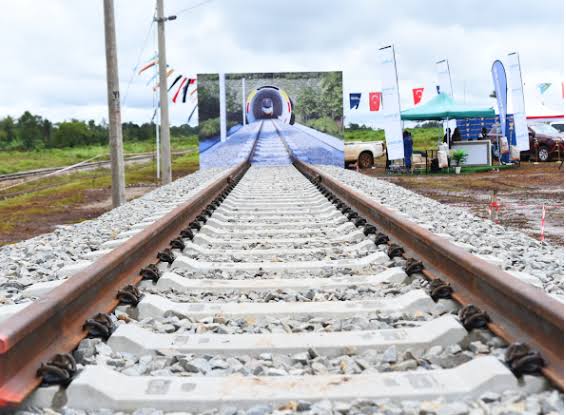
The SGR, estimated to cost Shs45.6 trillion (US$12.8 billion), was officially launched in May by President Yoweri Museveni and his Kenyan counterpart, President Uhuru Kenyatta. The contract for the construction of the 273-kilometre Malaba–Kampala electrified railway was awarded to the Turkish firm, Yapi Merkezi, in October last year.
The contractor indicated that the project can be completed within 48 months, subject to the availability of financing. Permanent Secretary and Secretary to the Treasury Ramathan Ggoobi said the government remains committed to achieving financial closure for the project by November 2026.

A Limited Notice to Proceed (LNTP) has already enabled the contractor to begin preliminary works. Under this arrangement, the Ugandan government provided approximately €75 million (about Shs312 billion) to finance early project activities. An LNTP is a written authorization that allows a contractor to begin specified preliminary works before the full contract becomes effective.
The government has so far secured approximately 5.4 trillion shillings (US$1.4 billion) in confirmed multilateral financing for the first phase of the SGR, mainly the Malaba–Kampala section, out of the estimated US$3.2 billion required for that phase. According to the government, the IsDB financing will support the construction of a 553-metre Jinja Nile Bridge, the 2.12-kilometre Mbuya–Kampala tunnel.
The money wil also be used to construct six railway stations at Tororo, Iganga, Jinja, Lugazi, Kampala East, and Kampala City; and three maintenance workshops at Kampala East, Jinja, and Tororo. Other financing commitments amount to approximately US$650 million (about Shs2.38 trillion), bringing confirmed funding to around US$1.4 billion. The government is expected to provide counterpart funding through budget allocations, domestic borrowing, and other financing mechanisms.
These funds will cover land acquisition, preparatory works, and early civil works being undertaken by Yapi Merkezi. In the 2026/27 national budget, the transport sector received 8.79 trillion shillings, with a significant portion earmarked for the eastern section of the SGR. Additional government financing is expected through Uganda’s first sovereign Sukuk (Islamic) bond, valued at €405.5 million (approximately Shs1.7 trillion), which is expected to finance about 15 percent of the first phase of the railway.
According to Sophie Kayemba, Senior Manager for Tax at PricewaterhouseCoopers (PwC) Uganda, the issuance represents an important step in diversifying the government’s infrastructure financing sources. The latest financing arrangements mark a significant departure from the project’s original financing model. Initially, Uganda planned to rely largely on Chinese financing, with construction to be undertaken by Chinese contractors.
However, negotiations between Uganda, Kenya, and Chinese financiers stalled after China sought firm guarantees that both countries would simultaneously construct their respective sections of the Malaba border to ensure the railway’s commercial viability.
The Malaba–Kampala section had originally been awarded to China Harbour Engineering Company (CHEC) in 2015, subject to securing Chinese government financing. That US$2.3 billion contract was cancelled in January 2023 following years of delays in reaching financial closure. Future phases of the SGR are expected to extend northwards and westwards, connecting Uganda to Rwanda, the Democratic Republic of Congo, and Tanzania.
The entire railway network is expected to take about seven years to complete. Once operational, the railway will transport both passengers and freight and is expected to have a design lifespan of 30 years. The government says the SGR will reduce cargo transport costs by about 35 percent, shorten transit times, improve reliability, and significantly reduce greenhouse gas emissions compared to the ageing metre-gauge railway.
According to the Uganda Railways Corporation, passenger trains will travel at speeds of up to 120 kilometres per hour, while freight trains will operate at up to 100 kilometres per hour. The government is continuing discussions with other development partners to close the remaining financing gap.
Citibank has been appointed lead arranger for broader syndicated financing, while negotiations are ongoing with the World Bank, export credit agencies and other financial institutions. Ggoobi said the Ministry of Finance is in advanced discussions with the World Bank, which is considering several financing options to support Uganda’s infrastructure development programme.
The ministry is also hosting final appraisal missions following a tentative financing commitment from the African Development Bank (AfDB), with the aim of incorporating the loan into the overall financing package. According to the SGR Project implementation update, land acquisition advanced significantly after November 17, 2025, expanding into Mukono District before reaching Wakiso and Kampala by the end of the year.
The project says affected communities have undergone financial literacy training, valuation disclosure exercises, and compensation processes. So far, nine of the 12 districts along the railway corridor have received compensation, marking significant progress in one of the project’s most critical implementation stages-URN. Give us feedback on this story through our email: kamwokyatimes@gmail.com