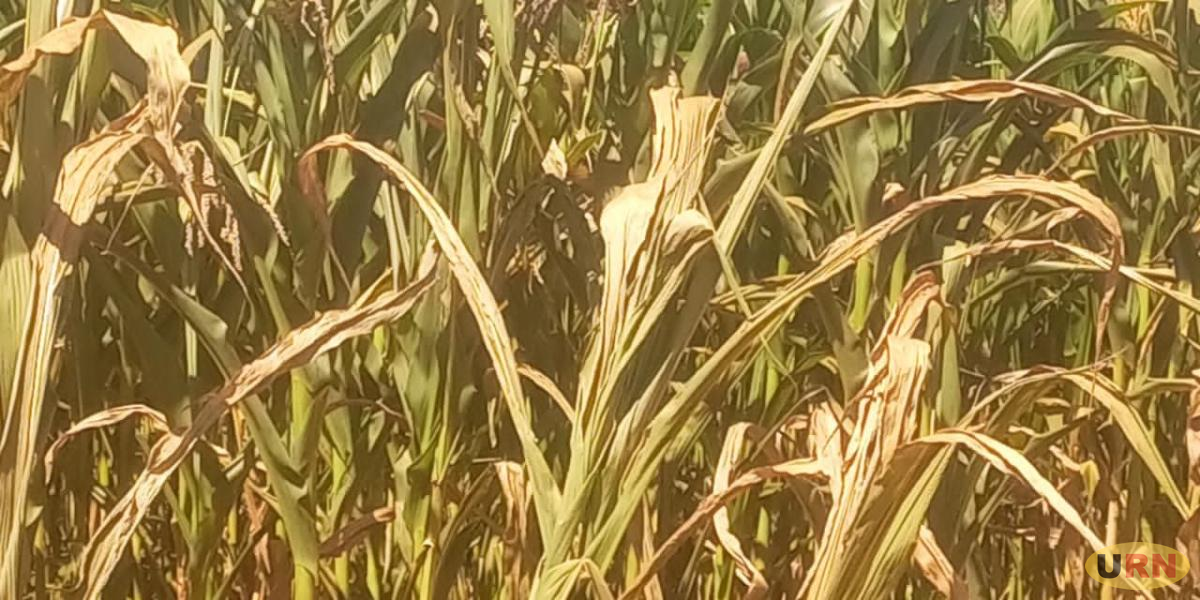
A prolonged dry spell is taking a heavy toll on farmers across the Bugisu and Sebei sub-regions, destroying crops and threatening food security, household incomes, and the ability of many farmers to repay agricultural loans. The dry conditions come as the two regions enter a critical stage of the first agricultural season. Agriculture remains the backbone of the local economy, with the majority of households depending on crops such as maize, onions, beans, and Irish potatoes for both food and income. However, weeks of limited rainfall and intense sunshine have left many gardens drying up before crops could mature.
The most affected districts include Bulambuli and Sironko in Bugisu Sub-region, as well as Kween, Bukwo, and Kapchorwa in Sebei Sub-region. Farmers report widespread crop failures, particularly in maize fields and Irish potato plantations. Isaac Mwanga, a farmer from Ngenge Sub-county in Kween District, says he has lost more than 30 acres of maize due to the prolonged sunshine. He explains that the situation has created serious economic hardships for farming households and heightened fears of food insecurity in the area.
“I invested heavily in maize farming this season, but the prolonged sunshine has destroyed more than 30 acres. Many families are now worried about where they will get food and income in the coming months,” Mwanga said. Joshua Chemonges, a farmer in Kapnandi Sub-county, Bukwo District, says many farmers have lost crops despite investing heavily in the planting season. According to Chemonges, some affected farmers obtained loans from village savings groups and banks and are now worried about how they will repay them.

He adds that the dry spell is also causing nearby streams to dry up, threatening water availability for both domestic use and livestock. Chemonges has called on district authorities to intervene through the district disaster management committees and formally seek support from the Office of the Prime Minister. “Most farmers borrowed money from village banks expecting good harvests, but the crops have dried up. We are now wondering how we shall repay the loans, yet even the streams we depend on are drying,” Chemonges said.
In Kapchorwa District, farmers growing Irish potatoes are reporting substantial losses. Mark Mweneg, a farmer in East Division, Kapchorwa Municipality, says the dry conditions struck when the potato crop was at the flowering stage, a period that requires adequate moisture for proper tuber development. Mweneg says many farmers were unable to irrigate their gardens due to limited access to water. He has appealed to the government and water authorities to invest in water infrastructure for agricultural production to help farmers withstand future climate-related shocks.
“The dry spell came when the Irish potatoes were flowering, a stage that requires a lot of moisture. Without water for irrigation, many farmers have watched their gardens dry up,” Mweneg said. Moses Chemswet, the LCIII Chairperson of East Division in Kapchorwa Municipality, says the prolonged dry spell has dealt a major blow to farmers who borrowed money to invest in agriculture during the planting season. He notes that many households are now uncertain about how they will repay their loans after losing much of their expected harvest.
Chemswet says local leaders are concerned that the crop losses could increase loan defaults among farmers and negatively affect household incomes. He has called on government agencies and development partners to support affected communities and strengthen irrigation initiatives to reduce dependence on rain-fed agriculture. “Many farmers obtained loans to invest in agriculture, hoping for good returns. With the crops drying in the gardens, it has become a big challenge for them to think about how they will repay those loans,” Chemswet said.
Meanwhile, Godfrey Makweta, a resident of Bunabutye Parish in Bulambuli District, says farmers who planted early in the season managed to get some yields, while those who planted later suffered severe losses as the dry spell intensified. “Those who planted early managed to get some harvest, but many people who planted later have lost almost everything because the rains stopped before the crops matured,” Makweta said.
In neighbouring Sironko District, Aron Gimoni, a farmer from Bunabdasa Ward, says the prolonged dry spell has devastated crops across many parts of the district, leaving farmers uncertain about their harvest prospects. He notes that maize, beans, and vegetable gardens have been severely affected, particularly among households that planted after the onset of the season. Gimoni says many farmers invested their savings in seeds and other agricultural inputs with expectations of a good harvest, but the lack of rainfall has wiped out much of their investment.
He warns that unless the rains return soon, many families could face food shortages and reduced incomes in the coming months. “We spent a lot of money preparing our gardens and buying quality seeds, but the prolonged sunshine has left many crops drying in the fields. Farmers are now worried about both food and income because the harvest may not be enough,” Gimoni said.
Justine Yeko Jim, the Kapchorwa District Commercial Officer, says the dry spell is likely to affect the financial stability of many farmer groups and individual borrowers who accessed credit to finance agricultural activities. According to Yeko, agriculture remains the backbone of the local economy, and widespread crop failure could weaken farmers’ ability to service loans and participate in future agricultural investments.
She has advised financial institutions to work closely with affected farmers while encouraging communities to adopt climate-resilient farming practices to reduce the impact of unpredictable weather conditions.
“Agriculture supports most households in Kapchorwa, and crop failure affects not only farmers but also savings groups and financial institutions that extended credit to them,” Yeko said.
Agricultural experts are also warning of possible reductions in food production across the region. Felix Sabila, the Kapchorwa District Production Officer, says the prolonged dry spell is likely to result in lower crop yields and reduced food availability in the coming months. Sabila explains that weather-related disasters are often difficult to predict accurately, making planning challenging for farmers. He has encouraged farmers to adopt climate-smart agricultural practices and explore irrigation options where possible to reduce vulnerability to extreme weather conditions.
“We are likely to register reduced yields this season, which may affect food availability. Farmers need to embrace climate-smart agriculture and irrigation where possible to cope with changing weather patterns,” Sabila said. The prolonged dry conditions have renewed concerns about the increasing effects of climate variability on agriculture in eastern Uganda. Local leaders and farmers are now calling for greater investment in irrigation infrastructure, water harvesting technologies, and climate-smart farming practices to help communities withstand future weather shocks.
If the dry spell persists, agricultural officials warn that the region could experience reduced food supplies, rising food prices, and increased economic pressure on households that depend on farming as their primary source of livelihood-URN. Give us feedback on this story through our email: kamwokyatimes@gmail.com