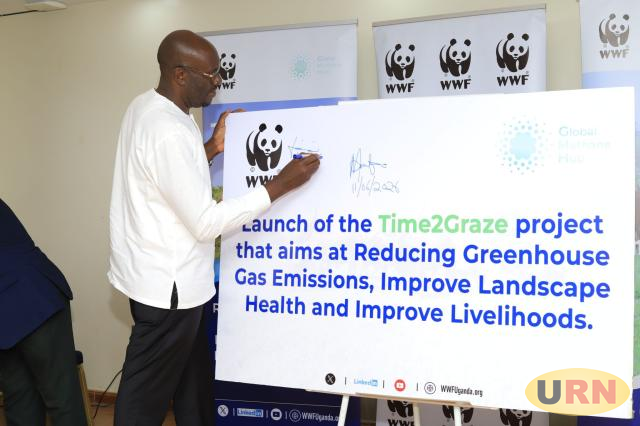
The World-Wide Foundation (WWF) has launched a project to abate methane gas emissions in livestock production in Western Uganda. The livestock sector is one of the greatest contributors of methane emissions, produced through the natural digestive process of ruminants. Methane is a highly potent greenhouse gas that increases global temperature, or global warming.
Methane doesn’t linger in the atmosphere for centuries the way carbon dioxide does, but while it lasts, it is far more destructive: it’s more than 80 times as potent at trapping heat over 20 years. The project to be implemented in Kasese and Isingiro districts is aimed at reducing greenhouse gas emissions, restoring degraded rangelands, and improving pastoralist livelihoods in Uganda.
The project that aims to enhance climate-smart grazing systems is also being implemented in Zimbabwe, Tanzania, Nigeria, Colombia, Argentina, and Brazil to reduce Methane emissions, regenerate degraded ranches, and improve pastoralists’ livelihoods. The three-year 500,000 US dollar Project “Time 2 Graze” seeks to combine Earth Observation data, pasture growth models, and co-design with farmers and stakeholders, Decision Support Tools (DSTs), and then deliver critical insights via SMS, web, and mobile apps tailored to local needs for effective climate-resilient grazing systems.

Paul Kihumuro, the landscape Coordinator of the project, says they will use community-grounded knowledge with digital innovations to guide adaptive grazing practices, deliver real-time estimates of pasture biomass, enabling farmers to make informed grazing decisions that improve animal nutrition and productivity while cutting emissions.
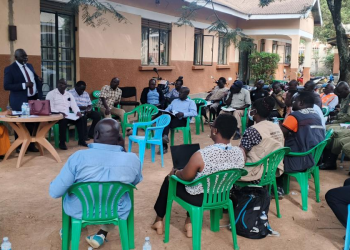
Launching the Project at Hotel Triangle in Mbarara City on Thursday evening, Dr. Alex Mukasa, a commissioner of Animal Production and Health at the Ministry of Agriculture, Animal Industry, and fisheries, says with the increased average temperatures, being experienced lately, and the emergency and the resurgence of some of the diseases in agriculture, and the change in rainfall patterns which is partly blamed on green gases or methane, the project will fight change the climate.
Mukasa adds that the project will directly contribute to the strategic objective of the Ministry of Agriculture, which is increasing production and productivity through improving the animal feeding systems, controlling diseases, and improving animal genetics. Uganda’s Milk production per animal stands at about 6 liters per day, which is quite little compared to the neighboring countries within the East African community, whose average milk production is 10 liters per cow. Mukasa says it can be improved if the project is implemented to its basics.
He adds that the project will greatly contribute to enhancing climate-smart agriculture and also tackle the sustainable reutilization of resources.
Ivan Tumuhimbise, the WWF Country director, says they are bringing on board other institutions like the National Agricultural Research Organization (NARO), Makerere University, Mbarara University, and Bishop Stuart University, to help design solution tools with local communities and deliver them on mobile phones and other offline platforms with the intent to reduce the effects of climate change. He narrates that agriculture, forestry, and other land uses are the key drivers of climate change in Uganda.
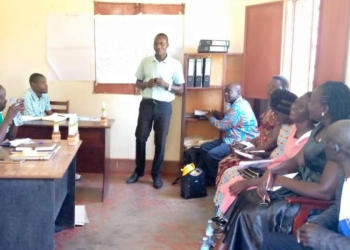
They have singled out livestock productivity as one of the key contributors of global warming. He adds that the project will also find solutions to reduce the effects of the disease rates between wildlife and the livestock for the communities neighbouring National Parks. Dr Simon Rukundo, the Isingiro District Veterinary Officer, says the Time 2 Graze project is a great initiative that will solve farmer challenges, especially those that arise from the drought, like lack of water and pastures.He says the project will skill cattle farmers in making forage.
Julius Baluku, a farmer from Kasese district, says he is optimistic that the project will equip him with technology to increase and improve the quality of feeds for his cattle, but also fight the rampant cattle diseases. The Project that will be implemented in Nyamugasa Parish, Nyakatori Sub-County in Kasese district, and Rwentango and Masha Sub-Counties in Isingiro district targets a 20% reduction in methane emissions intensity from pastoralists engaged in the restoration of over 4000 hectares of degraded rangeland and 20% increase in income in target communities.
The Global Methane Hub is a coalition of philanthropies and organizations working to slash methane emissions by 35% by 2030. Agriculture is the single biggest human source of methane, and livestock digestion accounts for the majority-URN. Give us feedback on this story through our email: kamwokyatimes@gmail.com