Every rainy season, Peter Kibeti watches the clouds gather over the slopes of Mount Elgon with quiet apprehension. The mountain has never allowed him to forget. Sixteen years have passed since the March 2010 landslide that tore through Nametsi village in Bududa District, burying homes, farms and entire families beneath tonnes of mud, rocks and uprooted trees. It remains one of Uganda’s deadliest natural disasters, claiming more than 300 lives and displacing hundreds of survivors. Kibeti survived.
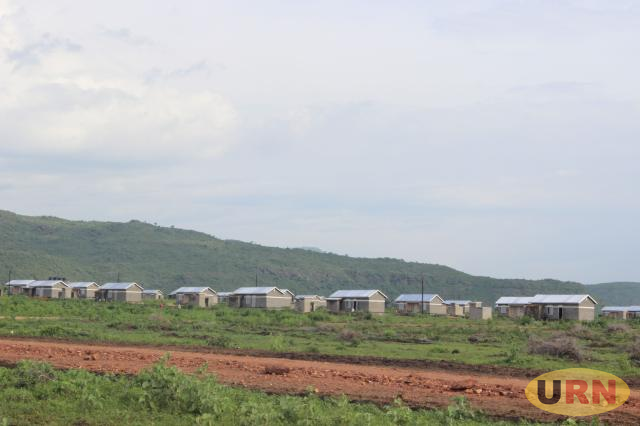
The government later relocated him, together with hundreds of other survivors, to Kiryandongo District in northern Uganda, believing that distance from the unstable slopes would offer a safer future. Years later, he came back.

To many people, the decision seems impossible to understand. Why would someone willingly return to a mountain that had nearly killed him? Kibeti’s answer is immediate. “I’m living in fear because the landslide might come again. But we need the government to search for us a place which is fertile like this one in Nametsi. Here we grow Irish potatoes, bananas and coffee. These are the crops that sustain our lives.”
His words reveal a reality that rarely appears in disaster response plans. For people uprooted by climate-related disasters, survival is only the first chapter, rebuilding a life is often much harder. For years, Kibeti’s return could easily have been dismissed as a deeply personal choice driven by attachment to ancestral land. Today, new evidence suggests it reflects a much broader challenge confronting countries increasingly forced to relocate communities because of climate-related disasters.
In “Disastrous Displacement: The Long-Run Impacts of Landslides,” economists Travis Baseler of the University of Rochester and Jakob Hennig, an economic research consultant with the World Bank, followed households affected by six major landslides in eastern Uganda between three and twelve years after the disasters. Their findings challenge a common assumption: moving people away from danger does not necessarily restore their lives.
The researchers found that landslides displaced nearly seven in ten affected households from their home villages. Yet by the time they returned to survey them years later, around 60 percent of those displaced had moved back home. Many did not return because they believed the danger had disappeared. They returned because they could no longer afford to remain in relocation sites or because those arrangements had always been temporary. Even years later, many affected households remained significantly worse off economically, socially and psychologically than neighbouring families who had not been displaced.
Kibeti understands those findings without ever having read the study.
“In Kiryandongo, the place is very hot,” he recalls. “If it begins from January to January, you cannot get the rain. We need land that is fertile and receives rain like this one, but not mountainous. We are afraid because of these mountains and because of the rain.” His dilemma captures one of the defining questions of climate adaptation. Safety matters, but The Bududa landslide disaster prompted one of Uganda’s largest government-led relocation programmes.
The objective was to move potential victims and bereaved families away from unstable mountain slopes before another tragedy struck. But relocation also meant leaving behind familiar farming systems, fertile volcanic soils and generations of agricultural knowledge.
For families whose livelihoods depended almost entirely on farming, adapting to a hotter and drier environment proved far more difficult than many had anticipated. Eventually, some returned not because the mountain had become safer but because life elsewhere had become unsustainable.
The Baseler-Hennig study found that households displaced by the landslides experienced substantially poorer long-term outcomes than their neighbours. Many earned less, reported lower life satisfaction, lived in poorer-quality housing and experienced worse mental health years after the disaster. Those who were displaced without adequate support generally experienced the greatest decline in welfare.
The findings challenge a common measure of success in disaster response. Relocation cannot be judged solely by the number of families moved away from danger. It must also be judged by whether those families can rebuild secure and dignified lives. For Kibeti, survival now means confronting challenges that receive far less attention than the landslide itself. “Life here is not good because transporting goods to the market is hard,” he said.
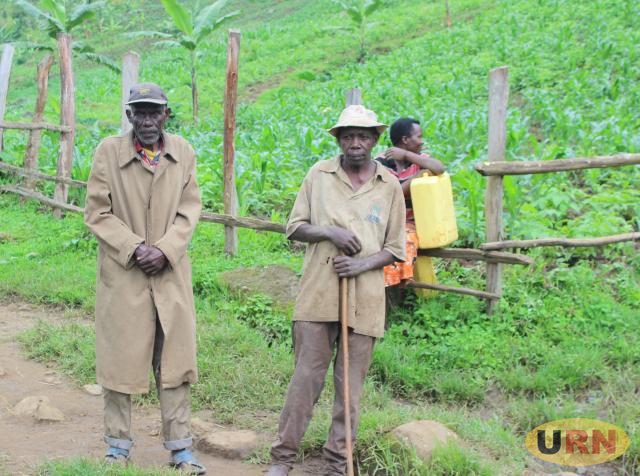
In Namasheti village where Kibeti and others returned, access to basic services remains equally difficult. “We walk about 15 kilometres to reach a health centre and also about 15 kilometres to get to school. I have three children. The first-born is six years old. He doesn’t go because the school is very far. The primary school that once served the community was destroyed by the landslide.
Residents have since organised a nursery school themselves, paying teachers from their own pockets while waiting for government support. “Since 2010 up to today, we have not been helped. Without education and treatment, we are just like animals in the forest,” he said.
His frustration reflects a wider truth. Disasters do not end when television cameras leave; recovery is measured over years, sometimes decades. Not everyone accepted relocation. Among them is Laban Katiya. His family survives through agriculture despite repeated warnings that cultivating steep slopes increases the risk of future landslides.
Asked why people continue farming such dangerous land, he does not hesitate. “Because the land is little for us and the people are many. We cultivate there in order to survive. It is dangerous because when it rains, the water can enter the soil and bring another landslide.” Khatiya explained.
Khatiya understands something planners often overlook. “The climate in Kiryandongo and here is not the same.” His words echo Peter Kibeti’s experience. Leaving Bududa does not simply mean leaving a dangerous mountain. It means leaving fertile soils, familiar crops, reliable rainfall and generations of agricultural knowledge.
For many families, relocation therefore becomes a choice between different forms of insecurity. The experiences of Kibeti and Katiya are no longer isolated stories; they are increasingly supported by research. “The Long-term Welfare Impacts of Natural Disasters: Evidence from Ugandan Landslides,” Baseler and Hennig argue that disasters destroy more than homes and crops. They also weaken the social networks that help families recover.
Neighbours who once shared labour, exchanged information, lent money during difficult seasons, or helped each other find work often become scattered across different districts after relocation. Those relationships are rarely counted in compensation packages, yet they are among the most valuable assets rural communities possess.
The researchers argue that relocation should therefore be designed not simply around safer land but around preserving livelihoods, maintaining community ties and providing sustained support long after emergency relief has ended. Their conclusion reinforces what survivors have been saying for years. People rebuild their lives as communities, not as isolated households. The lessons from Bududa extend well beyond Mount Elgon. Across Uganda, climate change is quietly reshaping mobility.
Unlike dramatic disasters that trigger emergency evacuations, many people now move because environmental change gradually erodes their livelihoods. Repeated crop failure, longer droughts, declining pasture, flooded gardens, unpredictable rainfall, migration increasingly becomes one strategy among many for coping with uncertainty.
Researchers involved in Makerere University’s Cities of Youth project have documented similar patterns across Uganda’s rapidly growing secondary cities. As environmental pressures make rural livelihoods more precarious, increasing numbers of young people are moving to urban centres in search of work and opportunity. Yet many arrive in informal settlements where housing, jobs and public services are already under strain.
Migration may reduce one form of vulnerability while exposing families to another. The Baseler-Hennig research offers one encouraging insight. Households that sent family members to towns and cities after the landslides generally experienced smaller declines in welfare than those that remained entirely dependent on rural livelihoods.
Urban migration, the researchers suggest, can become an important coping strategy when supported by opportunities for work and stable incomes. That finding carries important implications for Uganda: Climate mobility is no longer solely a humanitarian issue; it is also a question of urban planning. Will towns have enough affordable housing? Will schools, health centres, water systems and transport networks keep pace with growing populations? Can cities absorb new arrivals without simply transferring rural vulnerability into urban informal settlements?
Those questions will shape Uganda’s climate resilience as much as disaster response itself. Beyond relocation, Bududa teaches an important lesson: Moving people away from danger saves lives, help them rebuild their lives requires much more. It requires fertile land where farming remains possible, schools where children can learn, Health facilities within reach, and roads that connect farmers to markets.
Planners argue that support should extend beyond emergency relief and that communities should remain connected even after relocation. For them, these are not simply development priorities; they are climate adaptation priorities. As Uganda prepares for a future in which climate change is expected to increase floods, landslides, droughts and displacement, the country’s success will not be measured only by how many people it moves away from danger.
It will be measured by whether those families can build futures they no longer feel compelled to leave. As afternoon mist settles once again over Mount Elgon, Peter Kibeti looks towards the mountain that continues to shape his life. It still represents danger; it also represents home. His decision to return has often been interpreted as a personal choice.
The greatest challenge after disaster is not relocation; it is rebuilding lives with dignity, opportunity and hope. That may be the most enduring lesson Bududa has to offer Uganda as the country prepares for a future shaped by a changing climate.This is the third and final part of a series examining how climate change is reshaping mobility, livelihoods and adaptation in Uganda-URN. Give us feedback on this story through our email: kamwokyatimes@gmail.com