
Education stakeholders in West Nile have urged the government to introduce programmes for training new teachers alongside upgrading serving ones, warning that the phasing out of Primary Teachers’ Colleges (PTCs) and National Teachers’ Colleges (NTCs) has created a growing shortage of teachers. Prof. Epiphany Odubuker Picho, the former Chairperson of the Governing Council of the former NTC Muni, urged the government to reconsider its approach by allowing institutions to train new teachers while continuing to upgrade those already in service.

He warned that failing to produce new teachers would eventually affect learning in both primary and secondary schools. Under the new framework, UNITE is mandated to award bachelor’s degrees, while former Primary Teachers’ Colleges upgrade teachers to diploma level and former National Teachers’ Colleges upgrade diploma holders to degree level.
The reforms also raised the minimum entry requirement into the teaching profession, meaning only students who have completed Advanced Level education can enrol for teacher training, while those with lower qualifications are limited to upgrading programmes. Stakeholders fear the arrangement could worsen teacher shortages if no new cohorts of teachers are trained.
Arua City Education Officer Raymond Ombere said the absence of fresh teacher training over the past four years is likely to affect human capital development and appealed to government to merge the two programmes so institutions can simultaneously train new teachers and upgrade serving ones. UNITE Muni Campus Dean Daisy Aliwaru called for stronger collaboration among education stakeholders to ensure a better understanding of the reforms and to collectively address emerging challenges.
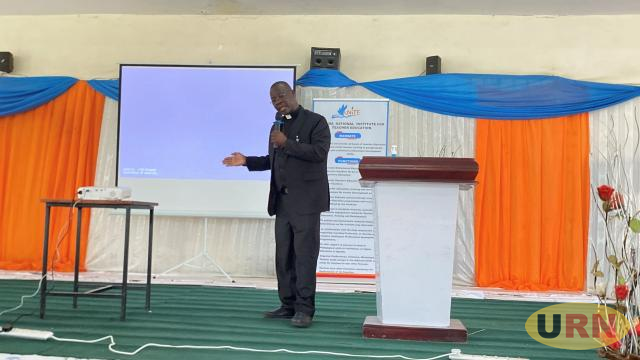
Speaking during a regional stakeholders’ engagement at UNITE Muni Campus, the Vice Chairperson of the UNITE Council, Teopista Birungi, said the National Teacher Policy is intended to improve the quality of teachers while ensuring a smooth transition to the new teacher education system.
The appeal comes nearly two years after the establishment of the Uganda National Institute for Teacher Education (UNITE), which was created on July 5, 2024, under Statutory Instrument No. 53 of 2024 as a specialised government degree-awarding institution. Under the National Teacher Policy (NTP), PTCs and NTCs no longer admit new teacher trainees but instead focus on upgrading the qualifications of serving teachers.
The reforms also phased out Grade III and Grade V teacher qualifications in favour of diploma and degree programmes. However, education stakeholders say the reforms have created a vacuum in the production of new teachers, with many experienced teachers retiring while others leave the profession for better opportunities-URN. Give us feedback on this story through our email: kamwokyatimes@gmail.com