By KT Reporter
The Uganda National Examinations Board (UNEB) is set to conduct another round of pre-testing for assessment items as part of its ongoing efforts to refine the new competency-based assessment system under the revised lower secondary curriculum.
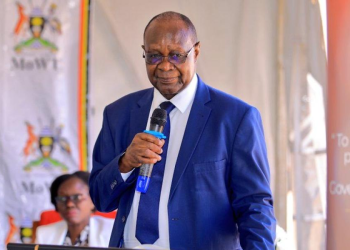
Mike Nangosya Masikye, the Director of Examinations at UNEB, revealed the development during the board’s ongoing engagement with Chief Administrative Officers (CAOs) and District Education Officers (DEOs) to update them on the new assessment framework.

Nangosya emphasised the importance of pre-testing to ensure that assessment items meet the required standards. “Given that the competency-based assessment is still new, we will continue pre-testing the items we develop to ensure quality,” he said.
He added that the first pre-testing exercise before the first national assessment was conducted provided valuable feedback from learners and teachers, which UNEB used to enhance the assessment process.
The board released sample items to schools in March 2024 to familiarise them with the new format, which includes scenario-based questions—a significant shift from traditional examination formats.
The revised lower secondary curriculum, rolled out in 2020, faced challenges in developing test items due to the need for alignment with recommendations from the National Curriculum Development Centre (NCDC).
Despite delays, UNEB has made strides in creating assessments that incorporate knowledge, skills, values, and attitudes, reflecting the curriculum’s competency-based approach.
In addition to pre-testing, UNEB will soon begin validating Continuous Assessment (CA) scores submitted by schools. CA scores, which contribute 20% to a learner’s final marks for Senior Three and Senior Four, are submitted termly using tools developed by UNEB.
However, concerns have emerged about the quality and integrity of these scores. Odongo, a UNEB official, highlighted issues of falsification, with some teachers allegedly inflating scores to favour certain students.
To address this, Dan Odongo, the UNEB Executive Director, plans to conduct on-spot validation exercises across the country to verify whether submitted scores accurately reflect the intended competencies.
When the new curriculum was introduced, it shifted emphasis from the traditional summative examination system to a greater focus on continuous and formative assessments. This change was designed to provide a more holistic evaluation of students’ abilities, as educationists have long argued that relying solely on final examinations fails to capture a learner’s full range of competencies.
However, concerns about the integrity of teachers, many of whom were accustomed to exam-focused teaching, led to cautious implementation. To address these concerns, the Ministry of Education capped CA at 20% of the final score, reflecting initial scepticism about teachers’ ability to administer assessments fairly and consistently.
To standardise CA across schools, UNEB trained 15 teachers from every secondary school in Uganda, regardless of their status, on how to use its assessment tools. The focus was on Senior Three and Four teachers due to the urgency of collecting scores required for the Senior Four final examinations.
Grace Mbabazi is the principal examination officer in charge of continuous assessment (CA), noted that many trained teachers failed to share their knowledge with colleagues, hindering the process. To address this gap, UNEB plans to train an additional 15 teachers per school, focusing on Senior One and Two educators. This initiative aims to equip them with the skills to conduct effective CAs and ensure consistent scoring aligned with the curriculum’s competencies-URN. Give us feedback on this story through our email: kamwokyatimes@gmail.com