United Nations High Commissioner for Human Rights Volker Türk has expressed deep concern over the escalating fighting in eastern Democratic Republic of Congo (DRC), warning that civilians are bearing the brunt of the renewed violence.
Recent clashes involving the Armed Forces of the Democratic Republic of the Congo (FARDC), the Wazalendo coalition, the March 23 Movement/Alliance Fleuve Congo (M23/AFC), and the Twirwaneho coalition have spread across several fronts in the region.
FARDC has accused M23/AFC rebels of receiving fresh reinforcements from Rwanda and using armed drones to bomb civilian-populated areas, resulting in deaths, injuries and destruction of property. M23/AFC has, in turn, accused FARDC of carrying out similar drone attacks against civilian areas.

In a statement released on Thursday, Türk said hostilities between the Congolese armed forces and the Rwanda Defence Force (RDF)-backed M23 armed group have intensified over the past two weeks in Fizi and Mwenga territories in South Kivu.
He said both sides have used armed drones, heavy artillery and other explosive weapons in densely populated civilian areas, leaving many civilians dead or injured while destroying homes and livestock. Referring to clashes around Mulima village in Fizi Territory on July 4 and 5, 2026, Türk said it was deeply troubling that fighting continues despite commitments made under ongoing peace initiatives.
“The continued hostilities are causing deaths, injuries, displacement and the destruction of livelihoods,” he said.
Türk warned that the renewed violence could trigger further displacement, including across international borders, and increase violations of international human rights and humanitarian law, including unlawful killings and conflict-related sexual violence.
He called for coordinated national, regional and international efforts to de-escalate the conflict.
The UN rights chief urged both FARDC and M23 to immediately halt hostilities, take urgent steps to reduce tensions and ensure the protection of civilians in Mulima and across the wider Fizi and Mwenga plateau region.He stressed that the use of explosive weapons with wide-area effects in populated areas has devastating humanitarian consequences and must stop.
Türk also called on all parties to the conflict and their allies to comply with international humanitarian law by guaranteeing safe, rapid and unhindered humanitarian access to civilians in need.
He urged Rwanda to end its support for M23 and withdraw its troops from the DRC, while calling on the Congolese government to intensify efforts to demobilise, disarm and repatriate members of the Democratic Forces for the Liberation of Rwanda (FDLR).
He further appealed to regional actors and the international community to act swiftly to prevent further escalation in South Kivu’s highland and midland areas while supporting ongoing political and diplomatic initiatives.By press time, neither the Congolese government nor M23/AFC had issued an official response to Türk’s statement.
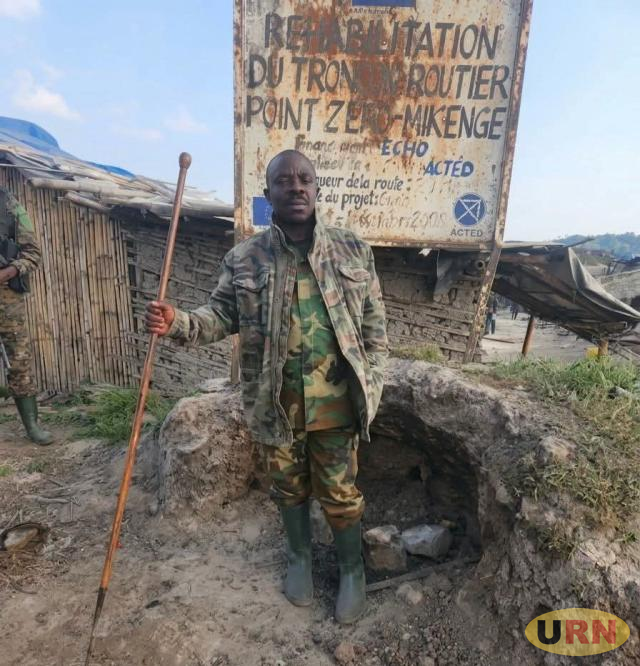
However, shortly after the statement was released, M23 commanders, including Deputy Chief of General Staff Gen. Bernard Maheshe Byamungu and spokesperson Lawrence Kanyuka, published photographs showing themselves patrolling Point Zero.
Kanyuka also released a video alongside another M23 fighter, claiming that FARDC and its allied forces were “very weak.”Other senior M23/AFC leaders, including the movement’s president Bertrand Bisimwa and Twirwaneho leaders within the AFC/M23 alliance, shared photographs and videos showing themselves dancing with Banyamulenge civilians in Minembwe, South Kivu Province.
The Congolese government has consistently accused Rwanda of supporting the M23 rebellion, allegations that both the Rwandan government and M23/AFC have repeatedly denied.
M23/AFC says its armed campaign seeks to address corruption, xenophobia and discrimination against certain communities in the DRC. In early 2025, the movement launched a major offensive across eastern Congo, capturing several strategic towns and heightening concerns over a wider regional conflict-URN. Give us feedback on this story through our email: kamwokyatimes@gmail.com