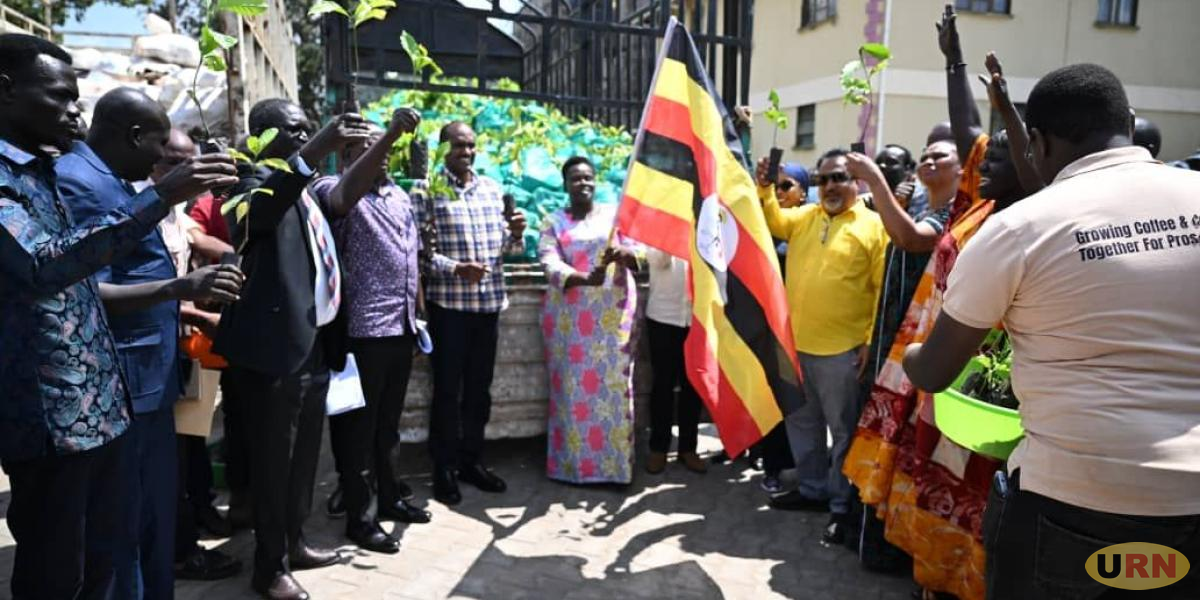
The government has launched a campaign to increase coffee, cocoa, and banana production in the Teso Sub-region as part of efforts to boost household incomes and fight poverty. The campaign was launched on Saturday in Katakwi District by Vice President Jessica Alupo alongside officials from the Ministry of Agriculture, Animal Industry and Fisheries (MAAIF) and leaders from the Teso Sub-region, with more than 80 million coffee, cocoa, and banana seedlings rolled out for farmers.
The initiative follows scientific assessments by the Ministry of Agriculture indicating that soils in Teso are suitable for coffee production, creating opportunities for the region to diversify beyond traditional livelihoods. The programme targets the 12 districts and cities in Teso, including Katakwi, Amuria, Soroti City, Soroti District, Kalaki, Kumi Municipality, Kumi District, Serere, Kapelebyong, Kaberamaido, and Bukedea, with coffee and cocoa promoted as alternative cash crops.
The government says the intervention is aligned with the 2017 coffee roadmap, which set a target of producing 20 million 60-kilogram bags of coffee annually by 2030 through expansion of coffee growing, improved seedlings, and increased export earnings. Speaking during the launch, Vice President Alupo urged the Ministry of Agriculture to strengthen support services for farmers from planting to harvesting, saying high-value crops such as coffee can transform household incomes and contribute to economic growth.

She said increased production of coffee and cocoa would support industrial development, create jobs, and improve livelihoods. Alupo said Uganda’s economic transformation has been built on expanding agricultural production, noting that coffee and cocoa have become important contributors to the economy. She said coffee currently contributes about two billion US dollars to Uganda’s economy, while cocoa contributes about one billion US dollars. The Vice President said the government’s economic strategy has moved through different phases, including restoring traditional cash crops, diversifying production, and promoting a knowledge-based economy driven by science and innovation.
She added that investments in infrastructure, including roads, energy, and ICT, have supported Uganda’s economic growth. Agriculture Minister Frank Tumwebaze said the government is committed to providing resources to support the programme and will soon announce mechanisms to ensure farmers access seedlings either freely or at subsidized prices.
Tumwebaze said the ministry is developing strategies to ensure the seedlings reach farmers across the country. Farmers welcomed the initiative but raised concerns over drought and the need for irrigation support. Moses Okwi, a farmer from Magoro in Serere District, said coffee has performed well in Teso, but drought remains the biggest challenge affecting production. Okwi, who leads an association of 70 private coffee farmers, said each farmer has planted more than 1,000 coffee seedlings but urged farmers to adopt water conservation methods to cope with dry conditions.
Lilian Amuge, a farmer from Katakwi Town Council, asked the government to invest in irrigation systems to help farmers manage prolonged sunshine and changing weather patterns. Geoffrey Omolo, the Katakwi District LC5 Chairperson, welcomed the government intervention, saying coffee growing has the potential to improve livelihoods in the region. However, he urged the government to provide more technical support to farmers and agricultural officers to ensure the successful implementation of the programme-URN. Give us feedback on this story through our email: kamwokyatimes@gmail.com