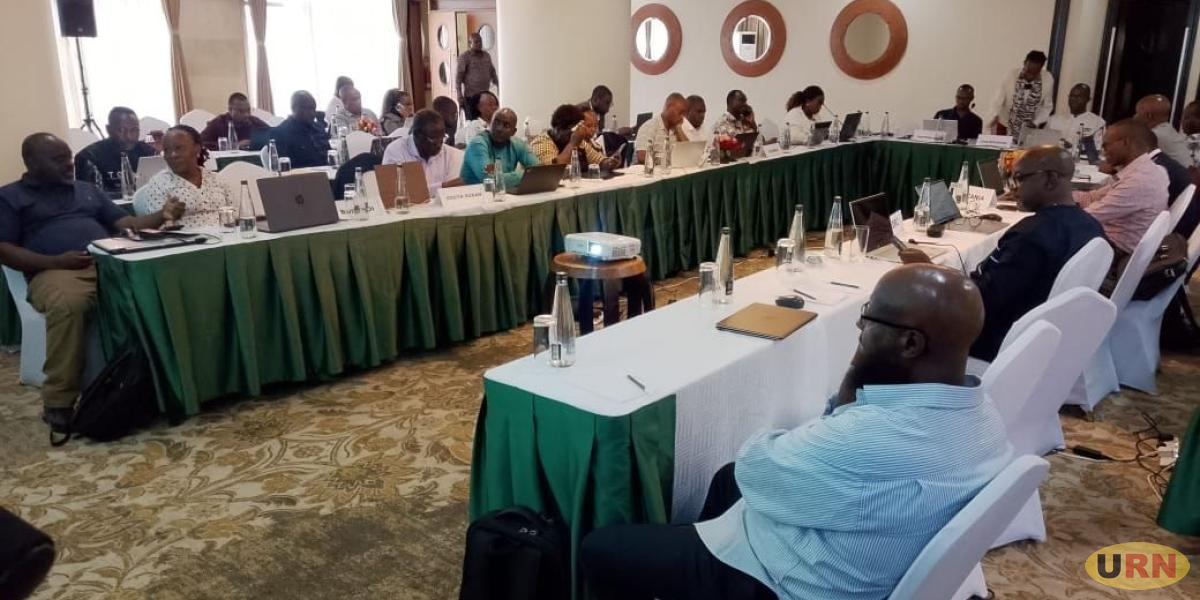
Uganda and Kenya have called on South Sudan and Tanzania to remove roadblocks, levies, and other trade restrictions affecting cargo trucks from East African Community (EAC) member states. The concerns were raised during the 40th EAC Regional Monitoring Committee meeting on Non-Tariff Barriers (NTBs) held in Kampala.
The 40th EAC monitoring Committee meeting in Kampala is geared at resolving the current outstanding Non-Tariff Barriers, which the Partner Heads of State meeting in Arusha, March 2026, directed that they should be ended by the end of June 2026.
It is noted that the 27 documented Non-Tariff Barriers negatively impact regional trade within the EAC states. The meeting, which opened on Monday, is to examine trade progress and commitments by partner states in ending trade restrictions as provided for under the EAC Customs Union.

Article 13 of the Customs Union Protocol provides for the elimination of Non-Tariff Barriers (NTBs) to promote Intra-EAC Trade.
A Non-Tariff Barrier (NTB) is a trade restriction–such as a quota, embargo, or sanction–that countries use to further their political and economic goals. Countries usually opt for Non-Tariff Barriers (NTBs) (rather than traditional tariffs) in international trade.
The Committee members from Uganda and Kenya said South Sudan continues to levy charges on trucks from other member states, contrary to the customs union protocol. They said several roadblocks targeteting argo trucks highly inconvenience them in reaching their destinations.
Among other major non-tariff barriers pointed out by the Committee members is Tanzania’s charge of USD 100 for an entry permit for every business-oriented entry made by EAC citizens visiting Tanzania.
The Kampala meeting also blamed Tanzania over her truck charges regime and urged the immediate removal of the levies regarded as a major Non-Tariff Barrier.
It is anticipated that these bilateral engagements, which are focused on resolving specific Non-Tariff Barriers, will strengthen cross-border cooperation and address trade-related challenges affecting the movements of goods, people, and services.
The committee has a checklist of activities and objectives so far achieved to ensure ease of Partner States doing business among themselves without any of the outlined Non-Tariff Barriers.
EAC partner States are grappling with 27 Non-Tariff Barriers that remain unresolved within the time-bound programs, a mechanism used by EAC to monitor and report outstanding Non-Tariff Barriers (NTBs).
During a feasibility study of the single window system, it was assessed that legal, institutional, technical, and financial requirements were necessary to implement an integrated electronic platform that would allow traders to submit standardized information and documents through a single-entry point across all Partner States.
This initiative is aimed at reducing administrative bottlenecks, minimizing duplication of procedures among border agencies, enhancing transparency, and expediting clearance processes.
High on the agenda is the official launch of the new Electronic Single Window system with the ABREMA (Burundi’s pharmaceutical and food safety regulatory) module, now operating on a fully web-based platform.
Once fully implemented, the Single Window System is expected to significantly reduce NTBs related to documentation requirements, delays, and procedural inefficiencies, thereby facilitating smoother cross-border trade within the EAC region-URN. Give us feedback on this story through our email: kamwokyatimes@gmail.com