The Supreme Court has ruled that courts cannot impose prison sentences that deny convicted persons the possibility of remission, declaring that such orders amount to judicial overreach because remission is an exclusive function of the Executive.
In a unanimous decision delivered by a panel led by Justice Stephen Musota, the court held that sentencing judges should only determine the appropriate punishment based on established sentencing principles. The panel comprised Justices Stephen Musota, Christopher Izama Madrama, Catherine Bamugemereire, Monica Mugenyi and Muzamiru Mutangula Kibeedi.
Decisions on whether a prisoner qualifies for remission, the justices said, fall solely within the mandate of the Uganda Prisons Service and, in certain cases, the President under the constitutional prerogative of mercy.

The court explained that remission is a post-sentencing administrative process provided for under the Prisons Act. It is intended to support effective prison management by rewarding inmates who demonstrate good conduct and industry while serving their sentences.
Under the law, eligible prisoners may have up to one-third of their custodial sentence remitted by prison authorities. Separately, Article 121(4)(d) of the Constitution empowers the President to remit all or part of a sentence or penalty through the exercise of the prerogative of mercy.
The justices said any attempt by the Judiciary to limit or eliminate the possibility of remission amounts to an encroachment on powers reserved for the Executive. They emphasised that judges should not pre-empt executive functions when passing sentence.
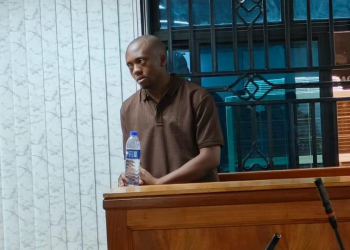
The ruling arose from an appeal filed by Olowo Wandera, who challenged a Court of Appeal decision that sentenced him to 40 years’ imprisonment without the possibility of remission. Wandera was convicted in 2007 by the High Court in Tororo for the murder of his wife, Scovia Owor.
Court records show that after a domestic dispute, Owor left Wandera and began living with another man. Wandera, assisted by two accomplices, later ambushed and hacked her to death. The High Court convicted him of murder and sentenced him to death.
On appeal, however, the Court of Appeal, comprising Justices Steven Kavuma, Augustine Nshimye Ssebuturo and Remmy Kasule, substituted the death sentence with a 40-year prison term but ordered that the sentence be served without remission.
In his appeal to the Supreme Court, Wandera argued that the Court of Appeal acted illegally by restricting his eligibility for remission because that power belongs exclusively to the Executive. The State Attorney conceded the argument, and the Supreme Court agreed.
The justices noted that the purpose of remission under the Prisons Act is to promote discipline, rehabilitation and the successful reintegration of offenders into society. They observed that rewarding good conduct through remission, while allowing prison authorities to withdraw that benefit for indiscipline, is central to the effective management of prisons.
The Supreme Court also noted that the Constitutional Court had previously reached the same conclusion in Sundya Muhamudu & 6 Others v Attorney General. Although the government appealed that decision, the Supreme Court has not yet determined the appeal.
Despite finding that the Court of Appeal had erred by excluding the possibility of remission, the Supreme Court did not alter Wandera’s 40-year prison sentence. Instead, it clarified that the sentence is subject to the ordinary legal framework governing remission-URN. Give us feedback on this story through our email: kamwokyatimes@gmail.com