Government accounting officers who ignore summonses from parliamentary committees risk undermining Parliament’s ability to hold them accountable for public money, Speaker Jacob Markson Oboth-Oboth has warned.
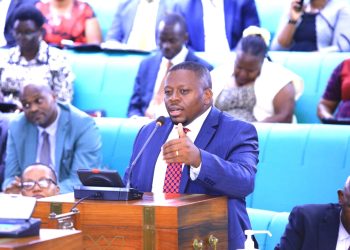
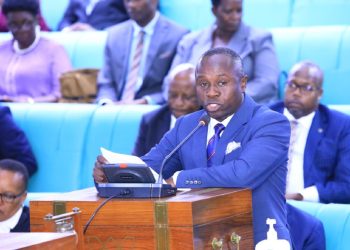
The Speaker made the remarks during Wednesday’s plenary sitting as Parliament’s oversight role came under scrutiny following difficulties faced by the Committee on Commissions, Statutory Authorities and State Enterprises (COSASE) in questioning officials from the Uganda Civil Aviation Authority.
“I would like to remind all accounting officers that it is their constitutional obligation to be accountable to the citizens of this country through Parliament, where they are represented. I therefore beseech them to appear whenever summoned.”

Parliamentary committees increasingly rely on accounting officers to explain government spending, audit queries, procurement decisions and the implementation of public programmes, in implementation of Article 90 of the Constitution, which gives parliamentary committees powers to investigate the conduct of public institutions.
While Article 164 also places a personal responsibility on public officers for the loss or misuse of public funds or property, it requires Parliament to monitor government expenditure and ensure that public resources are properly accounted for.
However, the COSASE Committee reported difficulties in proceeding with its scrutiny of the Uganda Civil Aviation Authority (UCAA). The committee had expected to question UCAA officials over audit concerns and allegations contained in a July 17 presidential directive concerning alleged corruption in the Ministry of Works and Transport and UCAA. However, UCAA Director General and Accounting Officer Fred K. Bamwesigye did not appear before the committee.
He was reportedly in Berlin, Germany, receiving medical treatment. Instead, the authority sent a team led by Deputy Director General Olive Birungi Lumonya, who told the committee that she had been acting as Director General for 33 days.
Her appearance raised questions about the legal authority under which she was acting and whether she was the appropriate official to answer questions concerning UCAA’s financial accountability.
The development put a spotlight on the broader challenge raised by the Speaker: when the official directly responsible for a public institution does not appear before a committee, Parliament may struggle to establish who is responsible for particular decisions and obtain answers to questions involving public funds.
Oboth’s warning therefore places accounting officers on notice that their responsibility to Parliament extends beyond managing public resources. They must also be available to explain how those resources are used when Parliament calls them to account-URN. Give us feedback on this story through our email: kamwokyatimes@gmail.com