For yet another of several times, Members of Parliament have returned to the hopeless dilapidation of Soroti Regional Referral Hospital. From annual health sector budget debates and Ministerial Policy Statements to committee reports and urgent statements on the floor of Parliament, legislators have consistently questioned why one of Uganda’s busiest referral hospitals continues to operate from ageing infrastructure despite repeated government promises to salvage it. At one point during debate, angry legislators described Soroti as “a sick hospital” struggling to care for patients.
The facility is the principal referral hospital for the Teso sub-region and also provides specialised services to patients from Karamoja, Sebei and parts of neighbouring regions. Yet despite repeated parliamentary scrutiny over the past five years, it continues to operate from ageing buildings amid critical staffing shortages, congestion and inadequate specialised facilities.
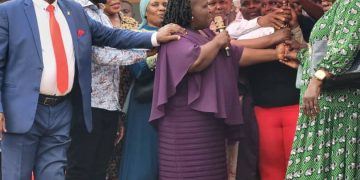
In the latest alarm, Soroti City Woman MP Joan Alobo Achom, who told Parliament that the hospital’s main operating theatre had become non-functional following an electrical fault, forcing the suspension of surgeries and leaving expectant mothers and other emergency patients with few options but to seek treatment elsewhere.

“We are so tired of complaining for 10 years now,” she told Parliament, saying women were dying or being referred elsewhere as surgery can no longer be conducted safely. Government Chief Whip and former Health Minister Dr Jane Ruth Aceng acknowledged the crisis, saying immediate repairs should be undertaken using the hospital’s development budget. She added that government had already approved a long-term rehabilitation programme with the Japan International Cooperation Agency (JICA).
Her response echoed assurances Parliament has heard over successive health sector budget debates. While ministers have consistently indicated that redevelopment plans exist, including the JICA-supported intervention -MP have continued to question the slow pace of implementation and the absence of major new infrastructure.
The facility has often featured in plenary debates, annual Ministerial Policy Statement discussions, Health Committee budget scrutiny and reports of the Committee on Government Assurances and Implementation.
During an oversight visit on 27 June 2024, the Committee on Government Assurances and Implementation heard from hospital management that despite attaining Regional Referral Hospital status in 1996, no significant infrastructure expansion had taken place. Consultant Surgeon Prof. Mary Margaret Ajiko told MPs that the hospital was serving a catchment population of about 2.7 million people using infrastructure that had changed little over nearly three decades.
The committee found that many of the hospital’s buildings dated back to the 1940s and had deteriorated beyond economical renovation. It also heard that congestion had become severe across almost every department because the hospital’s physical capacity had failed to keep pace with rising patient numbers. A year later, Parliament again criticised government over delays in constructing a new referral hospital despite earlier commitments and the availability of approximately 60 acres of land secured through Soroti University and the local government for future expansion.
During debate on the Committee on Government Assurances and Implementation report, MPs noted that the hospital still lacked adequate operating theatres, a fully-fledged Accident and Emergency Unit, sufficient outpatient space and a functional Intensive Care Unit. Legislators questioned why years after government commitments, construction of a modern regional referral hospital had yet to commence.
The concerns raised in committee reports mirror issues that have surfaced repeatedly during Parliament’s consideration of the Ministry of Health’s annual Ministerial Policy Statements. Under Vote 411, MPs have consistently questioned whether allocations for infrastructure, staffing, maintenance and specialised equipment are sufficient to meet the demands placed on one of eastern Uganda’s busiest referral facilities.
Among the key issues raised for the delays is financing, the prolonged administrative processes surrounding the transfer of land involving Soroti University and the Ministry of Health, and government’s shift towards externally financed interventions through JICA. As a result, sophisticated medical equipment is being installed in infrastructure that many engineers, clinicians and legislators believe has outlived its design life.
Ironically, Soroti Regional Referral Hospital has earned national recognition for performing highly specialised procedures despite operating under extremely difficult conditions. In 2021, a surgical team led by consultant surgeon Dr Joseph Epodoi successfully separated a living conjoined twin from her deceased sibling after rejection from Uganda’s topmost health facility Mulago National Referral Hospital. The operation attracted national attention and Parliament later recognised the achievement as an example of the expertise available at the hospital despite its poor infrastructure.
The hospital has also successfully managed rare obstetric emergencies, including abdominal pregnancies in which a fetus develops outside the uterus- one of the rarest and most dangerous forms of ectopic pregnancy requiring exceptional surgical skill. Beyond these, the facility has established itself as an important regional centre for complex urological surgery, advanced obstetric care, trauma surgery and the training of medical interns.
These achievements have repeatedly been cited by MPs as evidence that the hospital’s health workers continue to outperform the infrastructure available to them. As Tororo Woman MP Sarah Opendi observed during debate, the same doctors who successfully separated conjoined twins continue to work in operating theatres that “can make one shed tears.” Yet the breakdown of the operating theatre is only one manifestation of broader systemic challenges.
Hospital management has consistently cited severe congestion across nearly every department. The outpatient department now serves several times the number of patients it was originally designed to accommodate.
Successive Ministerial Policy Statements have identified recruitment of specialists, funding for the wage bill and maintenance of critical medical equipment as recurring priorities. According to the Ministry of Health’s Human Resources for Health data, Soroti Regional Referral Hospital previously operated with about 253 staff against an approved establishment of 340 under the earlier staffing structure, leaving roughly one-quarter of positions vacant.
Following the introduction of expanded staffing norms for Regional Referral Hospitals, the approved establishment increased significantly. However, recruitment has not kept pace because government has not fully funded the wage bill. Consequently, relatively few specialists continue to serve patients drawn from more than ten districts across Teso, Karamoja, Sebei and neighbouring regions.
Perhaps the greatest challenge, however, remains infrastructure. Most of the buildings currently in use were constructed in the 1940s and 1950s. This has been highlighted several Hospital administrators during parliamentary committee scrutiny meetings, indicating that many of the structures have deteriorated beyond economical repair.
Leaking roofs, overcrowded wards, inadequate operating theatres, ageing electrical systems and insufficient clinical space have become defining features of a hospital expected to function as a modern regional referral centre. The recent electrical failure that rendered the main operating theatre unusable exposed vulnerabilities that engineers, clinicians and legislators have warned about for years-URN. Give us feedback on this story through our email: kamwokyatimes@gmail.com