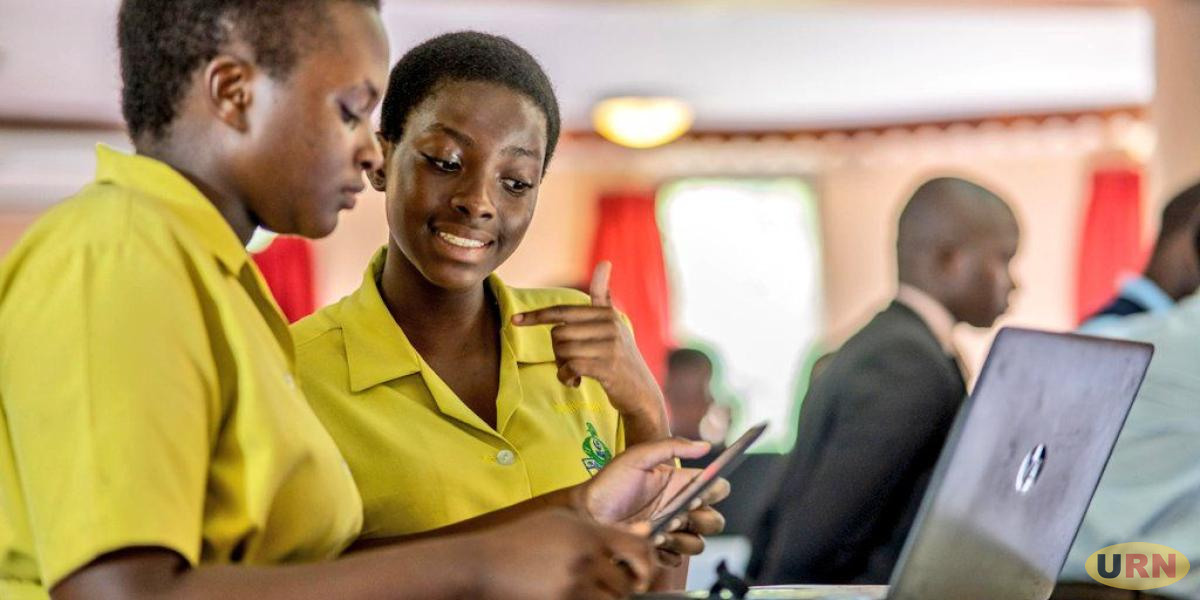
As schools close for the holidays, scenes of children glued to their phones, dancing on TikTok, chatting on Snapchat, or scrolling endlessly through Instagram have become a common sight. What was once occasional entertainment has turned into an all-consuming habit for many young people.
With this surge in screen time, parents, teachers, and cultural leaders are raising urgent alarms and calling for stricter controls, even outright bans, on social media access for children. The message to parents this holiday season has been consistent, voiced at nearly every public event. Speakers are urging parents to monitor and limit how children use their gadgets.
During a recent function at Greenhill Academy, Waggwa Nsibirwa, the Second Deputy Katikkiro of Buganda, urged parents to actively guide their children on the proper use of phones and social media platforms.

Annet Mbabazi, a concerned parent in Wakiso district, says many parents underestimate this risk. “Parents worry about what children watch. They should worry more about what children are doing,” she said. She recalls a group of girls posting content on TikTok that would shock most adults. “If a parent saw it, they would cry,” she added.
Her view feeds into a growing call for tougher action. Some want gadgets removed from young learners altogether. Others push for strict limits. This debate stretches far beyond Uganda. Governments across the world have started to act. In December 2025, Australia became the first country to enforce a nationwide ban on social media for children under 16. Platforms such as Instagram, TikTok, Facebook, and X now face heavy fines if they fail to block underage users.
Other countries have followed. Greece plans restrictions for children under 15 by 2027. Austria targets under-14s. France has already passed similar measures. Denmark, Malaysia, and Indonesia are moving in the same direction. Those supporting the matter point to clear evidence of harm, including increased anxiety, depression, sleep disruption, exposure to explicit content, and cyberbullying.
In Uganda, where over 70 percent of internet users are aged 15-35, a study by the Uganda Youth Development Link found that 40 percent of youth experience anxiety and stress related to social media use. Yet critics argue that bans may drive children to unregulated spaces, limit digital literacy, and be difficult to enforce. Major social media platforms officially restrict accounts to users aged 13 or 18 and above, but these rules are widely ignored.
Children lie about their age or are even helped by their parents to create accounts. Hadija Mwanje, a vocal advocate for child online protection, strongly supports a ban on social media for children in Uganda. She argues that firm government action is overdue. “We all know that all platforms, actually, especially social media, restrict children from accessing the platforms,” Mwanje said. “But we all know that children play around with these, and they can get online. Some children have even been added by their parents, surprisingly. This means that they are consuming information that is not their age.”
Mwanje insists that without strict national controls or an outright ban for minors, the situation will only get worse. “It is really, really important that there are controls for everything,” she emphasised. “When it comes to children and online activities, there have to be controls… Our children are receiving content that is not their age. This has resulted in a lot of bad things.”
She pointed to the growing mental health crisis among young people. “Lately, we have people saying, ‘ My child is stressed. As we were growing up, it was very hard to find a child stressed… Because children are taking in things that their young brains cannot process. And they end up with mental issues.” Mwanje warned about the permanent digital footprint children are creating and praised countries taking bold action.
She also criticised current measures as too weak, adding that UCC has something that speaks about control in terms of children’s content, but it is not very concrete. Rev. Fr. Lazar Arasu, Headmaster of Don Bosco SS in Gulu, has also voiced his concerns, noting that the risks brought by the use of social media and the use of smartphones in general are more than the apparent benefits.
“Children are exposed to unlimited characters, personalities, and people of different traits to which they compare themselves… Researchers on children and the digital world have found that children and teenagers are unable to distinguish the real world from real people with that of the unreal world that exists in the digital world,” he said.
Deo Kajimu, the Mukwenda (Singo County Chief in Buganda Kingdom), dismissed claims that children mainly use social media for studies. According to him, children see these platforms purely as spaces for entertainment and socialising. He recommended that if children are allowed to have phones at home or school, social media applications should not be installed on them.
Petronilla Nakabuubi, a teacher and parent, says social media carries some benefits, but the risks are greater. She points to addiction and exposure to content that children would not seek out on their own. In her view, without firm action on children’s use of social media, the country risks serious long-term consequences.
Yet for many children, social media feels like an essential part of life used for schoolwork, staying in touch with friends, and exploring the world beyond their communities. “I use TikTok to learn dance moves and sometimes English from videos,” says 17-year-old Amina Nakato from Kampala. “But sometimes I see bad fights or people posting naked pictures. It makes me scared, but I don’t tell my mum because she will take my phone.”
Another child, Joshua, not real names, from Wakiso, added, “Instagram helps me see what life is like in other countries. I want to be a footballer, and I follow players. But there is pressure; everyone shows perfect lives, and if you don’t have nice clothes or a phone, you feel small. At night, I can’t sleep because I’m scrolling.”
A 2020 UCC child online survey highlighted that one in five children had seen sexual images online, with social networking sites a common source. Urban children and older teens faced higher exposure. The Uganda Communications Commission (UCC) has previously emphasized online child safety, calling for parental monitoring and platform responsibility-URN. Give us feedback on this story through our email: kamwokyatimes@gmail.com