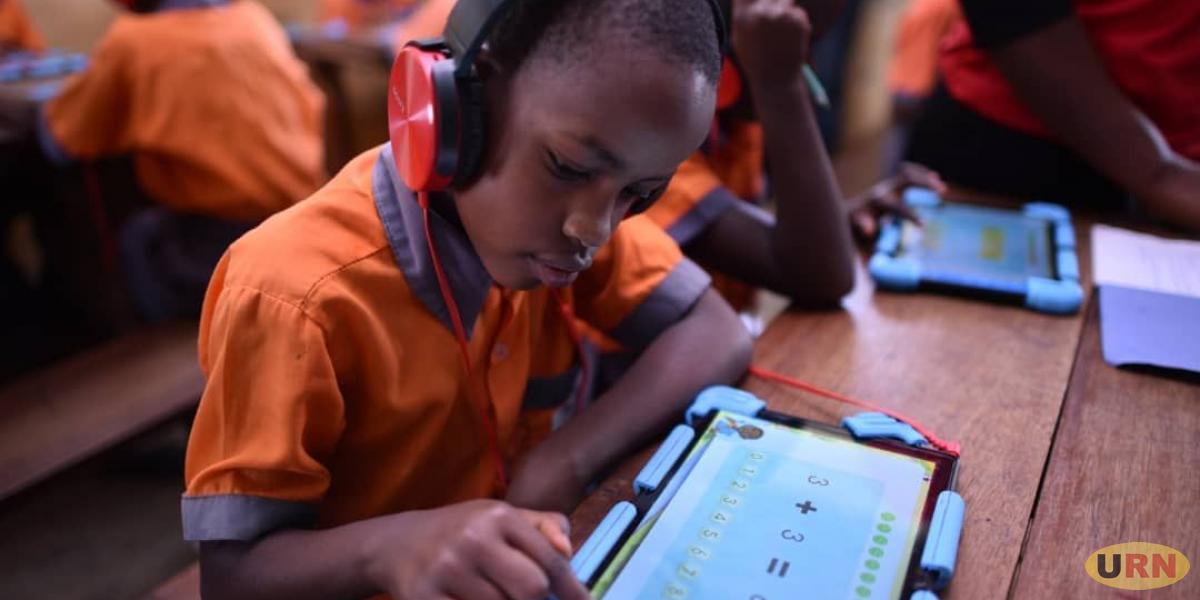
Many Early Childhood Care and Education (ECCE) centres, including nursery schools and kindergartens across the country, had enthusiastically embraced tablets, interactive TVs, and digital smart boards, weaving them into daily lessons for toddlers as young as three years old.
Now, the Ministry of Education and Sports, through the newly launched ECCE Policy, standards, and guidelines, is imposing strict limits on children’s exposure to ICT and digital gadgets, prioritising play-based learning and healthy development over early tech immersion. The guidelines, part of the comprehensive ECCE Policy 2025 unveiled last week, explicitly restrict screen time in a bid to safeguard young brains.
“Children in ECCE centers will not be subjected to more than two (02) hours, cumulatively, of exposure to ICT and digital gadgets in a single day at their respective center,” the guidelines read in part. Furthermore, continuous exposure is capped at 30 minutes at a time. The policy also warns against “deeply intrusive” technologies such as Augmented Virtual Reality, citing risks of addiction and disruption to brain development.

In recent years, a growing number of private and some publicly linked nursery schools invested heavily in modern technology. Tablets loaded with educational apps, wall-mounted TVs for animated lessons, and digital boards for interactive storytelling became selling points for parents eager to give their children a “head start” in a digital world.
Some centres integrated these tools into core activities, from alphabet tracing on touchscreens to virtual nature walks, marketing them as essential preparation for primary school. Dr. Hajat Safinah Mutumba, Assistant Commissioner in charge of Early Childhood Care and Education (ECCE) at the Ministry of Education and Sports, explained that the restrictions on digital tools for young children stem from the fact that their senses and brains are still developing. Excessive exposure to screens and over-reliance on digital devices can lead to cognitive problems.
Dr Mutumba added that the policy aims to ensure children develop a broad range of competencies, such as critical thinking, problem-solving, and other essential skills, which may not develop properly if learners become overly dependent on digital tools. Petronilla Nakabuubi, Headteacher of Kampala Kindergarten, has backed the Ministry’s policy restricting digital tools in early childhood education, saying it places the right focus on foundational skills built through real-world experiences rather than early screen exposure.
Nakabuubi, whose school has over 75 years of experience educating young learners, said children at this stage learn best in natural, play-based environments where they explore, interact, and engage in hands-on activities. She added that the use of digital devices should be delayed and, when introduced, kept to a minimum to avoid disrupting healthy child development.
Over the years, child development experts and health officials have increasingly raised concerns about overstimulation, reduced physical activity, social interaction, and potential long-term effects on attention spans and sleep in very young children. The new standards address these worries head-on while still allowing measured technology use.
Guideline 124 states that integration of ICT must primarily support cognitive, social, emotional, and physical development. Furthermore, the policy permits digital tools within play-based learning to encourage exploration, creativity, and problem-solving, but only as a supportive mechanism, not the main event. But Centres must also provide ongoing professional development for teachers on responsible ICT integration.
Some parents’ groups have expressed relief that the policy balances modernity with protection. “We want our children to be tech-savvy, but not at the expense of their health or childhood,” Gertrude Namutebi parents of two, noted-URN. Give us feedback on this story through our email: kamwokyatimes@gmail.com