By KT Reporter
Despite ongoing government campaigns aimed at promoting business formalisation, many Ugandan entrepreneurs continue to face significant hurdles when attempting to register their businesses and certify their products.
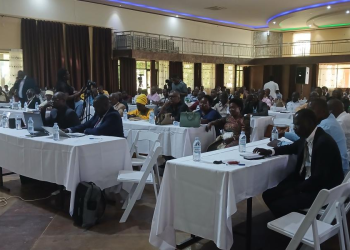
Business owners attending a policy dialogue by the Economic Policy Research Centre (EPRC) pointed out persistent bureaucratic, financial, and regulatory barriers that discourage formalisation, leaving many to operate informally.

Issa Sekitto, the Acting Chairperson of the Kampala City Traders Association (KACITA-Uganda), noted that while formalisation offers benefits such as the ability to reclaim Value Added Tax, many informal traders see little incentive to register.
Sekitto explained that for certain products, such as electronics, the cost of certifying a single item can exceed 3 million Shillings. He added that any failure during the certification process can lead to additional expenses, potentially running into millions more, alongside time-consuming bureaucratic procedures.
Because of these challenges, Sekitto says, some traders opt to bypass formal channels entirely, sometimes resorting to smuggling, a problem exacerbated by the lack of harmonised taxes across the East African region.
Sekitto spoke after Emmanuel Erem, a Research Analyst in the Macro Economics Department at EPRC, presented findings from a study examining whether Uganda’s regulatory environment encourages or discourages formalisation.
Erem noted that while initiatives such as the Tax Payer Register Expansion Programme (TREP), the Fiscal Receipting and Invoicing System (EFRIS), and Kampala’s online trade license registration system exist, little attention has been given to streamlining the broader regulatory framework to genuinely support business and worker formalisation.
He said that in 2012, the government attempted to reform business licenses, fees, and levies after discovering that ministries and local governments issued 790 licenses, permits, and user charges nationwide.
High administrative costs remained a major burden, particularly in agriculture, trade, tourism, and the transport and logistics sectors. However, this reform remains incomplete; out of 137 proposed license eliminations or reclassifications, only 59 have been implemented.
EPRC data shows that informality is most prevalent in agriculture and mining, while the lowest levels are found in utilities and education. Joseph Enyimu, Commissioner of Economic Development Policy at the Ministry of Finance, emphasised the need for a dedicated agency to register non-individual business entities to improve formalisation.
The analysis also examined informal employment, revealing stark vulnerabilities: 92.9 per cent of informal workers have no insurance, 76.6 per cent work without contracts, 72.2 per cent lack social security contributions, and 71 per cent have no employment benefits such as annual or maternity leave.
Erem pointed out the glaring enforcement gaps, with only 21 labour inspectors overseeing more than ten million workers, making the Ministry of Gender, Labour, and Social Development’s labour inspection office largely ineffective.
Enock Mutambi, a labour expert at the Ministry, acknowledged that while the office is operational, there are too few officials to cover the country adequately. Currently, there are 117 labour inspectors at the local government level, essentially one per district.
-URN. Give us feedback on this story through our email: kamwokyatimes@gmail.com