By KT Reporter
There are mixed reactions from the civil society to the proposed amendments to tax-related laws, which are aimed at boosting revenues for the 2025/2026 national budget. The Finance, Planning, and Economic Development Minister, Matia Kasaija, has presented seven bills before Parliament, including the Income Tax (Amendment) Bill, the Excise Duty (Amendment) Bill, and the Value Added Tax (VAT) (Amendment) Bill.
Others are the Stamp Duty (Amendment) Bill, Tax Procedures Code (Amendment) Bill, Hides and Skins (Export Duty) (Amendment Bill), and The External Trade (Amendment Bill). United under the 54-member Tax Justice Alliance Uganda, the NGOs said the government has not done enough in the proposals to prevent financial losses through illicit flows, tax incentives, and administration, among others.

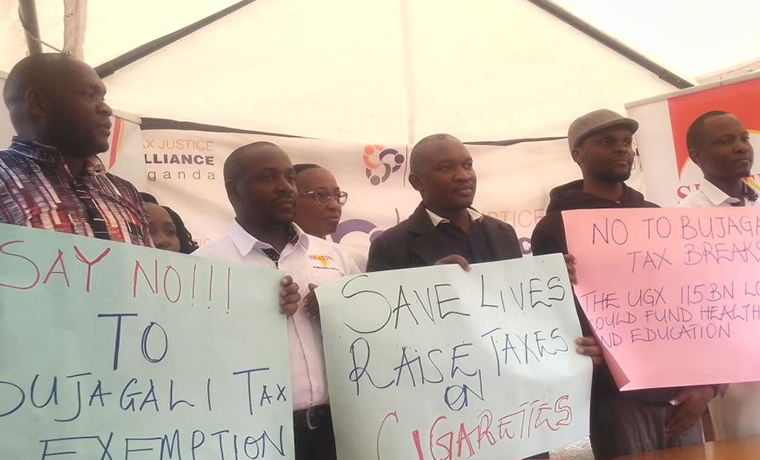
Presenting a joint statement to the media, Aloysius Kitengo, Program Coordinator, Financing for Development, SEATINI Uganda, called on the government to take bold steps in improving the governance of tax incentives. “Unjustified exemptions must be reviewed and rationalised to curb revenue loss and boost corporate income tax collections,” he said.
The civil society proposals under the theme: “Advocating for a Fair and Accountable Tax System in Uganda,” also called out the government over the mismanagement of gold exports, which has resulted in revenue losses. They said, for example, that gold worth 3.01 Billion Dollars was exported in the financial year 2023/2024 without permits, which, they say, undermines revenue collection and regulatory compliance.
“As the Tax Justice Alliance Uganda, we reaffirm our commitment to a tax system rooted in equity, public participation, and transparent, well-governed exemptions that deliver value for all Ugandans,” Kitengo said. This comes amidst a continuous decline in external financing sources, as developing partners withhold resources for their domestic needs.
In the Income Tax (Amendment) Bill, the Government has proposed another tax exemption to the Bujagali Project up to June 30, 2032. Questioning the rationale, the civil society said Bujagali Energy Ltd had been making profits and paying dividends, meaning it’s self-sustaining already.
However, they said, the ten-year period it has enjoyed has not helped bring down electricity tariffs for the last-mile consumers. “Electricity tariffs have not gone down in over ten years of exemptions-Ugandans are still paying high power costs,” he said, adding, “This exemption could cost Uganda 805 Billion Shillings over seven years or 115 Billion annually, yet the government claims there is no money for health, education, or infrastructure!,” said John Kafuko, Health for Tax Justice Network.
They called on the government to renegotiate the Bujagali deal before extending the waiver, saying it was a bad deal from the beginning. The NGOs welcomed meanwhile, welcomed the proposed exemption of startup businesses established by a citizen for a period of three years from tax.
But they suggested that three years is too short a time for a startup to have become profitable and therefore sustainable, proposing a five-year holiday.
On tax exemptions generally, they welcomed government improvement in the criteria used to set up the areas for exemption and the terms and conditions that should be fulfilled by a benefiting company. Sophie Nampewo, Finance for Development Coordinator, Oxfam in Uganda, welcomed the proposal, saying it enforces accountability and protects public revenue, but expressed worry over its enforcement.
Calling for transparency, Nampewo questioned why URA’s quarterly reports on the monitoring of tax exemptions are never made public, which would make the incentives regime more transparent instead of waiting for the Auditor General’s reports. She also called for more specific provisions in the law, giving an example of job creation for Ugandans as a condition for incentives, which is abused by the investors taking up all the good jobs and leaving casual positions for citizens.
The group also said that the government continues to focus on certain areas and leave out others where taxes would come from, with added advantages. These include luxury items and goods dangerous to health, like tobacco. They welcomed the government’s move to raise taxes on tobacco, after more than seven years, but added that the current structure will not impact prices, nor will it generate enough revenue to mitigate the disease burden from tobacco use.
“Uganda is a signatory to the WHO Framework Convention on Tobacco Control and has domesticated the Tobacco Control Act, so the amendment must follow Article 6 and be designed to raise prices meaningfully,” said Moses Talibita, Legal Officer, Uganda National Health Consumers’ Organisation, said, adding that increments on tobacco products should be annual.
The current tax structure favors locally manufactured tobacco over imported products.
The crusaders say the Government must eliminate this preferential treatment and create harmony in taxation for fairness and effectiveness. “All tobacco products are harmful, regardless of where they are imported, they would have worked at saving citizens and tree populations.”
On their part, Transparency International Uganda said the country had the capacity to raise the resources needed to fund its development, but persistent loopholes, especially in poorly negotiated tax waivers, continue to undermine the revenue potential.
“Tax waivers, like the one proposed for Bujagali, show a pattern of poor negotiation. Government keeps losing revenue equivalent to entire ministerial budgets, like that for tourism, without seeing the promised returns,” said David Kizito, Program Officer, Transparency International Uganda.
The joint statement also opposed the proposed fuel tax increase, saying the proposed hikes are coming too soon, just after a year.
“Following a 2024 hike, raising excise duty again in 2025 is unjust. It will raise production costs and burden citizens still recovering from COVID-19 impacts,” the statement said.
“We are happy not to see a fuel price increase in the current proposals. The current prices are already choking. We do not expect the government to bring back this proposal again,” said Oluma Kennedy, Coordinator, Uganda Parliamentary Network on Illicit Financial Flows and Tax Justice-URN. Give us feedback on this story through our email: kamwokyatimes@gmail.com