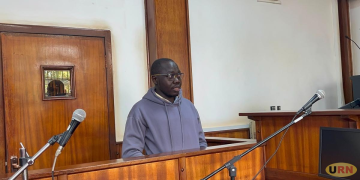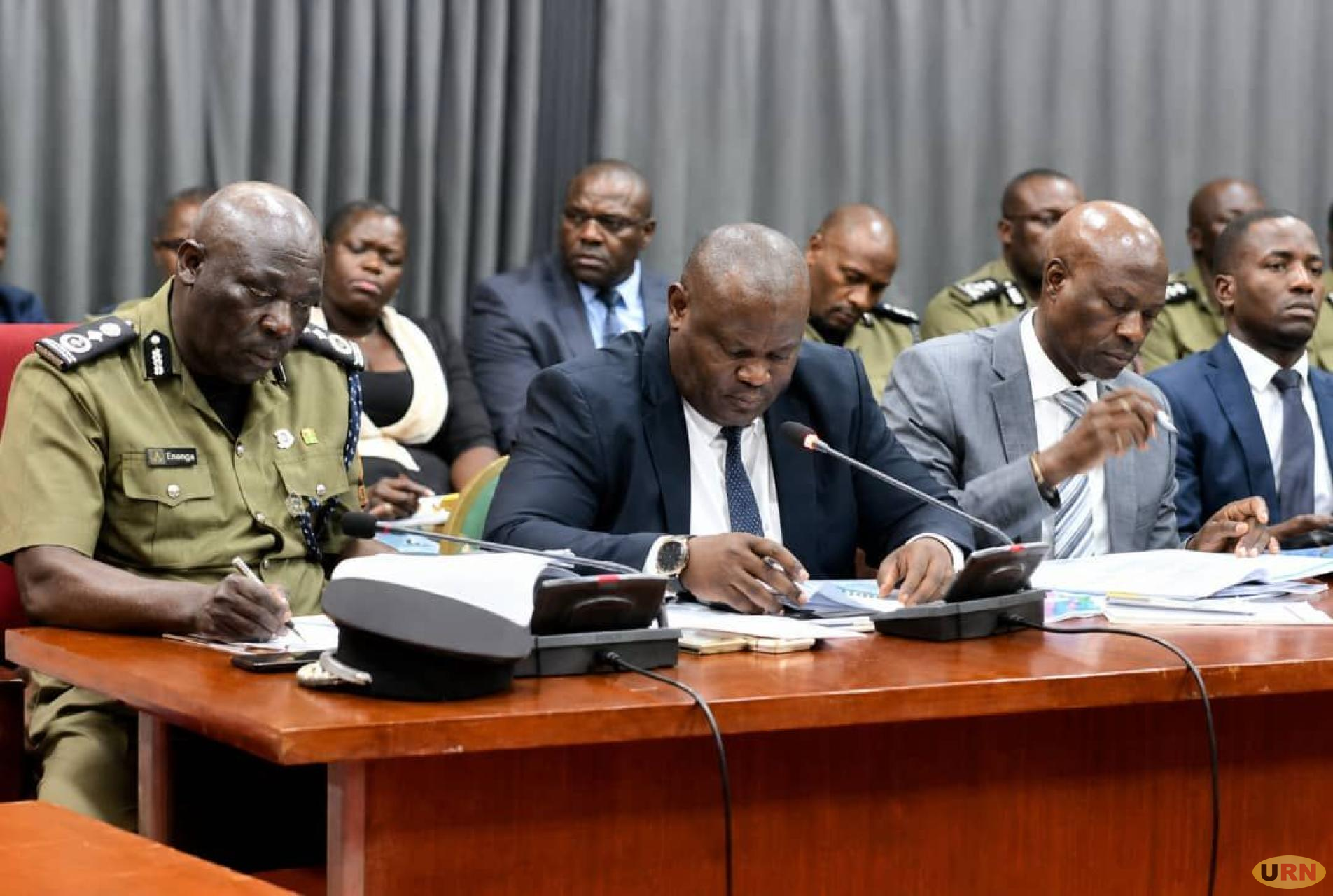
Police have admitted difficulty explaining how people reported missing or allegedly picked up by unidentified security operatives later “miraculously” reappear at police stations and are immediately produced before courts of law. The Deputy Inspector General of Police James Ochaya revealed this on Thursday while appearing before the Central Public Accounts Committee (PAC) of parliament together with other police officials.
MPs questioned the police over the force’s ability to account for people whose whereabouts became unknown following alleged arrests by security personnel. Ochaya acknowledged that the circumstances surrounding the disappearance and subsequent reappearance of some individuals remain difficult for police to explain. Mbale City Industrial Division Member of Parliament, Karim Masaba, challenged the police to explain whether the force was still in charge of arrests and detention, particularly in cases where individuals disappear for days before resurfacing in police custody and facing criminal charges.
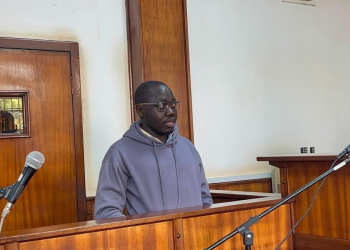
Masaba cited the case of former Butambala County MP Muhammad Muwanga Kivumbi, who disappeared shortly after being granted bail by the High Court in July and later resurfaced at Nateete Police Station before being taken to court. He questioned why police would be unable to account for Kivumbi during the period when his family, lawyers and Parliament were demanding information about his whereabouts, yet the force quickly took charge of him once he resurfaced and proceeded with criminal charges.

In response, Ochaya said the circumstances surrounding such cases were difficult to explain, particularly where individuals allegedly appear at police stations after periods during which the police had denied holding them. The committee chairperson, Patrick Oshabe Nsamba, appeared to agree with the police’s explanation, observing that it was indeed “difficult to explain” such circumstances.
Kivumbi’s case has become one of the most prominent examples of the accountability questions surrounding arrests and alleged enforced disappearances in Uganda this year. Kivumbi was granted Shs10 million cash bail by the International Crimes Division of the High Court on July 9, 2026, after spending about six months on remand over terrorism-related charges. His lawyers said he was intercepted the following day at a police checkpoint near Mpigi by unidentified armed men who allegedly forced him into a vehicle commonly known as a “drone.”
For almost three weeks, his family and lawyers could not establish his whereabouts. Police and the Uganda People’s Defence Forces denied holding him, with police telling the court that inquiries at its units and stations had found no record showing that Kivumbi had been arrested or detained. He eventually resurfaced at Nateete Police Station on July 29 and was subsequently taken to Butambala Magistrates’ Court, where he was charged with incitement to violence and managing an unlawful society. He denied the charges and was remanded to prison.
The development has raised questions about the chain of command and responsibility for people who are allegedly picked up by armed security personnel but whose detention cannot initially be confirmed by the police. The issue is not unique to Kivumbi. In January, National Unity Platform’s Western Region Vice President Jolly Jackline Tukamushaba reportedly went missing a day before the 2026 elections.
She was allegedly taken by armed men dressed in UPDF uniforms from a hotel in Muhanga, Rukiga District, and reportedly held incommunicado. She resurfaced in February when she was produced before the Kabale Chief Magistrates’ Court and charged with incitement to violence. Her appearance in court came while a legal challenge to her alleged disappearance and detention was still pending.
Another case involved former Kampala Lord Mayor Erias Lukwago, who was taken from his home in Wakaliga on June 15 by armed men reportedly dressed in military uniform. His family and lawyers subsequently sought a habeas corpus order requiring security agencies, including the IGP, to account for him.
Lukwago was produced before the Makindye Chief Magistrates’ Court two days later and charged with misprision of treason. He denied the charge and was remanded to Luzira Prison. The cases have renewed concerns about alleged enforced disappearances, prolonged detention, and the constitutional requirement that an arrested person be produced before a court within 48 hours-URN. Give us feedback on this story through our email: kamwokyatimes@gmail.com