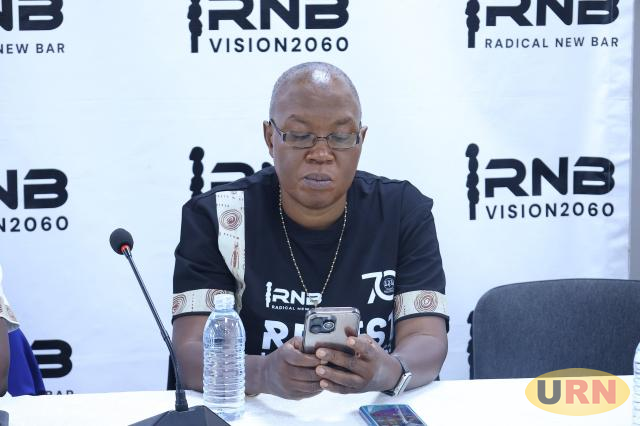
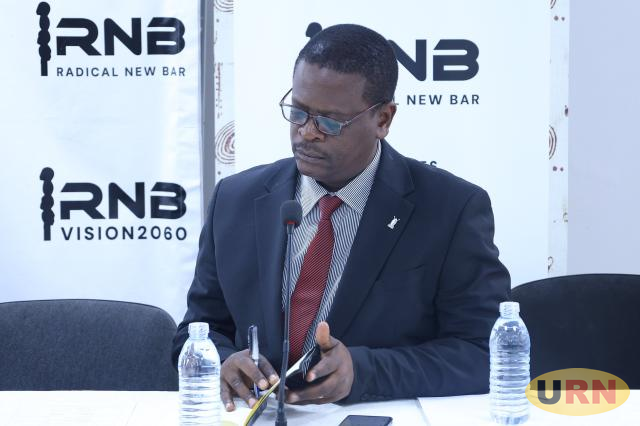
Senior leaders of the People’s Front for Freedom (PFF) have challenged the Uganda Law Society (ULS) to take a leading role in defending constitutionalism. They argue that the country’s constitutional order is under sustained attack from weakening institutions, growing impunity, and what they describe as increasing militarisation of governance. Speaking during the Uganda Law Society’s 70th anniversary celebrations under the theme “Upholding Constitutionalism in Changing Times,” PFF Speaker Salaamu Musumba and the party’s Buganda President, Dr. Michael Lulume Bayiga, painted a bleak picture of the state of constitutional governance.
They hailed Uganda Law Society’s Radical New Bar for speaking out against what they termed abuses of power. Musumba said Uganda’s 1995 Constitution, once celebrated as a landmark achievement born out of national consensus, has gradually lost its force through repeated amendments and disregard for its underlying principles.She noted with concern that the 1995 Constitution has gradually been emasculated with the several amendments of the last thirty years. The former Bugabula MP and Kamuli District Chairperson recalled the optimism that surrounded the birth of the 1995 Constitution.

Salaamu Musumba was among the members of the Sixth Parliament that largely began implementing the 1995 constitution after its promulgation by the Constituent Assembly, charged with implementing the new constitutional order after years of political instability and armed conflict.
“We celebrated the making of the 1995 Constitution because it was written by Ugandans for Ugandans. It represented our hopes after years of conflict and instability. Imperfect as it was, it became a milestone in our progress as a nation. Unfortunately, constitutionalism has not grown alongside it. Instead, the Constitution has been subverted, diluted and emasculated.”
She argued that the constitutional amendments have steadily weakened the original vision of the Constitution and called on the Uganda Law Society to undertake a comprehensive audit of its first thirty years. “The Constitution is not merely the text. It is the spirit behind it, the values, aspirations, and freedoms it was designed to protect,” said Musumba, one of the critics of the ruling NRM administration.
On the other hand, Dr Luluma Bayiga noted that constitutionalism requires leaders to accept that even those in power are limited by the supreme law.
“It is one thing to have a constitution like we have in Uganda, but it is another thing to believe in it and to practise it. Those in leadership led the process of making a constitution which they don’t believe in,” he said. According to Bayiga, repeated constitutional amendments have gradually transformed the country’s supreme law into an instrument that serves those in power rather than limiting them. “Uganda made the Constitution in 1995, which has been changed several times simply to suit the President’s will,” he noted.
Musumba also highlighted what she described as a less-discussed obstacle to constitutionalism, the Constitution’s inaccessibility to ordinary citizens. She noted that because it has not been widely translated into Uganda’s major local languages, millions of citizens remain unable to understand or invoke the rights guaranteed within it. “The Constitution remains an alien document,” she said, arguing that citizens cannot defend rights they cannot fully comprehend.
Citing the case of Dr. Kiiza Besigye, Obeid Lutale, whom she alleged was abducted from Kenya, Musumba suggested Uganda is moving in the wrong direction. She said alleged abductions, torture, and arbitrary arrests have created an atmosphere of fear that now shapes her everyday life.
“Personally, I am psychologically tortured. Whenever I see a van, I’m expecting that I’m going to be picked up. At exactly ten o’clock today, as I arrived here, there was a pickup parked across the road. That ignites in my heart the emotional scars we have lived with since independence. Our grandparents and parents believed that in my generation, torture and lawlessness would be a thing of the past. Instead, we are witnessing the same cycle replaying itself with exact precision,” she revealed.
She argued that Uganda had emerged from past political violence determined never to normalise torture again. Instead, she said, many citizens once again live under constant anxiety. She linked those fears to the detention of opposition figures, including PFF leader Dr. Kizza Besigye, saying the response of institutions charged with protecting constitutional rights has been disappointing. She singled out religious leaders, cultural institutions, and regional bodies for what she described as their silence.
Bayiga described what he believes is another consequence of declining constitutionalism: a population gradually losing hope. Borrowing from Newton’s First Law of Motion, the medical doctor likened Ugandans to a body trapped in inertia. “The population is now inert. It is tired. It is resigned. Everybody is looking to God to intervene. People have spoken, and the brain is saturated with speeches. We no longer want to listen.”
He said that resignation is reflected in citizens witnessing violence and injustice without reacting because they have lost confidence that institutions will deliver justice. The two opposition leaders accused the Uganda People’s Defence Force and the Uganda Police Force of being the biggest threats to the rule of law in Uganda. Musumba argued that the military and other security institutions have drifted beyond the constitutional limits originally intended for them.
“The military and the security agencies have become the mother of all lawlessness in our country. The institutions that should protect citizens have instead become instruments of fear.”
She called on the Uganda Law Society to review the UPDF Act and educate the public on the constitutional role of a professional army. Musumba questioned whether Uganda’s military leadership reflects the standards expected of officers trained at prestigious international military academies.
“Can you inquire from the Royal Military Academy, Sandhurst, what kind of officers they produce? Can you also inquire from the United States Army Command and General Staff College at Fort Leavenworth what kind of products they produce and distribute to the world, so that we are comforted that we have the right people in the right places? If we have not healed the military, even constitutionally, we need another look at it.”
Meanwhile, Dr Bayiga alleged that militarisation has spread beyond the armed forces into virtually every sphere of public life. “We have a militarized political system where all institutions are militarized, Parliament, the Executive, the Judiciary, even private institutions. Everywhere you turn, there is someone exercising power through intimidation rather than the Constitution.”
He also criticised what he described as a judiciary increasingly influenced by political power rather than constitutional principle, arguing that public confidence in institutions has steadily declined. They, on the other hand, praised the Uganda Law Society’s Radical New Bar for continuing to challenge what she described as growing impunity at a time when many national and regional institutions have become ineffective.
She urged lawyers to expand their work beyond courtrooms by inspecting prisons, scrutinising plea bargaining, monitoring military justice, and building stronger international partnerships to defend human rights. “We are asking the Uganda Law Society to continue shining a light on the threats facing constitutionalism. Where regional and international institutions have remained silent, lawyers must step forward to defend human dignity, the rule of law, and the rights guaranteed under the Constitution.”
She warned that the country risks deeper instability if constitutional safeguards continue to weaken. “What you’re doing is averting a catastrophe that is heavily looming over our heads. The anger is palpable. The frustration is palpable. We need to build legal and intellectual resources that will defend the Constitution, constitutionalism, and human dignity for future generations.”
Bayiga likewise credited the Law Society with reinvigorating debate around constitutional governance. “Uganda is looking up to you to ensure that the judiciary delivers. The Uganda Law Society has become a source of oxygen for the justice system and has demonstrated that lawyers can stand up for the public and defend the rule of law.”
He noted that lawyers are uniquely positioned not only to interpret the Constitution but also to restore public confidence in democratic institutions. Their calls come amid continuing national debate over constitutional governance, the role of security agencies, and the protection of civil liberties.
The government has consistently maintained that security agencies operate within the law and that arrests, prosecutions, and security operations are conducted in accordance with the Constitution and Uganda’s legal framework. Officials have repeatedly rejected allegations of systematic torture or politically motivated persecution, saying reported abuses are investigated through the appropriate legal processes. The Uganda Human Rights Commission has similarly said it continues to investigate complaints of torture, unlawful detention, and other human rights violations while urging accountability by all state agencies-URN. Give us feedback on this story through our email: kamwokyatimes@gmail.com