The exhumation of the remains of legendary musician Paul Job Kafeero for DNA testing has reignited debate over paternity testing in Uganda. While scientists insist DNA remains one of the most reliable tools for establishing biological relationships, legal and human rights experts argue that the growing reliance on DNA evidence has led to difficult questions about inheritance, privacy, children’s welfare and the limits of scientific truth.
The request, brought following an order from the Magistrate’s Court in Mengo, has elicited divided public opinion. To some, the exercise represents a legitimate search for truth. To others, it raises uncomfortable questions about disturbing the dead years after burial and the consequences such tests have for families left behind. Others claimed that the results delivered by the Police and the Government Analytical Laboratory were aimed at excluding some of Paul Kafeero’s children from claiming inheritance.
At one of Kampala’s hangouts, one of the revellers joked that “Nowadays, it’s difficult to trust completely. A child may have your smile, your nose and even your walking style, only for a DNA test to tell a different story. I believe DNA testing should be done at birth.” Yet the controversy surrounding Kafeero’s remains is only one chapter in a much larger national conversation.

Across the country, requests for DNA testing have risen steadily as paternity disputes increasingly find their way into the courts. What was once a specialised forensic procedure now determining questions of child maintenance, inheritance, succession, parental responsibility and even personal identity.
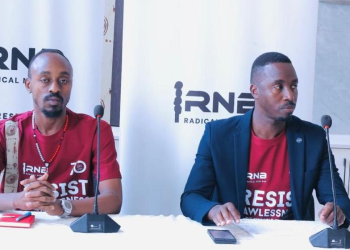
At the weekly press briefing by the Uganda Law Society, scientists, lawyers and human rights advocates agreed that while DNA technology has transformed the administration of justice, it has also exposed ethical and legal dilemmas that science alone cannot resolve. Professor Moses Joloba, Director of the Makerere University Biomedical Research Centre, stated that the science behind DNA testing is among the least controversial aspects of the debate.
He explained that DNA, the genetic material found in almost every cell of the human body, is remarkably stable, making it possible to establish biological relationships even many years after death.
“Every part of the body has the same copy of DNA. Whether you take the hair, or take the blood, or a bone, the DNA is the same because all those cells arise from one cell when you form the zygote during fertilization. DNA is highly resilient and one of the most stable forms of biological molecules. It persists in the environment, bones and chromosomes long after other biological materials have degraded. That is why we can still recover DNA from remains many years after death,” Joloba said.
He noted that scientists have successfully analysed DNA recovered from Egyptian mummies believed to be more than 4,500 years old, demonstrating why exhumation can still yield reliable genetic material decades after burial.
Joloba appeared to be answering directly to some who had doubted the fact that the DNA drawn from a person who died almost two decades ago could be relied on to determine the paternity of some who claimed that they were fathered by Paul Kafeero.
According to Joloba, modern paternity testing compares inherited genetic markers between a child and an alleged father. When sufficient markers match, laboratories can determine biological parentage with a probability exceeding 99.999 per cent, making DNA one of the most reliable forms of forensic evidence available. However, he cautioned that the reliability of DNA testing depends not only on laboratory technology but also on strict adherence to scientific procedures from the moment samples are collected.
“Most of the problems arise in the pre-examination phase. If you bring garbage into the laboratory, I will give you garbage. It is very difficult, even if you are a good cook, to cook a rotten turkey and turn it into a good product. That is why proper sample collection, transportation, storage, labelling and maintaining the chain of custody are critical to ensuring accurate DNA results,” he said.
He added that accredited laboratories are required to follow validated testing procedures, maintain confidentiality and comply with Ministry of Health guidelines governing DNA sample collection and analysis. While scientists view DNA as a highly reliable tool, lawyers say its greatest impact has been on the administration of justice.
Alice Kathleen Lakwech, a lawyer with FIDA Uganda, said DNA evidence has fundamentally changed how Ugandan courts resolve disputes involving child maintenance, custody, succession, inheritance and parental responsibility.
“DNA is not merely a scientific procedure. It is an important evidentiary tool that enables us to shape rights, obligations, parentage, maintenance, succession and identity. Over the past few years Uganda has witnessed a remarkable rise in the number of people seeking DNA testing, particularly to establish biological paternity, and this has ignited a national debate between those who see DNA as a tool for uncovering the truth and administering justice and those who fear it creates family instability and exposes children to psychological harm,” Lakwech said.
She noted that the law allows various people, including mothers, alleged fathers, guardians and even adult children, to seek declarations of parentage through the courts. The growing number of adults seeking to establish their biological identity, she said, reflects changing attitudes toward parentage and personal identity.
Lakwech also cautioned that exhumation should not become routine simply because DNA technology makes it possible.“Legally, exhumation is really a last resort because courts respect the dignity of persons who are deceased. They are not just exhumed anyhow. It is only where there is necessity and no other practical way of establishing the truth that courts may allow exhumation,” she said.
Throughout the press conference, speakers repeatedly returned to a question that science cannot answer. What happens after the DNA results are known? Lakwech said legal certainty does not always repair emotional damage within families. She described situations where fathers demanded DNA testing only for the results to confirm that the children were biologically theirs.
“Even after the DNA test turns out positive, there is a way the relationship is damaged. The child may grow up believing the father only accepted responsibility because the law compelled him to do so and not because he genuinely wanted to be their parent. Those are memories children carry with them even as they grow into adulthood,” she said.
That concern was equally raised by humanitarian lawyer Alobo Salome Joyce from Uganda Network on Law, Ethics and HIV/AIDS (UGANET). She argued that discussions about DNA testing often overlook the emotional consequences for children and families.
Alobo pointed to situations where adults discover, after spending their entire lives believing someone was their biological father, that DNA testing proves otherwise. “A child has a constitutional right to know their parents and to have an identity. If someone has grown up knowing a particular person as their father and all their documents identify them that way, but years later DNA says otherwise, we must ask ourselves, who is that truth really serving? Many times DNA is now being used when inheritance disputes arise, and we should be careful that it does not simply become a tool for disinheritance,” Alobo said.
The workshop also highlighted concerns about privacy in an era where DNA disputes increasingly unfold on social media.
Alobo questioned whether confidentiality ends once someone walks out of a laboratory. She observed that many laboratories are located in public places where individuals seeking DNA testing can easily be identified, photographed, or discussed online before results are even released.“Privacy and dignity should not end at the laboratory door. We have seen people’s identities and even minors become topics of discussion on social media. Scientific truth is important, but it must always be balanced against constitutional values, human dignity, family stability, privacy and above all the best interests of the child,” she said.
The legal framework in the country has begun responding to these concerns.
The recently enacted Forensics and Scientific Analytical Services Act, 2026 regulates forensic laboratories, consent procedures and the admissibility of forensic evidence, while Ministry of Health guidelines govern DNA sample collection and testing. Perhaps the most striking lesson from the press conference was that DNA testing has become far more than a scientific exercise.
It has become a legal instrument, a social issue and, increasingly, a deeply personal one. Science can establish biological parentage with extraordinary accuracy.
Courts can determine the legal consequences of that evidence. What neither science nor the law can easily resolve is whether every biological truth should be pursued at any cost, how the dignity of the deceased should be balanced against the rights of those seeking answers, and how families should navigate the emotional consequences that often follow scientific certainty.
The debate reignited by the exhumation of Paul Job Kafeero’s remains suggests that as DNA testing becomes more accessible and influential in Uganda’s justice system, the country’s greatest challenge may no longer be establishing the truth, but deciding what should be done with it once it is known-URN. Give us feedback on this story through our email: kamwokyatimes@gmail.com