

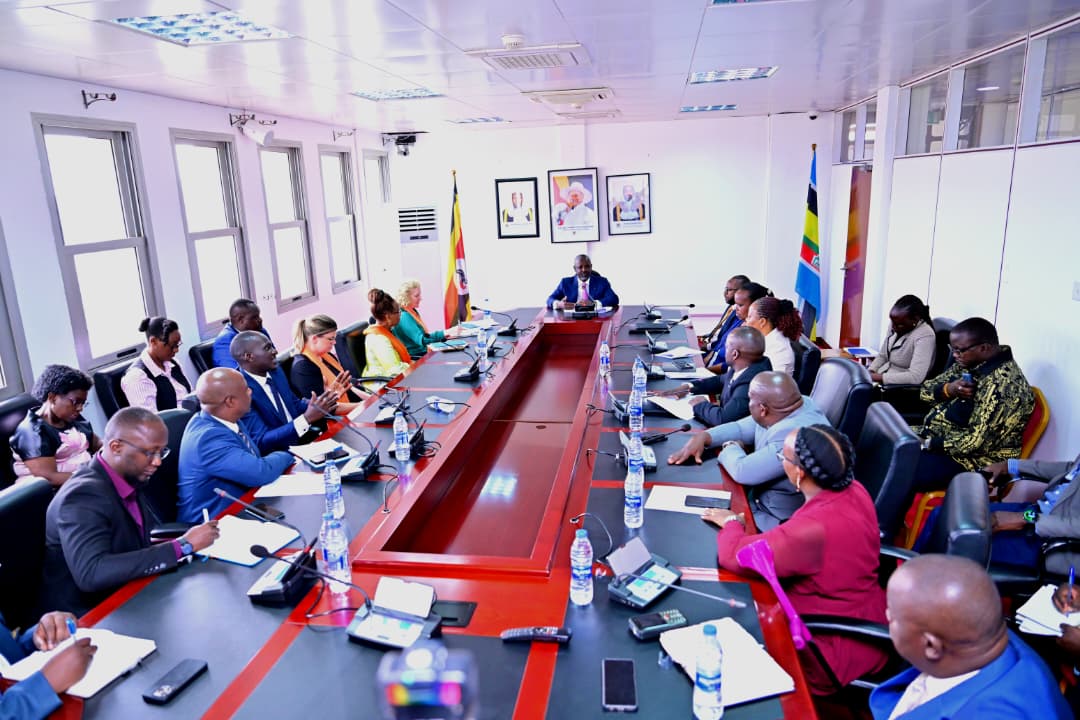
 Parliamentary Forum on Social Protection meeting development partners
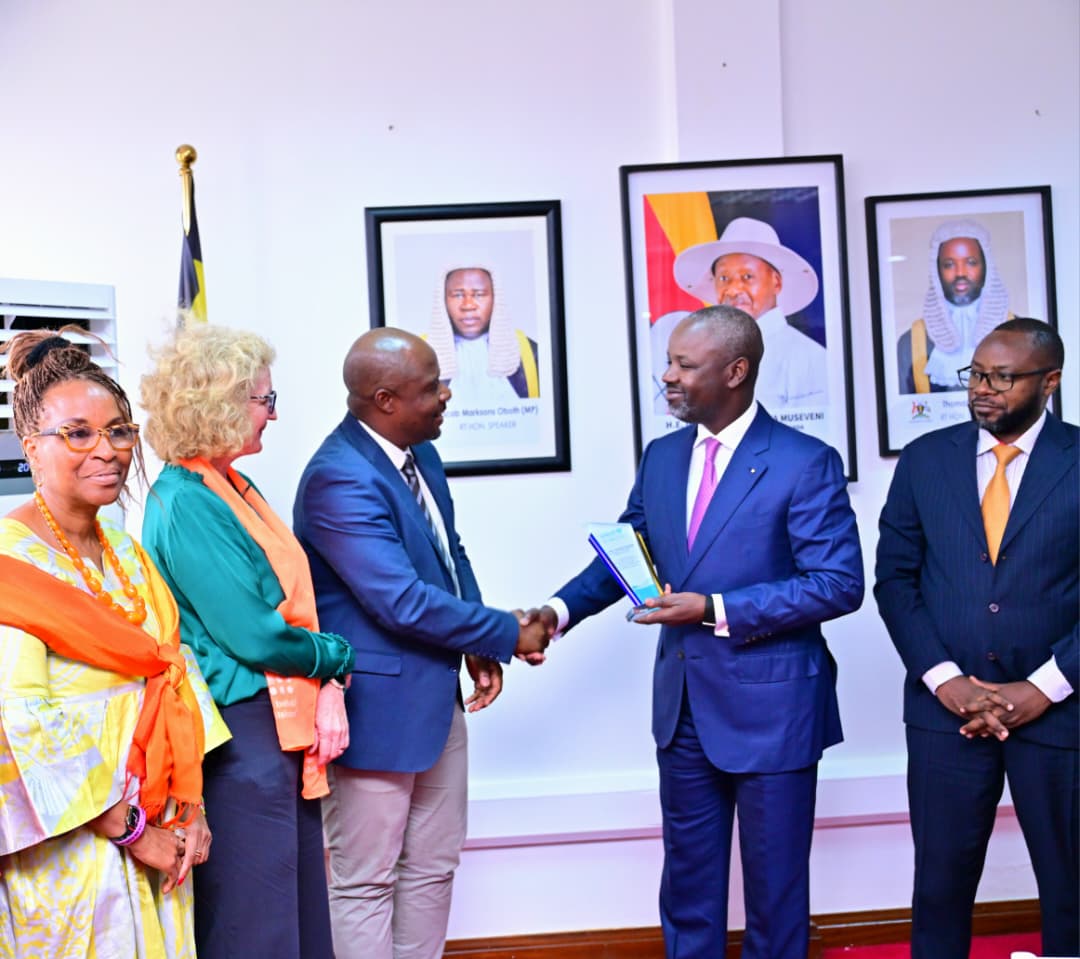
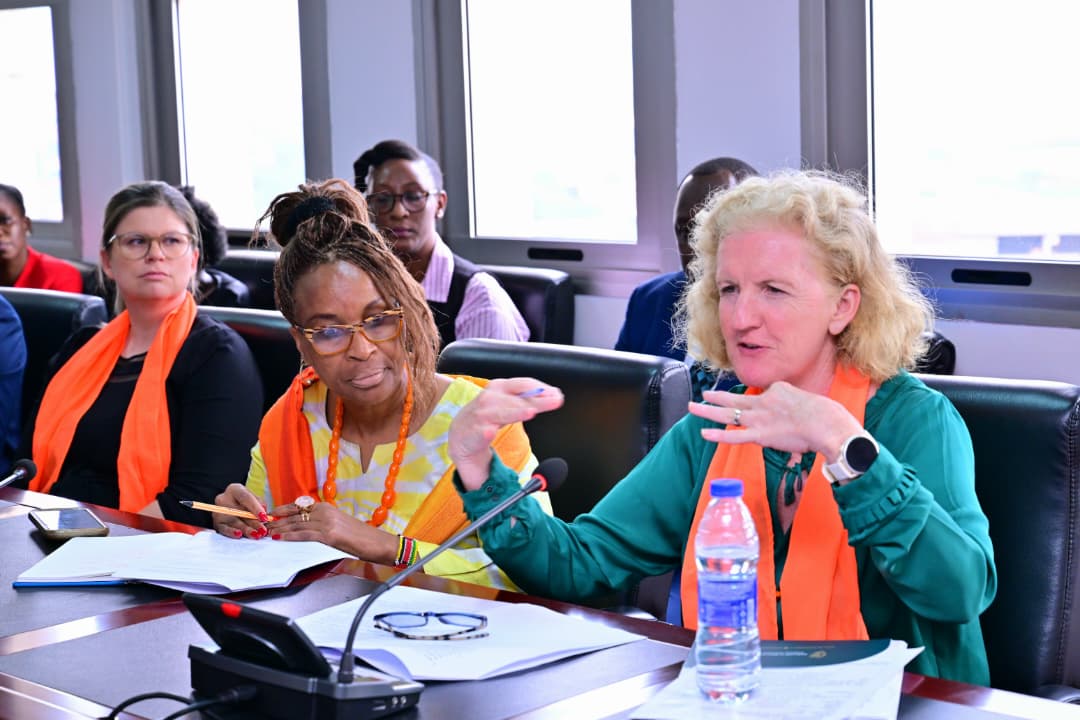 Ireland Ambassador to Uganda, Mags Gaynor, and representatives of UNICEF and World Food Programme (WFP).
The Deputy Speaker of Parliament, Thomas Tayebwa, has backed calls for a comprehensive social protection law to establish a sustainable financing framework, strengthen coordination and guarantee more predictable support for vulnerable Ugandans.

Tayebwa said existing government policies and interventions needed to be reinforced by legislation that clearly defines institutional responsibilities, establishes sustainable funding mechanisms and provides enforceable standards for delivering social protection services.
He made the remarks on Thursday, November 26, 2026, during a meeting with members of the Parliamentary Forum on Social Protection and development partners, including Ireland’s Ambassador to Uganda, Mags Gaynor, and representatives of the United Nations Children’s Fund (UNICEF) and the World Food Programme (WFP).
The proposed legislation is intended to provide a stronger legal foundation for programmes targeting older persons, children with disabilities, vulnerable households and communities affected by poverty, food insecurity and climate-related shocks.
Responding to a proposal by Gaynor for a unified legal framework, Tayebwa said legislation would help translate the Constitution’s social and economic commitments into practical interventions backed by clear implementation arrangements.
“We would need a law that would operationalise the provisions of the Constitution and go much deeper,” he said.
He urged the Parliamentary Forum to engage the Executive in developing the proposal, noting that Article 93 of the Constitution restricts Parliament from proceeding with private members’ bills that impose new charges on the Consolidated Fund or require withdrawals of public funds not already authorised, unless introduced on behalf of Government.
The provision makes collaboration with the Executive particularly important if the proposed legislation is to establish new spending obligations and sustainable financing arrangements.
“Social protection is not charity. Social protection is a fundamental right that ensures that the dignity, the resilience and the contribution of every Ugandan is considered and is felt,” Tayebwa said.
Gaynor described social protection as a strategic investment in human capital, poverty reduction, resilience and economic inclusion, arguing that supporting vulnerable populations should not be viewed merely as an expenditure but as an investment in national development.
Uganda already has a National Social Protection Policy, approved by Cabinet in November 2015, which provides for contributory social security, direct income support and social care and support services. However, the proposed law would seek to strengthen the institutional and financing arrangements underpinning these interventions.
The policy’s vision is to build a society in which individuals are socially secure and resilient to socioeconomic risks and shocks. Its implementation has, however, depended on multiple programmes and institutional arrangements, making coordination, adequate financing and consistent delivery important considerations.
The Constitution also provides a foundation for such interventions. National Objective VII requires the State to make reasonable provision for the welfare and maintenance of older persons, while Objective XIV commits Government to social justice and access to essential services, including education, healthcare, food security and pension benefits. Articles 32 and 35 further provide for affirmative action for marginalised groups and the dignity and protection of persons with disabilities.
The meeting also focused on proposed reforms to the Senior Citizens Grant under the Social Assistance Grants for Empowerment (SAGE) programme, including lowering the eligibility age from 80 to 65 years and increasing the monthly payment from Shs25,000 to Shs35,000.
Gaynor called for the reforms to be implemented without further delays, noting that expanding eligibility would bring substantially more older persons into the social protection system.
The proposed changes are particularly significant in a country where many older people continue to face income insecurity, limited access to healthcare and dependence on family members for their basic needs.
However, the expansion faces a substantial financing challenge. Although Cabinet approved the reduction in the eligibility age, Government has acknowledged that the required resources were not provided for in the 2026/2027 national budget.
Parliament was previously informed that approximately Shs252 billion would be required to finance the expansion, which is expected to increase the number of beneficiaries from about 306,759 to more than one million older persons.
The gap between policy commitments and available resources highlights one of the central arguments for a comprehensive social protection law: ensuring that government commitments are matched by credible budgetary provisions and predictable financing.
WFP Country Representative Wanja Kaaria-Ndoho highlighted the importance of targeted interventions for older persons in Karamoja, particularly during periods of drought and food insecurity.
She said approximately 10,000 older persons received assistance in June, helping them cope with the effects of the drought.
A second round of support is planned to reach approximately 17,000 additional older persons across all nine districts of Karamoja, following an earlier intervention covering five districts.
The interventions demonstrate the importance of combining long-term social assistance with emergency support to protect vulnerable populations against climate-related and economic shocks.
Tayebwa also commended Parliament and development partners for their advocacy, which contributed to the allocation of approximately Shs15 billion to the National Child Disability Assistance Programme.
The programme is intended to provide financial assistance to households caring for children with severe disabilities, many of which face additional expenses related to healthcare, transport, assistive devices and specialised care.
The allocation represents an important step towards recognising the economic pressures faced by families caring for children with disabilities. However, questions remain about the geographical reach and adequacy of the funding.
The Chairperson of the Parliamentary Forum on Social Protection, Patrick Kiconco Katabaazi, said the current allocation could only support implementation in fewer than 30 districts, calling for the programme to be expanded nationwide.
He argued that children with disabilities should not be excluded from support because of their geographical location or the financial circumstances of their families.
Tayebwa called for stronger monitoring, documentation and reporting of the programme’s impact, saying credible evidence of the benefits would strengthen Parliament’s case for increased government funding.
The intervention is consistent with Article 35 of the Constitution, which recognises the right of persons with disabilities to respect and human dignity and requires the State and society to take appropriate measures to enable them to realise their full potential.
It also reinforces the importance of translating disability rights commitments into practical support for children and their caregivers.
The meeting also considered proposals for a National School Feeding Programme, particularly targeting vulnerable communities where household food insecurity affects school attendance, retention and learning outcomes.
Development partners argued that providing meals at school could improve children’s nutrition, encourage regular attendance and reduce the risk of dropping out, particularly in drought-prone and economically disadvantaged communities.
WFP has supported school feeding interventions in Karamoja through the Karamoja Feeds Karamoja programme and other partnerships. During the recent drought, approximately 250,000 children benefited from take-home food assistance, according to the meeting.
The interventions helped cushion vulnerable households against food shortages while supporting children’s continued participation in education.
Representing UNICEF, Tawanda Chinembiri emphasised the relationship between food availability and school attendance in Karamoja, where some households struggle to provide children with adequate meals.
“If you don’t feed the school children in Karamoja, if you don’t provide them food at school, then they will not come to school,” he said.
Tayebwa supported targeted school feeding interventions but cautioned against adopting a blanket approach that ignores differences in household circumstances and regional needs.
He questioned the assumption that parents could independently provide meals for children when some households struggle to afford even one meal a day.
“You can only pack if you have what to pack,” he observed.
He called for interventions that recognise the particular vulnerabilities of communities such as Karamoja, where food insecurity can undermine children’s access to education and reinforce cycles of poverty.
Uganda’s Constitution guarantees the right to education under Article 30 and provides under National Objective XVIII for the promotion of free and compulsory basic education. National Objective XXII also requires the State to promote proper nutrition and food security.
These commitments reinforce the argument that school feeding should be considered alongside education, nutrition and social protection policies rather than treated as an isolated welfare intervention.
The discussions place renewed attention on the need for a coordinated national approach that connects income support, disability assistance, child welfare, nutrition and emergency response.
For Parliament and Government, the challenge will be to translate the proposed legislation into a workable framework that defines eligibility, institutional accountability, financing responsibilities, monitoring mechanisms and sustainable funding sources.
Ultimately, the effectiveness of a national social protection law will depend not only on the rights and programmes it establishes, but also on whether vulnerable Ugandans can reliably access the support promised to them.Give us feedback on this story through our email: kamwokyatimes@gmail.com