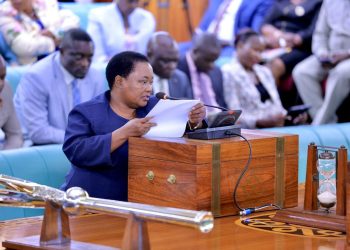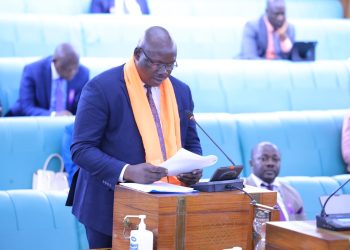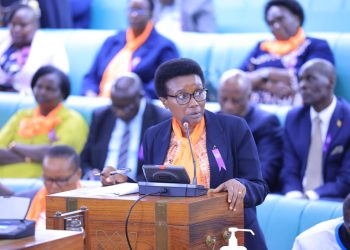



State Minister Peter Ogwang told Parliament that schools must follow the academic calendar and that the government has no immediate plan to replace the three-term system with two semesters.
Ogwang was responding to Mukono Municipality MP Betty Nambooze, who raised reports of schools closing early, with some administrators citing rising costs and operational pressures. Ogwang said premature closure deprives learners of classroom time and can leave the prescribed syllabus unfinished.
Deputy Speaker Thomas Tayebwa directed Ogwang to issue a circular to district education officers, asking them to convey the Ministry’s position to headteachers and monitor compliance. Ogwang agreed to issue a fresh circular.

The 2026 school calendar, issued by Permanent Secretary Kedrace Turyagyenda, sets out three terms of 89, 89 and 82 instructional days, 260 days in total. The third term is scheduled to end on December 4.
The calendar says no term should be shortened without the Permanent Secretary’s prior written approval and applies to public and private schools following the national curriculum.
That approval requirement is distinct from any enforcement action the Ministry may take. Under the Education (Pre-Primary, Primary and Post-Primary) Act, 2008, the Ministry oversees schools, while headteachers manage their institutions’ academic and administrative work subject to the Permanent Secretary’s direction.
The law’s regulatory provisions should not be conflated with the calendar’s separate requirement for written permission to shorten a term.
Early closure may reduce learners’ teaching time and syllabus coverage, including preparation time for candidates taking national examinations. It may also prompt parents to question whether schools have delivered the instruction and services expected for fees paid.
The impact on any particular learner or school will depend on what teaching has already been completed and whether the school has an approved arrangement.
Nambooze’s concern also points to financial strains facing schools and families. Higher costs for food, transport, utilities and learning materials, alongside difficulties collecting fees, can put pressure on school operations.
But those pressures do not, under the Ministry’s stated calendar rules, automatically permit a school to shorten a term; institutions must first seek written approval.
The debate over a semester system raises broader questions about curriculum coverage, assessments, teacher workloads, school costs and national examination schedules. For now, the government says the three-term structure remains in place.
Whether the renewed directive changes practice will depend on monitoring by district education officers and inspectors, as well as the Ministry’s response to schools’ operational difficulties. Give us feedback on this story through our email: kamwokyatimes@gmail.com