Parliament has called for increased funding for malaria control, genomic surveillance and diagnostic services after the Ministry of Health ruled out reports of a new malaria strain circulating in Uganda. Health Minister Dr Chris Baryomunsi told Parliament this afternoon that investigations and genomic surveillance conducted by the National Malaria Control Division had found no evidence of a new or more virulent malaria parasite in the country.
He explained that the recent fatalities were caused by severe malaria among school-age children living in Kampala and other historically low-transmission urban areas, where lower exposure to malaria has resulted in reduced naturally acquired immunity.
The minister confirmed that four learners had recently died from severe malaria. They include two students from Makerere College School, one from Mengo Senior School and one from Gayaza High School. He clarified that the recent deaths reported at Naalya Secondary School and Ndejje Secondary School were unrelated to malaria, having resulted from suicide, trauma and traffic accidents.

Baryomunsi said Kampala’s relatively low malaria transmission presents a paradox: children develop less natural immunity than their counterparts in high-transmission rural areas. Consequently, once infected, they are more likely to develop severe malaria, including cerebral malaria and severe anaemia, particularly when treatment is delayed.
Although Members of Parliament welcomed the ministry’s clarification, they argued that the deaths had exposed long-standing weaknesses in Uganda’s malaria response, including inadequate funding, emerging drug resistance, shortages of medicines and weaknesses in diagnostic systems.
Arua Central Division MP Muzaid Khemis said malaria continues to account for a significant proportion of illnesses treated in health facilities, placing enormous pressure on already stretched resources, especially in refugee-hosting districts.
He cited Oli Health Centre IV in Arua, which serves communities from Uganda, South Sudan and the Central African Republic, in addition to more than 24,000 refugees. The facility handles approximately 25,000 outpatient visits every month, with malaria accounting for a large share of the cases.
Khemis appealed to the Ministry of Finance to provide a supplementary budget to replenish malaria medicines, rapid diagnostic tests and injectable drugs in high-burden districts.
Ntwetwe County MP Dr Edward Kikabi, a medical practitioner, warned that although the ministry had ruled out a new malaria strain, Uganda should not ignore signs of emerging resistance to existing antimalarial medicines.
He said health workers are increasingly encountering patients who fail to respond to first-line treatment and, in some cases, even second- and third-line therapies. He noted that Uganda has already detected mutations in the K13 gene, which are associated with reduced effectiveness of artemisinin-based combination therapies. Kikabi recalled that resistance to older medicines such as chloroquine and quinine emerged similarly before eventually forcing Uganda to revise its malaria treatment policy.
He urged the government to increase funding for genomic surveillance, saying institutions such as Makerere University, the Uganda Virus Research Institute and the National Malaria Control Division require adequate resources to monitor drug resistance before it escalates into a national public health crisis.
The legislator also called for increased financing for malaria commodities, noting that many health facilities exhaust two-month drug stocks in less than two weeks because of overwhelming patient demand.
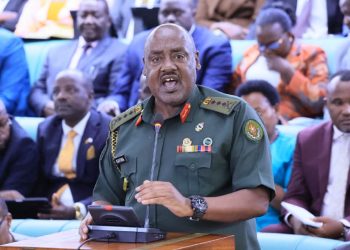
UPDF representative Gen Samuel Kavuma shifted the debate to the quality of medical diagnosis, arguing that inconsistent laboratory results across health facilities continue to undermine effective treatment.
He questioned why patients tested for the same illness at different hospitals often receive conflicting diagnoses. According to Kavuma, many Ugandans are repeatedly treated for conditions such as pneumonia without improvement, only to be diagnosed with more serious illnesses at advanced stages.
He called on the Ministry of Health to investigate whether the inconsistencies arise from faulty diagnostic equipment, inadequate laboratory standards or human error.
Responding to the concerns, Baryomunsi said the Ministries of Health and Education and Sports have established a multisectoral task force to coordinate malaria prevention, treatment, surveillance and public awareness in schools.
He said the government has already launched malaria risk assessments in affected schools, reactivated school health surveillance, issued updated malaria prevention guidance, and committed to recruiting school nurses while strengthening emergency referral systems.
The minister also pledged to conclude investigations into the four learner deaths and present the findings to Parliament’s Health and Education committees. In addition, he said the government will develop a fully funded Malaria-Free Schools Programme, integrating malaria prevention, surveillance, workforce development and emergency referral services to better protect learners-URN. Give us feedback on this story through our email: kamwokyatimes@gmail.com