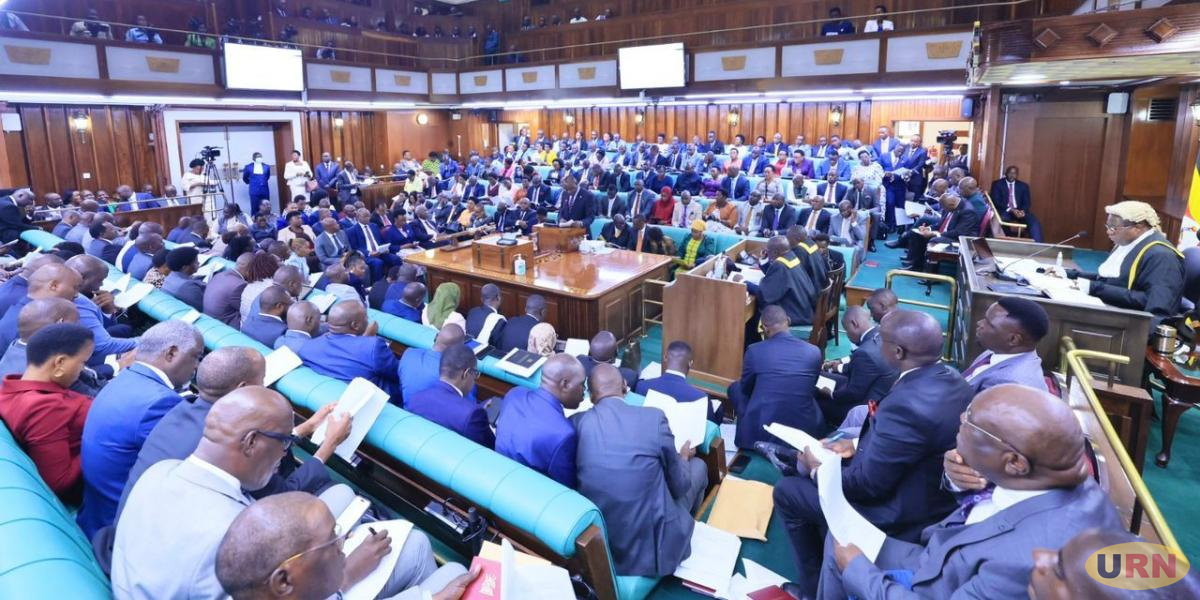
Parliament on Wednesdayapproved a government request to borrow up to €168.9 million (about 730 billion shillings) for the second phase of the Solar Powered Irrigation and Water Supply Systems Project. The decision followed a heated debate in which legislators questioned accountability for the first phase and criticized the Executive for rushing the House into approving fresh borrowing.
The loan, to be secured from UK Export Finance (UKEF) and Citi Bank, was the first borrowing to be approved by the 12th Parliament. Several MPs argued that Parliament was being asked to approve a major external loan without adequate scrutiny, particularly because key sectoral committees, including the Committee on National Economy that ordinarily reviews borrowing proposals, had not yet been constituted.
Older Persons MP, James Kakooza, accused the Ministry of Finance of repeatedly presenting loan requests at the last minute and warned against pressuring Parliament. He questioned why a financing arrangement dating back to 2021 had suddenly become urgent and cautioned against reducing Parliament’s oversight role to merely endorsing executive decisions.

Leader of the Opposition Joel Ssenyonyi said the opposition supports investments in irrigation and agricultural modernization but insisted that accountability for Phase One should come before approval of additional borrowing. He noted that irrigation remains critical to improving agricultural productivity, particularly as climate change and erratic weather increasingly affect farming.
However, Ssenyonyi argued that Parliament had a duty to ensure public funds were properly utilized before authorizing more debt. He cited committee findings indicating that some irrigation sites under the first phase were handed over without feasibility studies, only for subsequent assessments to reveal that several locations were unsuitable.
He further pointed to reports showing that by September 30, 2025, approximately Shs366 billion had been spent on Phase One, more than 100 percent of the approved budget, yet the project remained incomplete. According to the opposition, some irrigation systems established under the first phase are either unfinished or not operating as intended, raising concerns that similar shortcomings could affect the second phase if existing weaknesses are not addressed.
Ssenyonyi also criticized the government for presenting the loan request as an emergency despite having known the financing timelines well in advance. Responding to the concerns, Speaker Oboth-Oboth acknowledged that Parliament found itself in an unusual situation because the Committee on National Economy had not yet been established.
He defended his decision to invoke Rule 8 of Parliament’s Rules of Procedure, allowing the Committee of the Whole House to consider the loan request, saying the rules did not anticipate a situation where Parliament would be operating without standing committees. The Speaker agreed that Parliament should not appear to be rushing government business but said the House had to work within the realities of a newly inaugurated Parliament.
Finance Minister Henry Musasizi apologized for the delayed submission of the request, attributing it to circumstances beyond his control. He assured legislators that the funds would finance activities in the 2026/27 financial year beginning July 1, rather than the outgoing financial year ending June 30.
Musasizi explained that the government was racing against a June 12 deadline set by UK Export Finance and warned that failure to secure parliamentary approval before then would cause the financing offer to lapse. He also informed the House that the interest rate on the export credit facility had risen from 3.65 percent in March to 3.92 percent in June 2026.
Despite the increase, Musasizi said the effective borrowing cost of about 5.1 percent remained significantly lower than prevailing commercial foreign currency lending rates, which average around 11 percent. The minister urged MPs to treat the proposal as urgent government business, assuring them that Parliament would continue exercising oversight during implementation to ensure value for money and achievement of project objectives.
Vice President Jessica Alupo also rallied support for the loan, speaking from her experience as a farmer. While acknowledging concerns about implementation challenges under the first phase, Alupo urged legislators not to allow those shortcomings to derail efforts to expand irrigation infrastructure.
She argued that improved irrigation systems would boost agricultural productivity, increase household incomes, and support government efforts to expand coffee growing across the country. Parliament ultimately approved the borrowing request after MPS had raised tough questions about project performance, accountability, and the increasing reliance on urgency procedures to secure major government loans-URN. Give us feedback on this story through our email: kamwokyatimes@gmail.com