When Uganda’s government and its joint venture partners reached the Final Investment Decision (FID) in February 2022, it marked the end of years of negotiations and the beginning of what many believed would be the country’s most transformative economic project. The agreement unlocked the development of the Tilenga and Kingfisher oilfields, the construction of the 1,443-kilometre East African Crude Oil Pipeline (EACOP), and billions of dollars in investment expected to reshape Uganda’s economy.
Expectations were high that the petroleum sector would create jobs, strengthen local businesses, increase government revenues and provide the financial muscle to accelerate industrialisation. Much of that activity is already visible. Roads built to support oil operations have opened up previously inaccessible areas of the Albertine Graben.
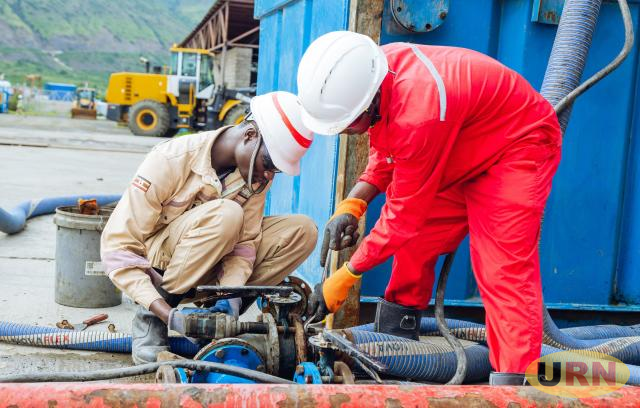
Kabalega International Airport is nearing completion, while drilling sites, central processing facilities and pipeline construction continue to employ thousands of workers. Ugandan companies have won contracts to supply goods and services to international oil companies, and the government has earned revenues through licence fees, taxes, signature bonuses and other petroleum-related payments.

Yet even as construction gathers pace, some analysts argue that the economics underpinning Uganda’s oil ambitions have shifted considerably since the projects were first conceived. The Institute for Energy Economics and Financial Analysis (IEEFA), an independent energy think tank, says the delays that characterised Uganda’s journey to first oil have coincided with profound changes in the global energy market.
In one of the report’s strongest conclusions, the institute states: “Uganda’s oil industry is delayed, over budget and likely to disappoint when it comes to financial returns. The delays to get Uganda’s oil industry off the ground and the realities of a quickly decarbonizing world could mean Uganda sees much lower fiscal benefits from the oil industry than expected.”
The report argues that the industry’s long development timeline has exposed it to rising construction costs, supply chain disruptions triggered by the COVID-19 pandemic, higher financing costs and an international energy landscape that is increasingly influenced by climate policies and investment in lower-carbon technologies.
According to IEEFA, these developments have altered many of the assumptions that informed earlier projections of Uganda’s oil revenues. The institute notes that before the Final Investment Decision, the combined cost of the upstream developments and EACOP was estimated at around US$9 billion. Since then, inflation, higher material costs and financing pressures have pushed costs substantially higher, increasing the financial burden on investors and reducing expected returns.
The report also challenges a widely held perception that Uganda’s oil wealth will provide a steady stream of income over several decades. Instead, it argues that government revenues are likely to be heavily concentrated during the industry’s early years.
“Seventy-two percent of Uganda’s value comes from before-tax items, primarily royalties and profit oil, and approximately 78 percent of the total value is expected to be earned during the first ten years of production.”
That finding has important implications for public policy. If the bulk of petroleum revenues arrive during the first decade of production, economists say decisions made during that period, whether to reduce debt, expand infrastructure or save for future generations, could have consequences that outlast the oil industry itself.
The report cautions against assuming that petroleum revenues alone will transform Uganda’s economy. “Making the country’s oil industry genuinely transformative, that is, making economic benefits into something that improves the lives of many Ugandans, will not be a simple task.”
On the other hand, the Natural Resource Governance Institute (NRGI) argues that the central issue is not how much oil Uganda produces but how wisely the proceeds are managed. Its report, Strengthening Uganda’s Management of Uncertain Oil Revenues, argues that uncertainty is an inherent feature of petroleum development.
Oil prices fluctuate, production forecasts change, and global energy markets evolve. Those uncertainties, it says, make strong institutions and fiscal discipline indispensable. The report reminds policymakers that Uganda’s oil resources are finite. “Uganda’s oil reserves are expected to produce oil for 25 years or less. This means the country has a relatively short period in which to convert petroleum wealth into broader and more sustainable economic development.”
Rather than focusing solely on maximising revenue, NRGI urges the government to strengthen the rules governing the Petroleum Fund, improve transparency and ensure spending decisions are anchored in long-term national development priorities. The institute warns that good laws alone are not enough.
“The revenue management framework must be enforceable; otherwise, it risks being undermined by a lack of government compliance.” The report further argues that uncertainty over future oil income should encourage prudence rather than optimism.
“Given the uncertainty surrounding future petroleum revenues, Uganda’s fiscal framework should be robust enough to manage volatility while ensuring oil wealth contributes to sustainable development.” Not all observers believe Uganda’s petroleum outlook has become less favourable.
Analysts at MCB Research argue that many of the economic benefits associated with the oil industry are already becoming visible, even before commercial production begins. In a recent assessment of Uganda’s economy, the firm says the country’s long-awaited oil story is beginning to shift from expectation to delivery.
“Uganda’s economic narrative has long centred on potential. Today, that story is gradually shifting towards delivery, supported by robust economic growth, contained inflation and major infrastructure investments linked to the oil sector.”
The report points to stronger economic growth, improving foreign exchange reserves and increased investor confidence as evidence that oil-related investment is already supporting Uganda’s broader economy. It concludes that: “The broader macroeconomic backdrop is becoming increasingly supportive for investors seeking exposure to East Africa’s growth story.”
The contrasting assessments reveal that Uganda’s oil debate is no longer centred on whether the country possesses commercially viable petroleum reserves. That question was settled years ago. Instead, the debate has shifted to a more complex set of questions: How much value will the industry ultimately generate? How should that wealth be managed?
And will the benefits extend beyond government revenues and corporate balance sheets to improve the lives of ordinary Ugandans? Those are the questions government officials, and the Uganda National Oil Company say critics too often overlook-URN. Give us feedback on this story through our email: kamwokyatimes@gmail.com