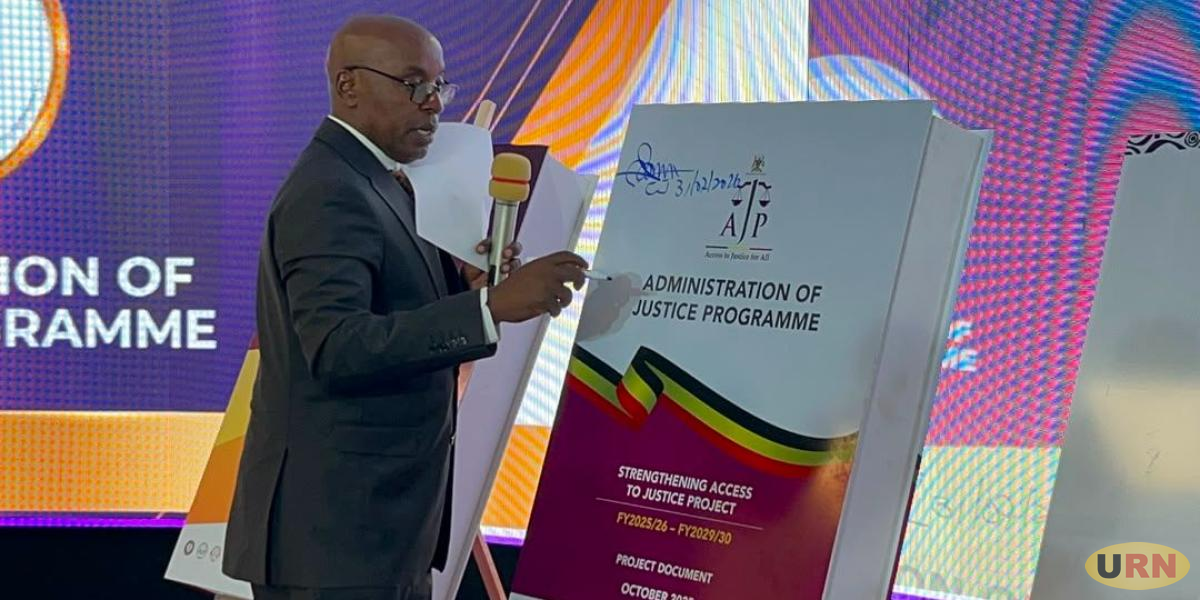
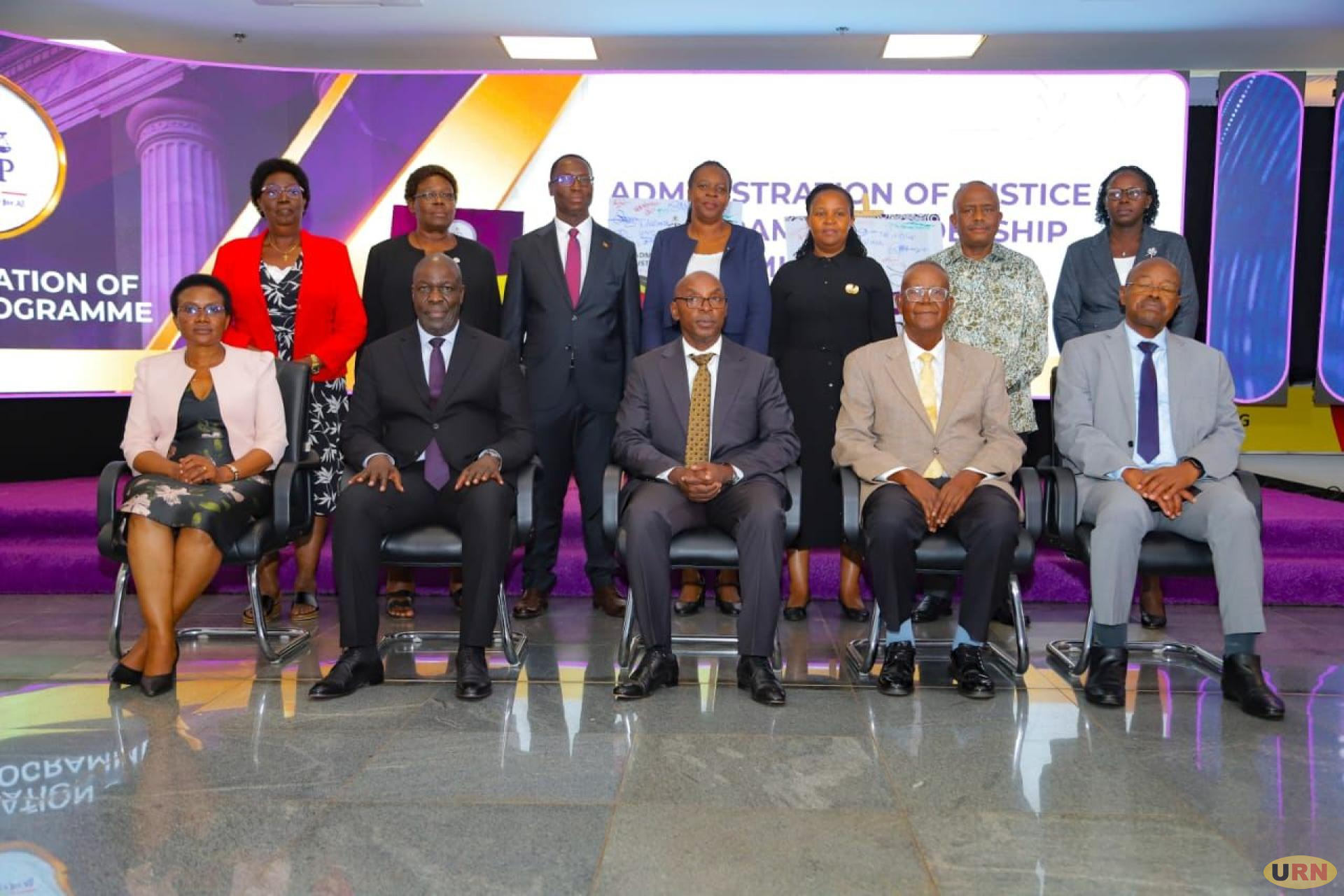
Chief Justice Dr. Flavian Zeija has unveiled the Administration of Justice Programme (AJP) Strategy for the 2026/27–2029/30 financial years. Key among the expectations is improving access to justice, reducing case backlog and strengthening public confidence in the country’s justice system.
Speaking during the launch at the Supreme Court in Kampala on Friday, Dr. Zeija said the strategy marks a significant milestone in efforts to build a more people-centred, efficient and accountable justice system. He said it builds on the gains made under the Third National Development Plan (NDP III) and aligns with the objectives of the Fourth National Development Plan (NDP IV).
The Chief Justice noted that the Administration of Justice Programme, now the 17th programme under NDP IV, is intended to strengthen the rule of law, protect individual and corporate rights, promote fair competition and enhance public trust in state institutions.

The strategy focuses on three key objectives: strengthening a people-centred justice delivery system, reforming justice business processes, and improving the administrative, legal, institutional and coordination capacity of justice sector institutions.
Among its priorities are expanding the use of Alternative Dispute Resolution (ADR), increasing access to legal aid, strengthening case management, improving enforcement of court orders and accelerating automation across justice institutions to enhance efficiency. The strategy sets several measurable targets to be achieved by the end of the 2029/30 financial year.
By the end of the 2029/30 financial year, the programme aims to make Uganda’s justice system faster, more accessible and more trusted. Its targets include cutting the national case backlog nearly in half, reducing the average time it takes to conclude a case by about five months, lowering the number of prisoners held on remand, expanding access to justice services closer to communities, and improving public confidence in the justice system.
Specifically, the programme targets reducing the case backlog from 27 percent to 15 percent, shortening case disposal time from 843 to 693 days, and increasing public confidence from 71 percent to 74 percent. The Administration of Justice Programme has expanded from eight institutions under NDP III to 13 under NDP IV, with the Judiciary remaining the lead institution responsible for coordinating implementation through the Programme Secretariat.
Participating institutions include the Office of the Director of Public Prosecutions, Judicial Service Commission, Law Development Centre, Uganda Police Force, Uganda Prisons Service, Inspectorate of Government, the ministries of Gender, Labour and Social Development, Internal Affairs, and Local Government, the Directorate of Government Analytical Laboratory, Tax Appeals Tribunal and Kampala Capital City Authority.
Justice Centres Uganda will collaborate in the provision of legal aid services. Dr. Zeija said effective coordination among the institutions will be critical to delivering timely, affordable and accessible justice services. The strategy is backed by a multi-institutional project designed to mobilise resources for improving equitable access to justice, strengthening institutional capacity and enhancing oversight and compliance with justice service delivery standards.
A Project Management Team will oversee planning, implementation, monitoring and performance reporting. The strategy aligns with Uganda Vision 2040, the Sustainable Development Goals, particularly SDG 16 on peace, justice and strong institutions, Africa Agenda 2063 and the East African Community Vision 2050.
Officials said successful implementation is expected to contribute to social stability, economic growth and national development by making justice services more accessible, efficient and responsive. Before the launch, justice sector leaders held a closed-door meeting to review priorities for the 2026/27 financial year and discuss reforms aimed at strengthening the administration of justice.
The meeting reviewed the status of key pending legislation, including the Legal Aid Bill, the Constitutional Affairs Bill, the Witness Protection Bill and the Mutual Legal Assistance Bill. Participants also discussed strategies to reduce prison congestion and strengthen Local Council Courts and the juvenile justice system-URN. Give us feedback on this story through our email: kamwokyatimes@gmail.com