By KT Reporter
For years, mobile money borrowers who defaulted on digital loans have exploited a simple escape route: move or transact from another network.
Once blacklisted on one platform, some borrowers would quietly switch SIM cards, open wallets on rival networks, and continue borrowing, often while diverting incoming funds away from the defaulting line. Others went a step further, alerting friends and relatives not to send money to the indebted wallet, but to route payments through a different network altogether.

As a result, lenders were left stranded, unable to recover loans because the defaulting wallets remained perpetually empty. Now, Uganda’s leading mobile money providers say that the loophole is finally closing.
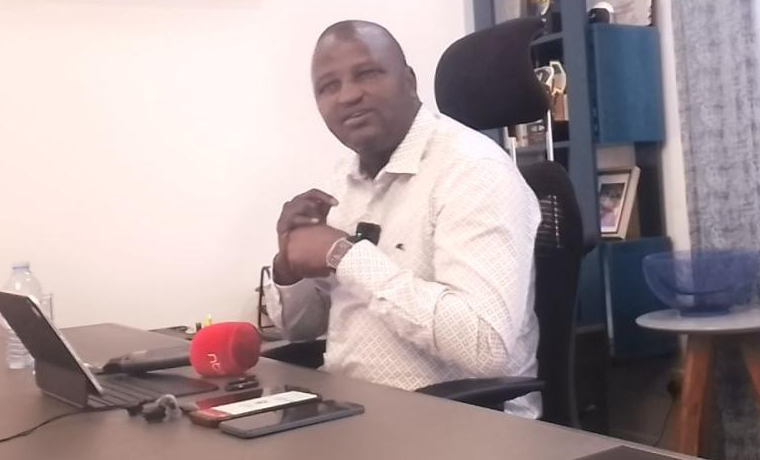
MTN Mobile Money Uganda Ltd Chief Executive Officer Richard Yego says MTN and Airtel Money Uganda have begun collaborating to instantly share information on loan defaulters across networks. Under the new arrangement, any attempt to deposit money into a defaulting account will be automatically rejected, with both the sender and the recipient notified of the reason.
Yego says the move is aimed at restoring discipline in digital lending, which he describes as one of the most fragile pillars of Uganda’s push toward a cashless economy. Online lending, he notes, has long struggled with default risks, high transaction costs, and regulatory bottlenecks, factors that have slowed adoption compared to regional peers like Kenya and Rwanda.
Uganda currently has about 36 million active mobile money subscribers, out of roughly 40 million mobile phone users nationwide. MTN alone accounts for 14.1 million mobile money customers, from a total subscriber base of 23.5 million. Despite the challenges, mobile borrowing is expanding rapidly.
According to Yego, the number of mobile money borrowers has grown from 3.5 million to 8 million users this year, driven largely by products such as MoMo Advance. Over the same period, the value of mobile loans doubled from 1.4 trillion to 2.8 trillion Shillings.
He says the industry is optimistic about recalling the full value of loans issued this year, even as operators tighten controls on defaulters. However, Yego admits that high transaction costs remain a major drag on growth, particularly since the introduction of the 0.5 per cent tax on mobile money withdrawals in 2018/2019. The levy triggered a sharp decline in high-value transactions, especially those above 500,000 Shillings.
Mobile money operators are now proposing a compromise: retain the 0.5 per cent tax as government revenue, but spread it across the payment value chain rather than concentrating it on withdrawals alone.
Yego points out that withdrawing cash from a bank is significantly cheaper than withdrawing from a mobile wallet through an agent, a gap that once encouraged users to move money from wallets to banks before accessing it via ATMs. That behaviour changed after operators made bank deposits more expensive.
He says discussions with the government are ongoing to at least halve the tax burden and share it between banks and mobile money platforms, a move he believes would restore choice for consumers while safeguarding public revenue.
Out of MTN’s 14.1 million mobile money users, only about 200,000 regularly transfer funds from their wallets to bank accounts, while about 800,000 move money from banks into mobile wallets, figures Yego describes as worryingly low for a country aspiring to go cashless.
However, Yego is hopeful that the long-awaited National Payments Switch will ease the pressure. The switch, expected to be operational before the end of 2026, according to Bank of Uganda Governor Michael Atingi-Ego, is designed to reduce the cost of cross-network transactions by allowing deeper system integration.
As they wait, Yego says mobile money operators are already collaborating among themselves to cut cross-network charges and exploring ways to extend the same efficiencies to banks.
Meanwhile, mobile money users have recently encountered yet another cost: fees for depositing cash into wallets not registered in the depositor’s name.
Previously, such deposits were free. But the policy changed after operators shifted how they pay agent commissions, from per-transaction payments to daily value-based compensation. This left agents earning nothing on third-party deposits, prompting companies to introduce charges to cover operational costs.
Yego says the change also serves a broader purpose: curbing money laundering. As regulated financial service providers, mobile money companies are required to know all parties involved in transactions. Third-party deposits, he explains, often leave the true recipient untraceable.
For millions of Ugandans who rely on mobile money to borrow, save, and transact, the tightening rules mark a turning point, one that could restore trust in digital lending, even as debates over cost and access continue.
-URN. Give us feedback on this story through our email: kamwokyatimes@gmail.com