By KT Reporter
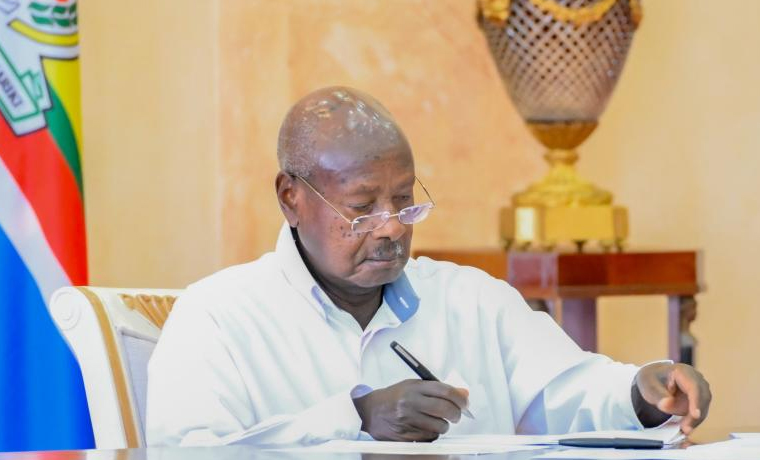
President Yoweri Kaguta Museveni has assented to eight new laws, setting in motion sweeping reforms that will reshape Uganda’s health regulation, labour protections, energy efficiency, justice system, and creative industries. The presidential assent, announced by the State House Uganda on Wednesday, marks the final constitutional stage required for the Bills to become law under Article 91 of the 1995 Constitution.The reforms conclude a legislative process in which Parliament exercised its lawmaking mandate under Article 79 to enact laws aimed at improving governance and public administration.
At the center of the reforms is the National Drug and Health Products Authority Act, 2026, which establishes a broader regulatory body to oversee medicines, vaccines, medical devices, diagnostics, cosmetics, and nutritional supplements. The law expands the mandate previously exercised under the National Drug Policy and Authority Act and grants stronger powers in licensing, quality assurance, pharmacovigilance, and import-export controls.

It also introduces provisions allowing supervised emergency use of unapproved medicines during public health emergencies. The reforms come amid persistent concerns over counterfeit and substandard medicines. According to the World Health Organization, up to 10 percent of medicines circulating in low- and middle-income countries are either falsified or substandard.
The Energy Efficiency and Conservation Act of 2026 introduces mandatory energy performance standards, audits, and regulation of inefficient technologies in industries, commercial buildings, and households. The law is expected to reduce energy waste and lower electricity costs as Uganda expands generation through projects such as the Karuma Hydroelectric Power Station and Isimba Hydroelectric Power Station dams.
Officials say the legislation also supports Uganda’s climate commitments under the Paris Agreement and reinforces the constitutional right to a clean and healthy environment under Article 39. Two of the new laws are linked to the government’s Rationalisation of Government Agencies and Public Expenditure (RAPEX) policy launched in 2021.
The Non-Performing Assets Recovery Trust (Repeal) Act, 2024, dissolves the Non-Performing Assets Recovery Trust and transfers its responsibilities to the Ministry of Finance, Planning, and Economic Development. Meanwhile, amendments to the Public Enterprises Reform and Divestiture Act seek to reduce duplication, cut administrative costs, and improve accountability within government agencies.
Parliament has previously indicated that agency mergers and closures could save the government hundreds of billions of shillings. The Employment (Amendment) Act, 2025, strengthens protections for domestic workers, casual labourers, and migrant workers. The law introduces tighter regulation of recruitment agencies, improves severance and sick leave provisions, and strengthens protections against workplace harassment.
It also provides safeguards for breastfeeding mothers. The reforms operationalize Article 40 of the Constitution, which guarantees fair and satisfactory working conditions. Government officials say the law also responds to the growing importance of labour migration, with remittances from Ugandans abroad estimated at around 1.7 billion US dollars annually.
Two laws target long-standing inefficiencies in Uganda’s justice sector. The Forensic and Scientific Analytical Services Act, 2026, formally establishes the Government Analytical Laboratory as a national referral center for forensic science. The law expands its mandate to include DNA analysis, toxicology, cybercrime investigations, and environmental testing under a clearer regulatory framework supervised by the Ministry of Internal Affairs.
At the same time, the Magistrates Courts (Amendment) Act, 2026, increases the financial jurisdiction and sentencing powers of magistrates while abolishing the Magistrate Grade II position. The reforms are intended to reduce case backlogs, ease pressure on the High Court, and improve access to justice, particularly in rural communities. The Copyright and Neighbouring Rights (Amendment) Act, 2026, introduces tougher penalties for piracy and strengthens royalty collection systems.
Artists and producers have for years complained about weak copyright enforcement, especially on digital platforms. The amended law reportedly introduces fines of up to 50 million shillings and seeks to align Uganda’s copyright framework with international intellectual property standards. Government says the reforms are expected to improve earnings for artists and formalize the creative industry’s contribution to the economy.
Collectively, the new laws signal one of the broadest reform waves in recent years, touching key sectors including health, labour, energy, public administration, justice, and the creative economy. While many of the Bills originated from government ministries, they underwent parliamentary scrutiny, committee review, stakeholder submissions, and amendments before being passed.
However, analysts say the real challenge now lies in implementation. Successful enforcement will depend on adequate funding, institutional capacity, regulatory clarity, and public awareness to ensure the intended reforms translate into measurable impact.
-URN. Give us feedback on this story through our email: kamwokyatimes@gmail.com