By KT Reporter
The Ministry of Education and Sports is set to distribute 334 science kits to schools across 20 districts as part of a nationwide drive to promote practical science learning in primary education. This initiative, launched in 2021, has so far benefited over 1,336 Universal Primary Education (UPE) schools.
The latest rollout will target both the 10 best-performing and 10 worst-performing schools in each selected district. According to Abbey Musoke Bbosa, a senior education officer for basic education, the distribution aims to make science education more interactive and hands-on, as opposed to the traditional theoretical approach.

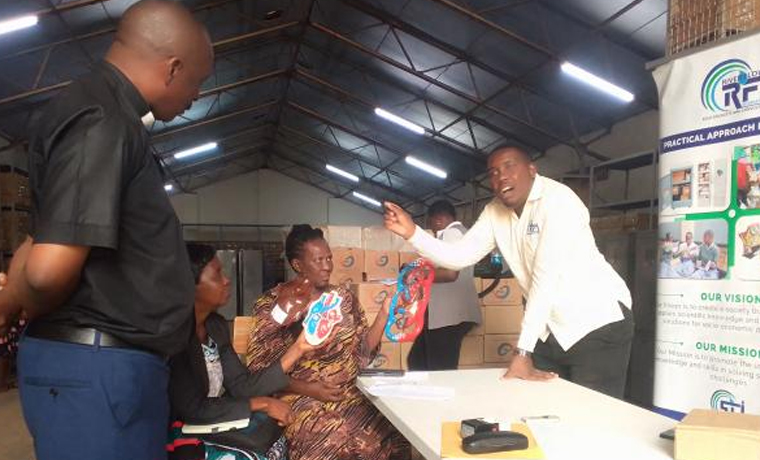
Bbosa noted that with the new science kits, learners will be able to observe and handle real organs and conduct experiments, helping to stimulate curiosity and deepen understanding.
In the fourth phase of this initiative, Stewart Nabaasa, the Science and Innovations Manager at River Flow International — the organization responsible for making and distributing the kits — highlighted the group’s role in teacher training and curriculum support.
Nabaasa explained that after the kits are delivered, River Flow International conducts training for teachers to help them understand how to use the kits in line with the national curriculum. He said curriculum interpretation remains a challenge for many teachers, particularly in science subjects.
To date, over 100,000 teachers have been trained, with each school receiving three trained instructors. After the training, River Flow evaluates how well learners are responding to the practical teaching methods. Nabaasa also noted that private schools interested in acquiring the kits can purchase them directly from River Flow International.
Margaret Olore, the organization’s Communication and Advocacy Officer, said the kits are already yielding results. She cited improved science performance at Kitunga Boarding Primary School in Ntungamo District and Paicho Primary School in Gulu District. Olore added that the kits have also contributed to a reduction in school dropout rates, with learners showing greater interest in science due to the hands-on learning experience. In Pader District, District Education Officer Margaret Alanyo said the ministry has allocated kits to only 20 of the 107 government-aided schools in the area — 16 high-performing and four low-performing institutions.
She acknowledged that most primary school science teachers lack the skills to fully utilize the kits, often relying on diagrams and verbal explanations rather than physical demonstrations. “Teachers often cannot come up with something tangible for learners to see and touch to aid understanding of the subject. They just draw and explain,” she noted.
Alanyo expressed hope that the introduction of science kits, if properly embraced, will significantly improve science performance in the district. However, she described the current coverage as “a drop in the ocean,” calling on the ministry to expand the project.
She also revealed plans to invite all science teachers — even from schools not receiving kits — to attend the upcoming training sessions. In addition, she pledged to promote the sharing of kits among schools to ensure wider access-URN. Give us feedback on this story through our email: kamwokyatimes@gmail.com