By KT Reporter
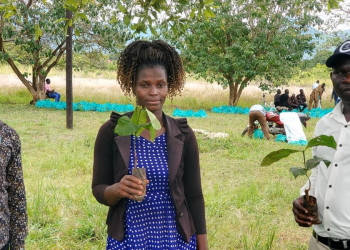
At the Kampala Capital City Authority (KCCA)-managed dumpsite in Kiteezi, Jennifer Namulondo, a resident of Lusanja, has noticed a disturbing trend. Although the site was temporarily closed, she says piles of garbage are still being dumped in the area.
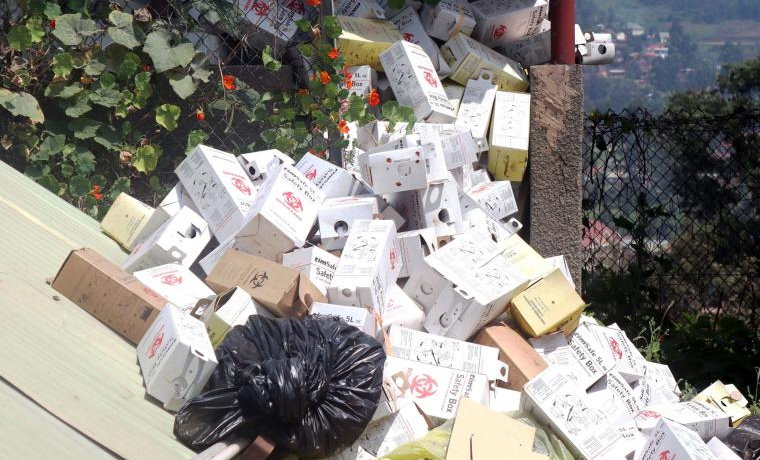
As she told URN, what used to be mostly domestic waste now increasingly includes hazardous materials such as used syringes, gloves, drug packaging, used condoms, and injection paraphernalia that spill into neighboring homes.

Namulondo fears these materials pose health risks and environmental hazards, especially to children. Her concerns are valid—according to Ministry of Health data, 26% of medical waste in Uganda is hazardous. Of this, 20% is infectious, 3% pharmaceutical, 1% sharp materials, and another 1% is cytotoxic and radioactive waste.
Currently, however, hospitals across the country are overwhelmed with this waste, and some of it is spilling into communities. At Gulu Regional Referral Hospital, Principal Administrator Walter Uryek-Wun told URN that the facility had been depending on Green Label Services Ltd, contracted by the Health Ministry to transport hazardous waste to Nakasongola District. That arrangement, however, was terminated after the U.S. government suspended funding in January.
Since April, the hospital has been stockpiling waste—especially sharp materials—in its limited storage space. Uryek-Wun says the volume has grown beyond manageable levels and is now calling for urgent government intervention. Although Gulu Hospital has an incinerator, it is unable to process the volume of waste coming not only from its wards and laboratories but also from lower-level health facilities in Gulu City and neighboring districts.
The hospital receives around 200 kilograms of medical waste daily from surrounding health facilities for incineration—a burden administrators say is overwhelming. A similar situation is unfolding nationwide. In Jinja, the hospital has resorted to open-air burning of medical waste.
Over 400 kilometers away in Kabale, URN found the incinerator house at the regional referral hospital overflowing with red and yellow polythene bags of waste. A health worker who requested anonymity said the waste had been accumulating for over a month, as hospital administrators struggled with disposal. When URN contacted Dr. Philbert Nyeko, the hospital’s director, he referred all inquiries to the Ministry of Health.
The Ministry appears short on solutions. In an earlier interview, Dr. Joseph Nkodyo, the National Coordinator of the Biosafety Programme at the Ministry of Health, admitted they had yet to identify a new service provider. He advised facilities to manage disposal on their own by following standard operating procedures for healthcare waste management.
This crisis began months ago when the U.S. government paused funding to review its foreign policy. While some funds have since been restored, the Shs 22.2 billion allocated for healthcare waste management was lost. As a result, the Ministry now expects health facilities to find their solutions.
At Moroto Regional Referral Hospital, Vicky Angella, the officer in charge of medical waste, said they’ve begun reallocating funds from other departments to sustain waste management operations. The hospital also resolved to borrow a truck from Lira Regional Referral Hospital to transport waste to a designated dumpsite.
While they’ve started burning some waste on-site, Angella added that mentorship programs are being rolled out to help private health facilities in the region manage their waste. At Arua Regional Referral Hospital, a similar stopgap strategy is being used.
A small incinerator originally meant for limited waste has been overwhelmed. Huge piles of bottles and vials remain undisposed. According to Dr. Alex Andema, the hospital’s director, they are still relying on the outdated incinerator as they await completion of a new waste management facility expected to be operational by the end of July.
In Gulu, Uryek-Wun confirmed that their new incinerator has been completed and should be functional by early August. The facility, located in Unyama Sub-county, was funded by the World Bank at a cost of Shs 19 billion. Construction, however, stalled in November 2024 when the landowner evicted the contractor over a Shs 30 million land payment dispute. With long-term solutions still in limbo, hospitals have turned to risky practices like open-air burning of medical waste, posing significant health and environmental risks.
While officials at the National Environment Management Authority (NEMA) declined to comment, a previous advisory on their website cautions against burning waste without proper classification. “Where possible, hazardous waste generated in medical areas should be stored in locked utility rooms. In this way, the waste can be kept away from patients before removal, then collected and transported to a central storage facility. If utility rooms are not available, waste can be stored at another designated locked location near to a medical area but away from patients and public access,” the NEMA fact sheet reads-URN. Give us feedback on this story through our email: kamwokyatimes@gmail.com