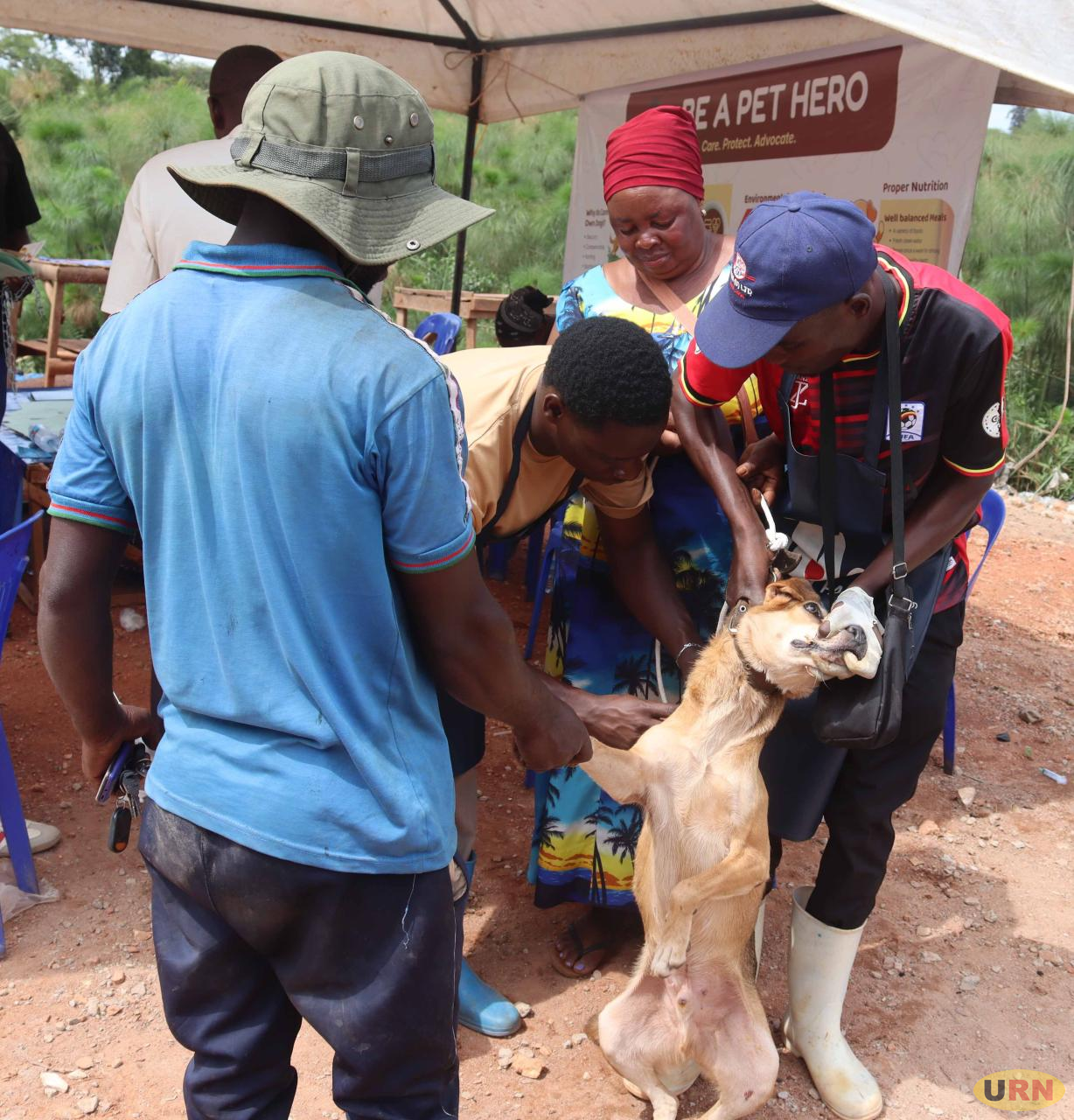
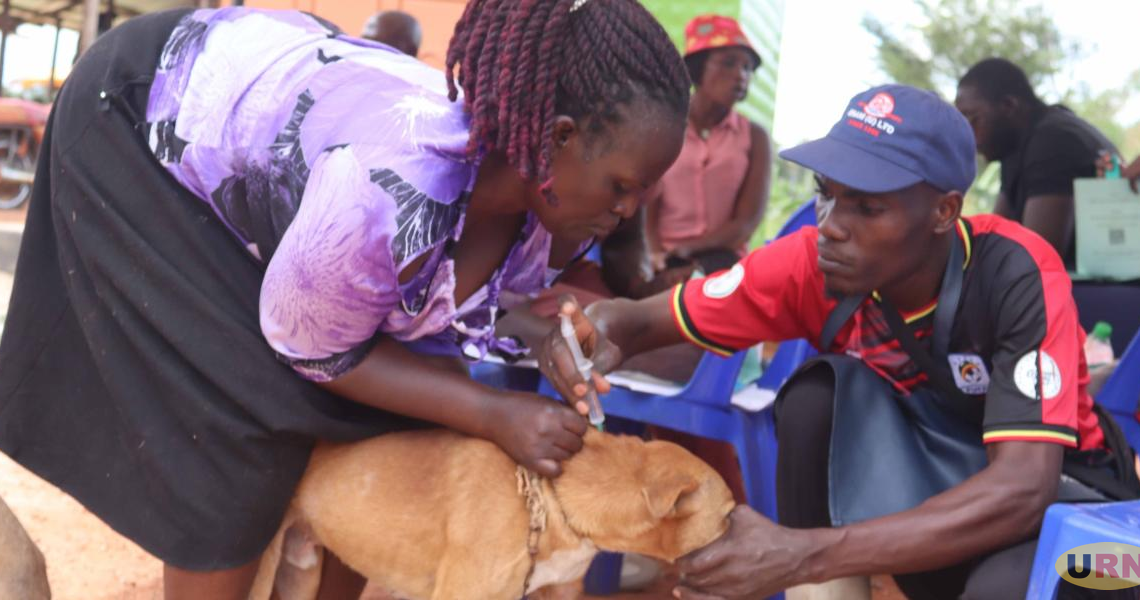
Luwero District has intensified vaccination and sterilisation of dogs as Uganda marks World Rabies Day, amid concerns over the large number of free-roaming dogs and rising risks of rabies transmission. The district has so far vaccinated 1,061 dogs and castrated or spayed 355 others as part of an ongoing campaign targeting at least 14,000 of the estimated 16,000 dogs in Luwero.
About 70 percent of the dogs in the district are reportedly free roaming, despite having owners, according to veterinary authorities. The campaign comes as Uganda joins the rest of the world to commemorate World Rabies Day on Saturday, September 26, with Luwero selected to host the national celebrations.

Health officials say the large number of roaming and unvaccinated dogs poses a significant public health risk. Luwero recorded 440 dog-bite cases in 2025, down from 539 cases in 2024. Victims sought post-exposure treatment at health centres and Luwero Hospital.
Although no deaths have been recorded in the district from the recent dog bites, veterinary and health officials warn that unvaccinated dogs remain a major risk because rabies is almost always fatal once symptoms develop.
Dr Fred Odwa, the Luwero District Veterinary Officer, said the vaccination campaign was launched with support from the Ministry of Agriculture, Animal Industry and Fisheries. He said the district is targeting 14,000 dogs in an effort to increase vaccination coverage and reduce the risk of rabies transmission.
Odwa said free sterilisation clinics have so far been conducted in Kamira, Bamunanika, Wobulenzi and Busiika town councils, where 355 dogs have been castrated or spayed. He said another mass vaccination exercise will be held on Saturday at Kasana Playground in Luwero Town.
Odwa explained that sterilising male and female dogs is also intended to control reproduction and prevent an uncontrolled increase in the dog population, particularly the number of free-roaming animals. He warned dog owners who fail to vaccinate their pets that they risk prosecution under the Animal Diseases Act.
The cost of veterinary services is one of the barriers facing dog owners. Private veterinary clinics charge about 20,000 shillings to vaccinate a dog, while castration of a male dog costs about 350,000 shillings and spaying a female dog cost about 450,000 shillings. Dog owners say the cost is beyond the reach of many households, particularly in rural areas where veterinary services are also less accessible.
Susan Nabuufu and Samali Nabwami, dog owners from Kikoma Village in Wobulenzi Town Council, welcomed the free vaccination and sterilisation services, saying they would otherwise have struggled to pay for the procedures. At national level, the Ministry of Agriculture, Animal Industry and Fisheries says dog bites remain a significant public health concern.
Dr Maria Flavia Nakanjako, the ministry’s rabies focal person, said at least 60,000 dog-bite cases have been reported across Uganda over the past four years, resulting in 190 deaths. She said dogs also bite an estimated 3,500 to 4,000 other animals, including domestic animals and livestock, with about 350 animal deaths reported as a result.
Nakanjako said World Rabies Day is being used to raise awareness about rabies prevention, particularly the importance of vaccinating and sterilising dogs. She said Luwero was selected to host the national commemoration because of the high number of dog-bite cases recorded in the district.
The campaign comes as veterinary authorities seek to increase dog vaccination coverage while reducing the number of free-roaming dogs that can come into contact with people and other animals. Authorities are urging dog owners to take responsibility for vaccinating and controlling the reproduction of their animals, while the free clinics are providing an opportunity for households that cannot afford private veterinary services to access the interventions-URN. Give us feedback on this story through our email: kamwokyatimes@gmail.com