By KT Reporter
Civil society, religious leaders, and elders are set to convene an emergency peace conference to address the worsening violence ahead of the January 15, 2026, general elections.
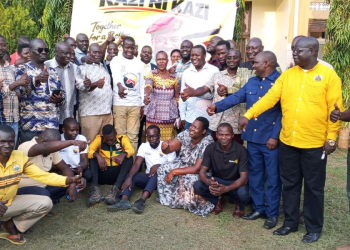
The conference, to be held at Mestil Hotel on Thursday, 11 December 2025, under the theme “Dialogue, Trust, and Transparency: Pillars to Peaceful Elections,” coincides with the global observance of International Human Rights Day, whose 2025 theme is “Everyday Essentials.”

What began as a largely calm campaign season in late September has now descended into deadly confrontations, prompting peace-building organisations to call for urgent action
International Human Rights Day, observed annually on December 10, marks the adoption of the Universal Declaration of Human Rights (UDHR) in 1948, an instrument that lays out fundamental rights and freedoms for all people. But this year, Uganda’s commemoration has been overshadowed by allegations of torture, violent policing, and increasing suppression of opposition supporters.
Violence has escalated sharply over the past two months, with at least three people, Mesach Okello and Hassan Kalungi in Kawempe, and Leon Joshua Otim in Gulu, killed in election-related incidents.
According to the National Unity Platform (NUP), security forces have arrested more than 500 of its supporters across the country: 200 from western Uganda, 160 from central, 100 from eastern, and 50 from the northern region.
The latest flashpoint occurred last weekend in Gulu City, where a violent confrontation between NUP supporters and security forces drew sharp condemnation. Video clips shared online showed police officers and men in army uniform beating civilians with long sticks and firing tear gas.
Former Gulu Municipality MP Lyandro Komakech described the assault on NUP president Robert Kyagulanyi and his supporters as “unacceptable, unlawful, and contrary to the principles of democracy, human rights, and the rule of law.”
Justice and Constitutional Affairs Minister Nobert Mao also rebuked security agencies, warning that Gulu, an emblem of post-conflict recovery, should not be turned into a theatre of state brutality.
“When you see incidents like this, that’s a failure of leadership on the part of the Electoral Commission,” Mao said. “They must show a red card to those fomenting violence.”
The Uganda Police Force later issued a statement expressing regret, though spokesperson Kituuma Rusoke insisted Kyagulanyi “triggered” the confrontation by allegedly defying an agreed campaign route. Rusoke promised internal investigations and disciplinary action against any culpable officers.
Uganda Human Rights Commission (UHRC) chairperson Mariam Wangadya, in a letter to the Inspector General of Police, condemned the “brutal and degrading” conduct of security personnel in Gulu, calling the widely circulated images “a blatant violation of professional policing standards.”
Human rights defenders say the violence is not isolated. Reports from Gulu, Iganga, Mbarara, Kiruhura, Kawempe, and Nakawa describe a pattern of tear gas, beatings, dog attacks, and the use of live ammunition.
Leader of Opposition Joel Ssenyonyi delivered a fiery condemnation on the floor of Parliament, accusing security forces of enforcing the law selectively. Tear gas has become the order of the day,” he said.
“Dogs are being used to attack citizens, akin to apartheid-era tactics. When NUP supporters hold processions, they are beaten, tear-gassed, and even killed. But when NRM supporters do the same, it is permitted. This hypocrisy must end.”
The African Centre for Treatment and Rehabilitation of Torture Victims (ACTV) said the state’s use of pepper spray, batons, dogs, and indiscriminate tear gas amounts to torture, prohibited under Article 24 of the Constitution.
ACTV reminded authorities that torture is a non-derogable right, meaning it cannot be suspended even during elections. They also noted that the Constitutional Court’s nullification of Section 32 of the Police Act was meant to prevent the over-policing now seen nationwide.
Uganda’s electoral landscape has long been fraught with instability. The Netherlands Institute for Multiparty Democracy – NIMD’s 2025 “Let’s Talk Peace” report identified Elgon, Lango, Acholi, and Rwenzori as hotspots. The report concluded that election violence is systemic, rooted in political history, security force conduct, and entrenched governance weaknesses.
Since independence, 63.6% of Uganda’s elections have been marked by violence. Afrobarometer data shows 49% of Ugandans fear election violence, and 62% cite political rivalry as the primary trigger. Women face disproportionate risks, including gender-based violence and harassment during campaigns.
Electoral Commission chairperson Justice Simon Byabakama warned that political leaders must prioritise de-escalation. “No election is worth the life of any Ugandan,” he said, urging campaign actors to demonstrate restraint.
Yet many citizens fear the country may be on the verge of repeating past traumas. As Uganda joins the world in marking International Human Rights Day, the mood at home is sombre, with more questions than celebrations.
Uganda heads into the 2026 polls with deep scars: widespread mistrust, rising youth frustration, and political intolerance shaping the national mood. Analysts say the elections could either deepen democratic backsliding or, if actors commit to transparency and genuine dialogue, become a moment of course correction.
For now, the urgent appeals from peace actors remain clear: Uganda must defuse tensions, end impunity, and safeguard citizens’ rights before the electoral season spirals further out of control.
-URN. Give us feedback on this story through our email: kamwokyatimes@gmail.com