The Japanese-funded Kitgum Public Library has registered 9,449 pupils since opening in 2010 and helped more than 50 vulnerable children return to school through a sponsorship programme.
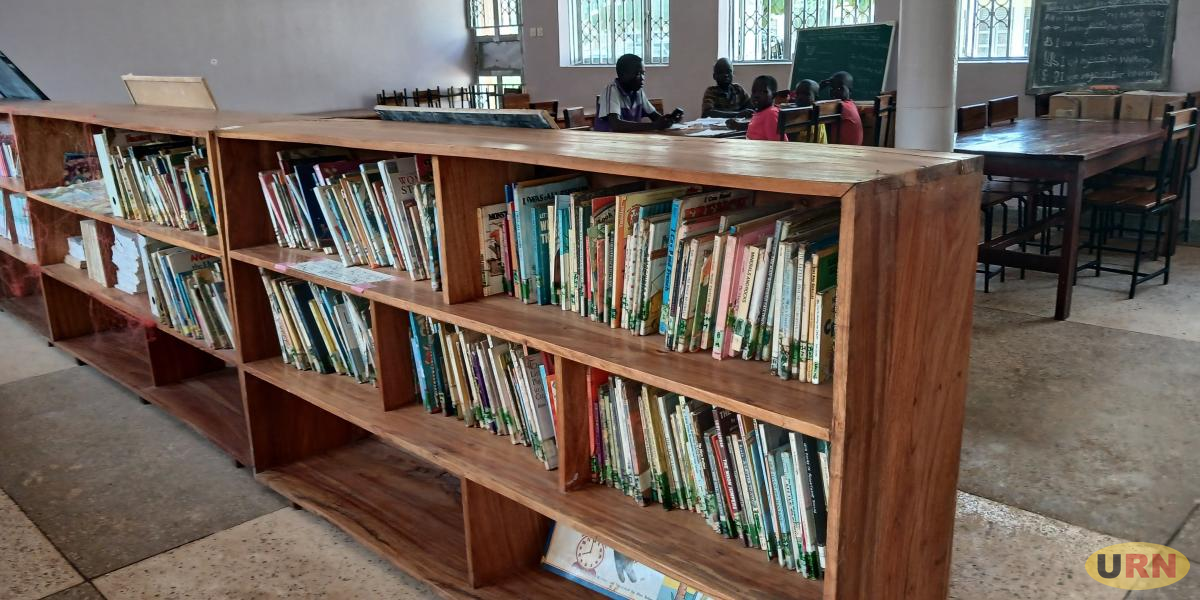
The library provides free access to reading materials and study space for primary and secondary school pupils, including children whose schools lack adequate textbooks and library facilities.
Located next to the Kitgum District government offices, the facility was initially operated from an old building that served as a teachers’ resource centre. In 2018, the Government of Japan provided USD 92,000 through its Grant Assistance for Grassroots Human Security Projects (GGP) to construct a separate library building.

Joyce Oyella, the library coordinator, said the facility had helped children progress through different stages of education, with some of its early users advancing to secondary school and university and eventually graduating.
“Here is free access to educational materials,” Oyella said, explaining that pupils can visit the library, read books and borrow them without paying fees.
The library also rotates its book collection every three months between senior reading rooms and specialised play and reading areas for children aged three to five.
Beyond providing reading materials, the facility runs a support programme for children who have dropped out of school or cannot afford to continue their education.
According to the management, the programme identifies vulnerable children, provides academic guidance and sponsors their return to government schools.
More than 50 children have so far received full sponsorship covering school fees, shoes and scholastic materials.For some users, the library also provides opportunities to earn money while pursuing their education.
Robinson Ochora, a second-year Medical Records student at Makerere Business Institute in Kitgum, said he started using the facility during his A-level holidays to keep himself occupied.
He has since been employed by the library to help young users with basic numeracy and arithmetic, earning money to meet some of his expenses while at school.
“It keeps me busy. I am also employed here to guide the young learners, and it helps me raise money when I go back to school,” he said.
Pamela Adokorach, the Kitgum District Deputy Chief Administrative Officer, said the library was helping address shortages of learning materials, particularly in primary schools without their own libraries.
“Some schools even don’t have libraries, like our primary schools. So this is a great opportunity that this library is here,” Adokorach said.
She said pupils from primary and secondary schools regularly use the facility, particularly at weekends when they have more time for independent study.
However, Adokorach said the library needed more books aligned with Uganda’s education curriculum. She also called on the management to submit regular reports to the district to help monitor its activities and impact.
“I don’t know how well stocked it is with all the books that we need. But still I know it’s helping much as there are some gaps,” she said.
Adokorach said monthly or quarterly reports would help the district track library attendance, activities and the number of children receiving support.
She also appealed to the Japanese Embassy to extend its assistance to other schools in the district that face shortages of classrooms, teachers’ accommodation and desks.
Adokorach said the district had fulfilled its commitment to maintaining the library, including financing rehabilitation work after cracks developed in parts of the ceiling.
The repairs were funded through the district education department, which continues to allocate resources for the facility’s operation and maintenance.
Anthony Lam Lawot, the Kitgum District Education Officer, said Japanese support had improved learning conditions by giving pupils additional opportunities to study outside normal school hours.
“We are so grateful because the library has allowed the learners to study during weekends and holidays when they are not engaged in classroom lessons,” Lawot said.
Masanobu Yonemitsu, head of cooperation at the Embassy of Japan in Uganda, visited the library on Friday during a press tour showcasing Japanese-funded development projects in northern Uganda.
Yonemitsu said Japan assessed not only the construction of facilities but also how well recipients maintained them after completion. He said proper management was an important consideration when deciding whether to provide further support.
“Without any good management, we cannot provide additional funding,” he said.
Yonemitsu said the library was established to address educational needs in a region affected by prolonged conflict and to improve literacy by expanding access to reading materials. He invited the district to submit additional project proposals for consideration.
However, replenishing the library’s collection remains a challenge. Management says disruptions to international shipping and postal services since the COVID-19 pandemic have made it difficult to import books from Japan and other English-speaking countries.
The existing collection continues to be circulated among readers to maintain access to learning materials, but the need for more books remains, particularly those aligned with Uganda’s curriculum.
The challenge reflects a wider shortage of school libraries and learning resources across the country.
According to the Uganda Bureau of Statistics’ National Service Delivery Survey 2021, only 31.7 per cent of government primary schools had libraries. In rural areas, the proportion was lower at 27.9 per cent.
Even among schools with libraries, only 21.1 per cent met the standards for adequacy.
In many public and Universal Primary Education (UPE) schools, learning materials remain scarce, with some relying on a few ageing textbooks kept in a headteacher’s office or a small storeroom.
The Kitgum library therefore offers pupils an alternative place to study, although its ability to meet their needs will depend partly on replenishing its collection, maintaining the facility, and sustaining support for vulnerable children-URN. Give us feedback on this story through our email: kamwokyatimes@gmail.com