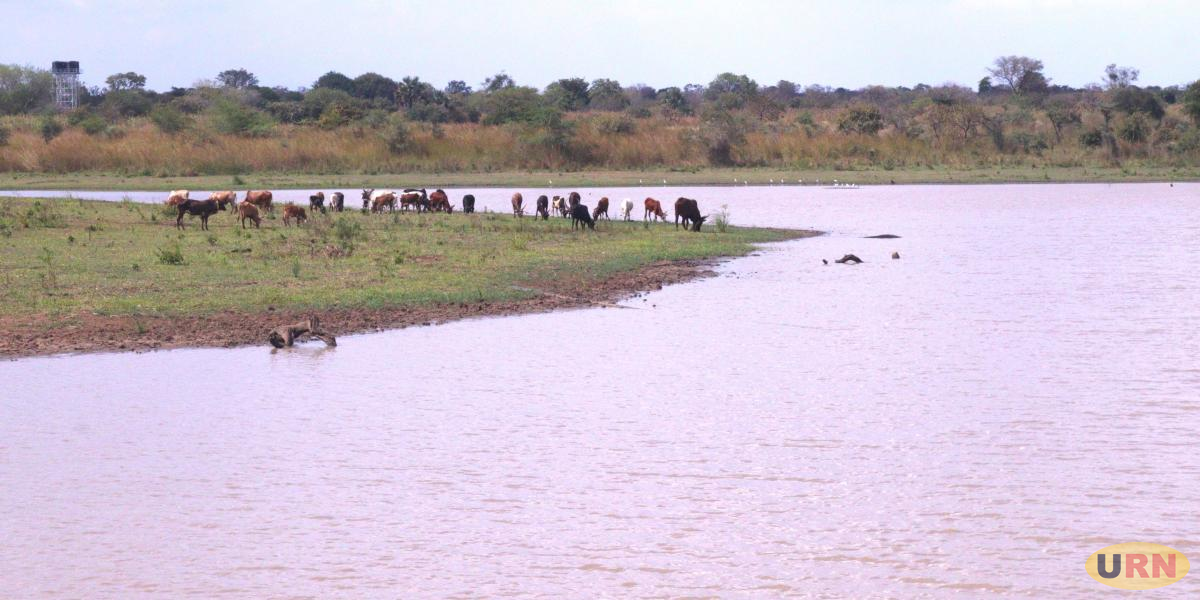
A section of leaders from the Karamoja have called on the government to find a solution to the long-standing water crisis in the Karamoja Sub-region that has affected agribusiness and livestock production.
The call was made on Thursday as the Ministry of Science, Technology and Innovation launched the Pearl of Africa Innovation Series (PAIS) in Gulu City. The Launch was convened by the Science, Technology and Innovation (STI) secretariat and attracted sub-regional leaders from West Nile, Acholi, Lango and Karamoja.
Charles Ichogoro, the Resident District Commissioner for Kotido, noted that the Karamoja Sub-region has experienced prolonged drought over the years, adding that if government is to promote innovation in the region, its focus must target addressing the water crisis.

Ichogoro said the Science Ministry must consider initiating innovative technologies that can enable bulk supply of water from main water sources to affected communities who comprise farmers and pastoralists. He suggested such innovation can be employed to draw bulk water from neighboring lakes such as Opeta, Bisinia or Kyoga so that the sub-region has constant water.
Ichogoro also called for increased support for reformed warriors in the Karamoja sub-region, some of whom have now taken up the production of soap and skin lotion after receiving the Parish Development Model (PDM).
“The Warriors have started surviving on their own; we have groups in Kotido who are making soap, body lotion, and they are doing a commendable job. My appeal is that such groups can be promoted using this innovation we are talking about, and we shall say bye-bye to poverty,” said Ichogoro.
William Bwatum Loram, the LCV Chairperson of Amudat District, said that with the prolonged drought in the sub-region, there is a need for the government to tap into solar energy to boost supply of bulk water.
He asked whether the solar energy, which is in abundance in the sub-region due to high temperatures and lack of rainfall, can be added to the national grid to help in the supply of bulk water from distant water bodies.
“Is there any way of tapping this too much heat in Karamoja into the national grid so that you generate and supply bulk from far sources instead of electricity? If there is no rain, then we have our resources, solar energy, which does not affect ecology,” he said.
The leaders noted that despite the government’s efforts to establish man-made dams to promote food crop and livestock production, they have been unsustainable, and some have dried up.
Minister of Science, Technology and Innovation Eng Jonard Asimwe Akiiki acknowledged the water challenges in the Karamoja Sub-region, adding that his ministry is already working out a long-term solution.
Akiiki said some interventions such as borehole drilling in some communities in the sub-region have not been sustainable.
“We need to find a proper solution where Karamoja can have sustainable water; that is the science, innovation and technology. So, our technical team is going to work with you people of Karamoja to see that we reach complete success,” said Akiiki.
Akiiki’s admission comes about a month after parliamentarians tasked the government to explain the impact of the past interventions and money spent in the Karamoja.
Among the key queries were the proposed Karamoja Regional Development Plan (KRDP), a 15 trillion shillings 10-year plan intended to transform the Sub-region. The KRDP had proposed plans for the establishment of a man-made lake, bulk water transfers from Lake Bisina, and industrial park, among others-URN. Give us feedback on this story through our email: kamwokyatimes@gmail.com