

A study of Kenya’s fertiliser subsidy programme has raised questions about how governments select farmers for subsidised agricultural inputs.
Researchers found a limited overlap between farmers who would benefit most from support to improve their welfare and those whose farms offer the greatest potential returns from fertiliser.
They found that most of the existing national fertilizer programmes are not truly universal as they are supposed to be.

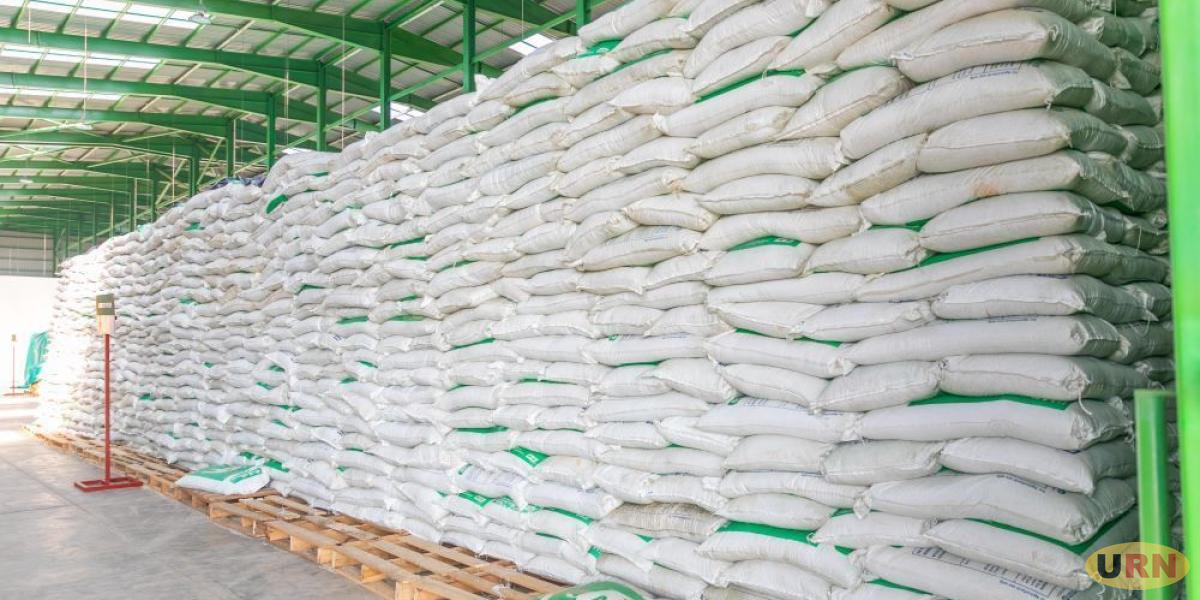
The government of Kenya in September began distributing two million bags of subsidized fertilizer, providing relief to over six million farmers across the country. The programme was designed to mitigate the effects of globally high fertilizer prices The findings could offer lessons for Uganda, which has previously subsidised agricultural inputs through an electronic voucher system.
In August 2026, the government announced a new initiative to distribute fertiliser free of charge to selected farmers.
This study could also help to shape the implementation as the government tries to ensure more productivity through fertilizer.
The Kenya findings reflect a wider challenge identified in research by the International Food Policy Research Institute (IFPRI) on fertiliser subsidy programmes in low- and middle-income countries.
In a June 2026 discussion paper, Targeting of Beneficiaries in Chemical Fertilizer Subsidy Programs: State of Knowledge and Evidence Gaps, Carly Trachtman and Ruth Vargas Hill examined how eligibility rules and implementation arrangements influence who receives subsidised fertiliser.
The researchers found that programmes intended to benefit all farmers can still exclude some through registration requirements, administrative barriers and shortages of subsidised inputs.
They also found that, although fertiliser subsidies generally benefit poorer households, there is little systematic evidence establishing which households benefit from the programmes.
“In many countries there are implicit targeting criteria embedded in the way subsidy programs are implemented and/or informal targeting induced by supply shortfalls,” the researchers wrote in the discussion paper’s abstract.
The review provides context for the Kenya study, which examines in greater detail the tension between selecting farmers to improve household welfare and selecting those whose farms are likely to generate the greatest productivity gains.
In another study, “Smart” Targeting of Fertilizer Subsidies in Kenya: Productivity, Welfare, and Soil Health, researchers from IFPRI examined survey data from 3,105 Kenyan maize-farming households collected in 2026 and combined it with soil test results from farmers’ plots.
The paper, published in July 2026, examines whether Kenya’s National Fertilizer Subsidy Program reaches farmers who are most likely to benefit under two different objectives: improving the welfare of poorer households and increasing agricultural production.
Carly Trachtman, an IFPRI research fellow in the Markets, Trade and Institutions Unit and one of the study’s authors, said the two objectives can identify different groups of farmers.
“It’s very possible that the farmers who have the highest returns to additional fertilizer are not the poorest farmers,” Trachtman said during an online presentation of the research on Wednesday.
The paper also concludes that “the ideal beneficiaries under schemes that target productivity and welfare have little overlap”.
The researchers found that 43 per cent of the Kenyan maize farmers surveyed were receiving subsidised fertiliser.
Recipients tended to come from wealthier households with larger cultivated areas, better soil nutrition and higher agricultural yields.
However, the researchers caution that these differences do not establish that the subsidy caused higher yields or improved household welfare.
The study is descriptive and assesses how actual beneficiaries compare with households identified by the researchers’ measures of welfare and potential productivity.
The researchers also found that farmers’ access to mobile phones and their knowledge of fertiliser recommendations could help explain which households received subsidies.
Trachtman said the findings point to a need for governments to establish what their subsidy programmes are intended to achieve before deciding who should receive the benefits.
“If it’s to help the poorest farmers, are you targeting the poorest farmers? Or is it possible that all the fertilizer is going to some wealthy farmers that are able to drive into town and spend their day buying all the subsidized fertilizer and then there’s none left?” she asked.
The research suggests that eligibility rules, registration procedures and access to distribution points can influence who receives fertiliser, even where governments intend to support vulnerable farmers.
The Government of Uganda has previously used different approaches to support farmers with agricultural inputs.
Under the Agriculture Cluster Development Project, implemented by the Ministry of Agriculture with World Bank support, the government introduced an electronic voucher system in 2018.
Farmers in selected areas and value chains could obtain subsidised inputs, including fertiliser, improved seeds and other farm supplies, by contributing part of the cost.
By July 2021, the Ministry reported that more than 420,000 farmers had benefited from the system, with the total value of inputs distributed reaching Shs81 billion.
The government contributed 54 billion shillings while farmers provided 27 billion shillings.
The programme targeted selected agricultural value chains, including maize, beans, rice, cassava and coffee.
To qualify, farmers had to belong to a registered farmer association or cooperative, possess a valid National Identity Card, commit at least one acre to a project crop and contribute towards the cost of inputs.
These requirements provided a formal way to identify beneficiaries, but they also raise questions about whether farmers who lack formal group membership, adequate land or the resources to make the required contribution could access the scheme.
Trachtman and Hill provide a useful qualification to this experience. They found that programmes described as universal do not necessarily provide universal access.
Registration procedures and other administrative requirements can make it easier for some farmers to obtain subsidised inputs than others, while shortages can leave some farmers without fertiliser even when they qualify.
In a related article explaining the review, Targeting Fertilizer Subsidies: Five Lessons for Sustainable and Equitable Policy Reform, published on July 16, 2026, the authors wrote: “While many fertilizer subsidies are designed to be universal, few meet that standard.”
Their analysis found that only seven of 29 programmes not formally targeted were genuinely universal, without registration or other administrative hurdles beyond basic identification. Sixteen had implicit self-targeting mechanisms.
The findings suggest that the design of Uganda’s subsidy programmes needs to be assessed alongside their implementation.
Formal eligibility criteria alone may not establish whether the farmers intended to benefit can register, afford any required contribution or obtain the inputs from designated distribution points.
The government has also distributed agricultural inputs through programmes such as the National Agricultural Advisory Services and Operation Wealth Creation.
These initiatives provided farmers with inputs such as seedlings and planting materials, although not all such support constituted a fertiliser subsidy.
In August 2024, the Ministry of Agriculture said the government had stopped providing free inputs and that farmers were expected to purchase agricultural inputs through arrangements under the Parish Development Model.
That position was followed by a new intervention. On August 31, 2026, the government launched the distribution of 173,913 bags of fertiliser procured from ITRACOM Fertilizers Uganda.
The Ministry said the fertiliser would be distributed free to selected farmers in strategic agricultural value chains, initially including tea, coffee and cocoa, as part of efforts to restore soil fertility and improve productivity.
The new programme places renewed importance on how farmers are selected, how the inputs are distributed and how government establishes whether the fertiliser reaches the intended beneficiaries.
The Ministry of Agriculture’s FY2026/27 Vote Budget Framework Paper identifies increased fertiliser access and application as a policy objective. Under the intervention to increase fertiliser uptake, the Ministry set a target of 4,200 farmers receiving fertiliser during the financial year.
The target provides an official measure against which implementation can be assessed. However, the document does not, by itself, establish how many farmers have already received fertiliser, how the 4,200 beneficiaries will be selected, or whether the target refers to the same distribution initiative launched in August.
The Ministry’s FY2026/27 policy statement also identifies declining soil fertility and farmers’ limited ability to purchase fertiliser, even at subsidised prices, as constraints on agricultural productivity.
These policy documents provide a basis for examining whether Uganda’s fertiliser interventions are designed primarily to support poorer farmers, raise production in strategic value chains or combine both objectives.
The IFPRI review also cautions against assuming that a particular targeting system will automatically produce a fairer distribution of benefits.
The authors found no clear systematic relationship between the type of targeting regime used and how progressively subsidies were distributed.
This means that introducing stricter eligibility requirements is not, on its own, a guarantee that Uganda’s fertiliser programme will reach the farmers most in need of support.
The criteria must be appropriate to the programme’s objectives, workable for intended beneficiaries and assessed against the actual distribution of inputs.
Trachtman notes that better targeting requires reliable information about the people receiving subsidies and the reasons they qualify.
In her Kenya research, she argued that “You can’t improve what you don’t know”.
She noted the importance of administrative data that records who benefits from subsidy programmes and how much support each household receives.
The review identifies the lack of systematic information on subsidy recipients as a major obstacle to assessing and reforming fertiliser subsidy programmes.
The authors note that even where household surveys were available, researchers often had to infer subsidy receipt from the prices farmers reported paying.
URN did not establish whether the Ministry of Agriculture maintains records showing which farmers received fertiliser, how much each received, and the criteria used to select beneficiaries.
Such information would help establish whether the 173,913 bags to be distributed under the new initiative are reaching the intended farmers and whether the programme is delivering against its stated objectives.
It would also provide a basis for assessing whether the distribution system excludes farmers who meet the formal requirements but face practical barriers to obtaining the inputs.
The Kenyan research also suggests that governments should consider the practical barriers farmers face when registering for subsidies.
Requirements for mobile phone access, formal land documentation, or collection from distant distribution centres can affect which farmers obtain the inputs.
The criteria being used to distribute fertiliser, the mechanisms for verifying beneficiaries, and the availability of records showing which farmers have received the inputs need to be verified in Uganda’s case.
There is also a question of whether soil testing and fertiliser recommendations can help the government to identify where subsidised inputs are likely to produce the greatest returns, while ensuring that poorer farmers are not excluded because they lack the resources or information needed to participate.
The effectiveness of the new fertiliser distribution initiative will depend not only on the quantity of inputs procured, but also on whether the distribution system reaches the farmers the programme is intended to support-URN. Give us feedback on this story through our email: kamwokyatimes@gmail.com