The coming of Artificial Intelligence has made business and governance processes easy, with one able to give instructions to their AI tools, which then processes them and offers solutions.
In many organisations, AI has rendered some traditional professional duties redundant, leading to job-cutting and in the end, reducing administrative expenditure.
However, AI in corporate leadership introduces risks including biased decision-making, erosion of human judgment and empathy, high implementation costs, and significant data privacy concerns, while it can also cause employee mistrust, workforce anxiety, and ethical dilemmas regarding automation.

Yet over-reliance on AI may lead to “leadership-diminished” organizations, where strategic nuance is replaced by algorithm-driven, impersonal decisions.
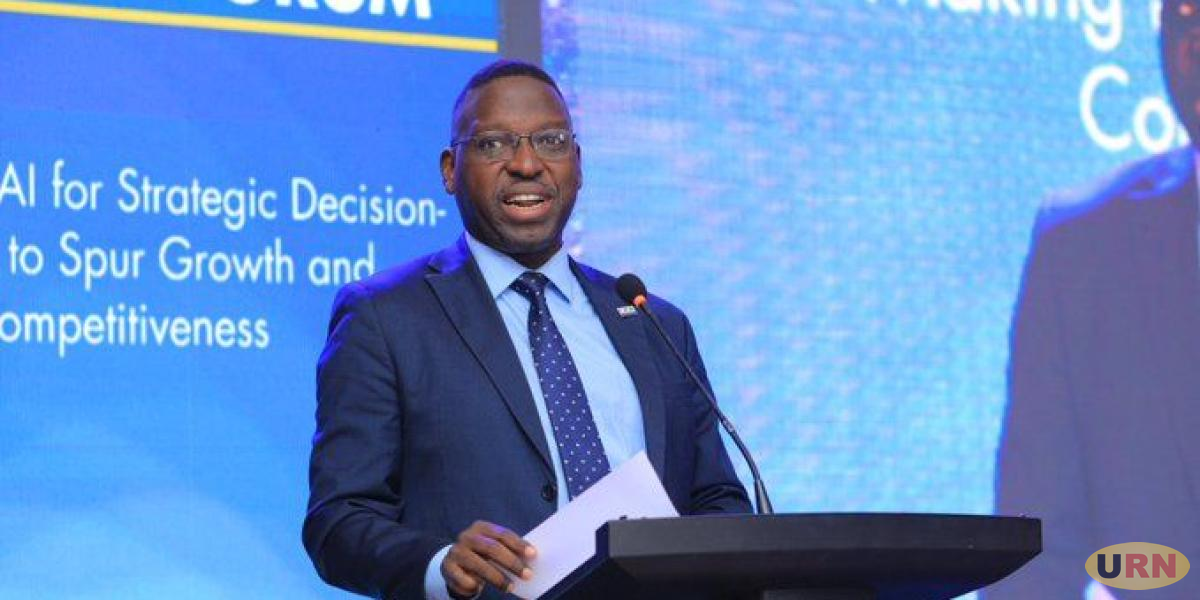
“Strong institutions are built by qualified professionals,” says CPA David Timothy Ediomu, President ICPAU, while speaking at the 4th C-Suite Forum, a gathering of top executives in the corporate world called by the Institute of Certified Public Accountants of Uganda (ICPAU).
He reaffirmed the value of professional accountants in driving ethical leadership, accountability, and strategic decision-making.
The forum organized under the theme: “The future of leadership is AI-driven,” with a focus on exploring how AI is shaping smarter decision-making, growth, and competitiveness for senior leaders.
On concerns that some executives are relaxing in their roles because of the influence of AI, Charles Mudiwa, Managing Director, dfcu Bank, warned: “AI is not accountable, leaders are.”
He challenged organisations to rethink how they approach Artificial Intelligence, noting that while AI can enhance decision-making, it cannot replace leadership responsibility.
So, it should be treated as just an enabler and not the strategy itself, he said, and warned against relying on technology without clear direction, governance, and execution.
There are concerns that AI is enhancing the digital divide especially in developing countries like Uganda, with small enterprises likely to lag behind or experience business failures as those that afford to install the tools thrive.
Ernest Ssekisonge, Managing Director of Kasi Insight, a decision and research intelligence company says they is a lot that SMEs can do leveraging AI at their level, to improve their operations.
His company aims to empower decision makers with context, insights and foresight “needed to win in Africa”, providing real time, aggregated and trended primary data on and across Africa.
He says solutions that they can gain from AI include using AI-powered consumer intelligence to strengthen strategic decision-making, leveraging behavioural data to anticipate market and economic shifts, and moving from reactive reporting to proactive, forward-looking strategy.
Others are enhancing risk management through early warning signals and predictive insights, and understanding how sentiment data can influence investment and growth decisions-URN. Give us feedback on this story through our email: kamwokyatimes@gmail.com