By KT Reporter
Parliamentary campaigns kicked off early this week and will run until January 12th, coinciding with the presidential campaign period. However, as campaigns intensify, questions have emerged about how newly formed opposition parties—and those whose support appeared to dwindle—managed to rapidly mobilise candidates for competitive parliamentary races.
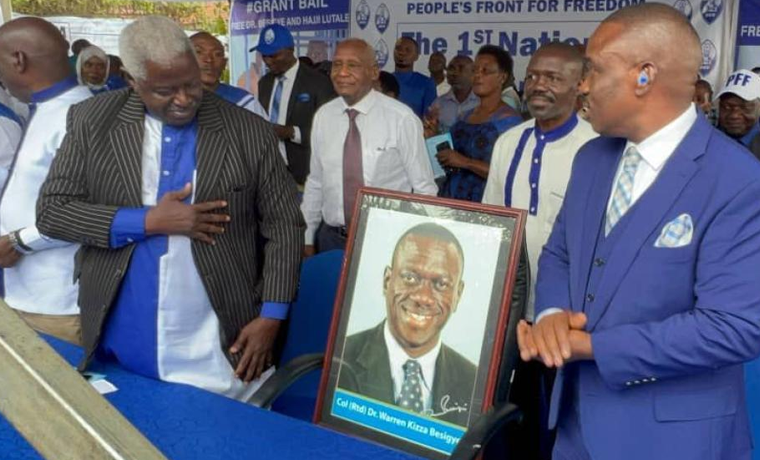
The Forum for Democratic Change (FDC), which recently split and gave birth to the People’s Front for Freedom (PFF), was widely expected to struggle to field parliamentary candidates. Contrary to expectations, FDC spokesperson John Kikonyogo revealed that the party has fronted more than 220 MP candidates across the country.

The Democratic Front (DF), which split from the National Unity Platform (NUP) and is led by former Leader of Opposition in Parliament Mathias Mpuuga, has fielded over 90 MP candidates. PFF’s Secretary General Harold Kaija also confirmed that despite being a new party, PFF successfully mobilised 81 parliamentary candidates. These developments have raised questions about how these emerging political groups were able to attract and sponsor so many candidates.
Kikonyogo attributed FDC’s success to its organisational strength and financial planning. He said the party sponsored all its candidates by covering their nomination fees. “I want to inform you that all our candidates were supported with nomination fees. We have been getting money from IPOD and we chose to spend on our candidates’ nominations, and we are still supporting others in this campaign process,” Kikonyogo said.
Each parliamentary candidate pays Shs3 million as a nomination fee, meaning FDC spent more than Shs660 million on its candidates. “Every political party has its own priorities. For us in FDC, we prioritised our people. We gave them the necessary support. We planned ahead,” Kikonyogo added.
Kaija said PFF also sponsored candidates who faced financial challenges, though he did not specify how many beneficiaries were supported under the nomination-fee scheme. In Makindye West, DF candidate David Musiri narrated that he initially planned to run under the PFF ticket, and the party had indicated readiness to sponsor his nomination. This was after he failed to secure the NUP flag, which went to current KCCA Speaker Zahara Luyirika.
Musiri said he ultimately joined DF after PFF President and Kampala Lord Mayor Erias Lukwago endorsed his rival Allan Ssewanyana. “I was about to join PFF but I was shocked when the acting president Erias Lukwago endorsed my competitor Allan Ssewanyana. I quickly joined DF and I am now their candidate. First, I was betrayed by NUP because in 2021 we agreed that I would get the ticket and Ssewanyana was going to serve his last term,” Musiri said.
DF’s 90 parliamentary candidates mean the party spent not less than Shs270 million on nomination fees. The ability of DF and PFF—both new players—to sponsor parliamentary candidates has raised questions about the National Unity Platform, which previously received significant funding under the Inter-Party Organization for Dialogue (IPOD). Despite being the second-highest beneficiary of IPOD funds after the NRM, NUP announced that it would not sponsor the nomination fees of any of its parliamentary candidates.
In 2022, the government increased IPOD funding from Shs10 billion to Shs35 billion. More than Shs11 billion is released every four months to political parties. Before recent amendments restricting IPOD funds to fully registered parties, NUP received more than Shs1.4 billion every cycle. Questions about how many NUP candidates are running—and whether any received financial support—remain unanswered. When contacted, the Secretary for the Elections Management Committee (EMC), Lovan Lwanyaga, said investigations into internal petitions were ongoing. “Still compiling but soon EC is finalizing hearing all petitions so we shall have the final details,” Lwanyaga said.
-URN. Give us feedback on this story through our email: kamwokyatimes@gmail.com