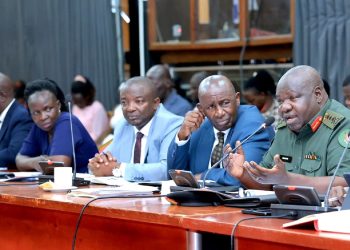
The effects of the conflicts in the Middle East and Eastern Europe have dominated the 29th Ordinary Meeting of the Monetary Affairs Committee of the East African Community, just ended in Uganda.
All seven Governors of the Central Banks (minus DRC) decried the conflicts that export inflation to their economies and weaken their currencies and are threatening the economic growth prospects.
Bank of Uganda Governor, Michael Atingi-Ego, stressed the importance of being prudent when handling monetary policies, in the midst of the widening current account deficits.

A country has a current account deficit when it spends more money on imports and transfers than it earns from selling its own exports abroad.
The EAC countries have reversals in current account trends since the outbreak of the conflict in the Middle East, a region that has joined the top markets for the region.
Atingi-Ego says, this is also in turn affecting the foreign exchange reserves and calls for early warning systems and the need to build strong financial buffers, using avenues like domestic purchase of gold.
Annette Ssemuwemba Mutaawe, EAC Deputy Secretary General in Charge of Customs Trade and Monetary Affairs, called for quick and strong interventions that will ensure that the maintain their resilience amidst the global threats.
She commended the economic growth rates in the region which pushed the average rate to an estimated 5.6 percent in 2026, a rate higher than the sub-Saharan African average.
The region also saw a growth rate of more than 30 percent in trade, including significant growth in exports, but Ssemuwemba says the trade amongst the EAC countries has not grown for the last thirteen years due to persistent trade barriers, and that this exposes the region to external shocks.
The Middle East has been a major source of foreign exchange in recent years, especially export earnings from mineral like gold, agricultural products and labour. Labor has been critical in the increasing remittance for most EAC countries, but it is being threatened by the conflict in the region.
Kenya Central Bank Governor Kamau Thugge says he forecast a widening of the current account deficit especially as exports and remittances are bound to be affected this year due to the conflict.
He adds that the country’s inflation had remained within the EAC target bellow 5%, but in June, it rose above 6%and the geopolitical developments affected prices of essential commodities back home.
Like Uganda, Tanzania also opted for the domestic purchase of gold to boost its reserve buffers and protect the local currency. However, and now has gold reserves worth about 6 billion, excluding “non-monetary” gold stocks which would raise the total reserve value to 8 billion.
Bank of Tanzania Governor, Emmanuel Mpawe Tutuba, says that before the war, the country was enjoying a positive current account until the year 2025/2026.
Thierry Kalisa, Chief Economist of the National Bank of Rwanda, says the changing economic environment due to the geopolitical developments, climate change and other shocks are making monetary policy environment more complex.
While Rwanda’s economy is the fastest growing in the region at 9.2% last year, the country is also witnessing the highest inflation rate of more that 13% due to high costs of essential imports.
Kalisa says it is time for the central banks and the governments to commit more resources into finding solutions that can mitigate the effects of global shocks which are likely to become more frequent-URN. Give us feedback on this story through our email: kamwokyatimes@gmail.com