Tourism entrepreneurs, sports promoters and health stakeholders are challenging Gulu City leaders and residents to prepare for the economic opportunities that could come with the growing Gulu City Marathon.
The stakeholders say the marathon should go beyond a one-day sporting event and become a platform for promoting local tourism, hospitality, culture, entertainment and small businesses across the Acholi Sub-region.
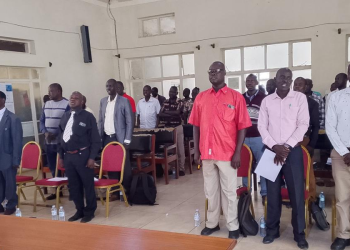
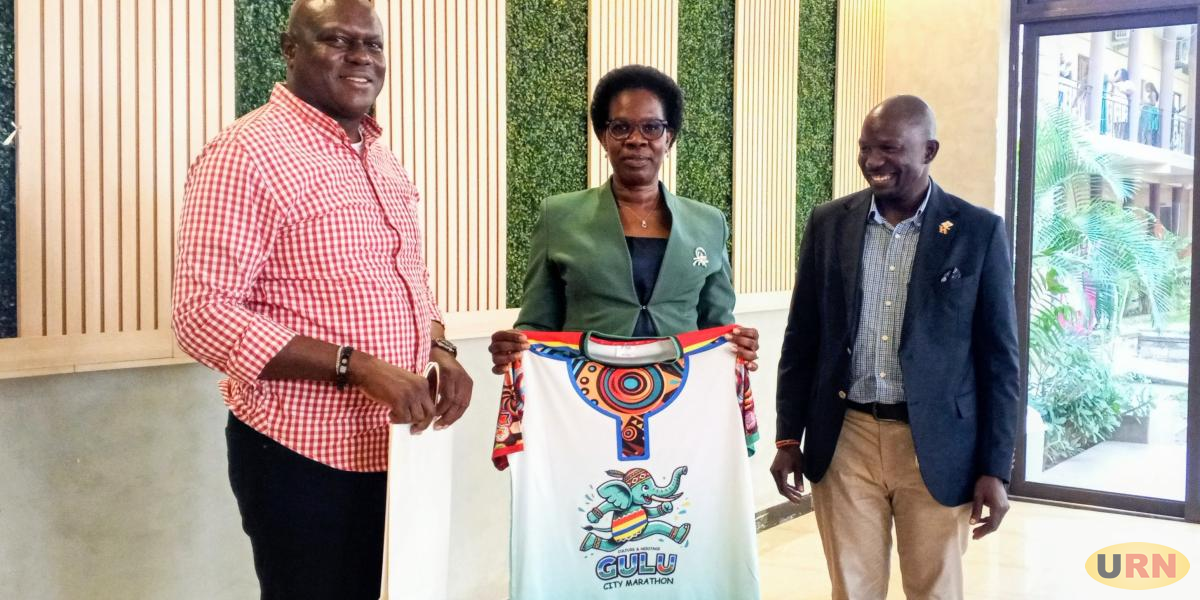
Their call was made during a stakeholders’ engagement in Gulu City over the weekend ahead of the third edition of the Gulu City Marathon scheduled for December 5, 2026.

This year’s edition will be held under the theme “Run to Raise HIV and AIDS Awareness,” following concerns raised from HIV testing conducted during last year’s marathon.
Francis Gimara, the lead convener of the Gulu City Marathon, said 80 people were tested during the medical camp held alongside last year’s event, with 19 testing positive for HIV.
“When we were thinking of the course this year, they said these are the results, and they said, no, we think the generation has forgotten about HIV. Can we run this year for HIV/AIDS to remind the young people and everyone else to be aware of HIV/AIDS?” Gimara said.
Dr Miriam Apiyo, a board member of the Gulu City Marathon, said the theme is intended to renew public awareness about HIV prevention, particularly among young people.
She said the organizers also want to use the marathon as part of their corporate social responsibility to contribute to the fight against HIV/AIDS in Gulu City.
Dr Apiyo said although the Acholi Sub-region had made progress in reducing HIV prevalence in recent years, the latest statistics point to the need for renewed and sustained prevention messages targeting young people.
Data from the Uganda AIDS Commission indicates that HIV prevalence in Gulu City stands at 9.6 percent, up from 7.5 percent in 2025, compared to the national prevalence of 4.9 percent.
However, beyond the health campaign, tourism entrepreneurs at the engagement urged stakeholders to deliberately turn the marathon into a major sports-tourism and business event capable of benefiting communities across Northern Uganda.
Amos Wekesa, a tourism entrepreneur and founder of the Rwenzori Marathon, who was the keynote speaker, challenged Gulu City authorities and local businesses to prepare residents to take advantage of the economic opportunities created by the event.
Wekesa said his experience organising the Rwenzori Marathon in Kasese showed that sporting events can generate significant economic activity for communities, but limited local investments remain a challenge.
He cited research conducted by the United Nations (UN) Pulse Uganda and Makerere University for the Rwenzori Marathon, which highlighted that some of the richest visitors in Kasese had an average of US 2,000 dollars to spend a day, but could only spend US$ 600 because Kasese Town could not attract the money.
“Prepare your population. Those who are selling, don’t sell secondhand shoes. There are very many rich people coming. Make sure that you teach the population how to tap into the opportunities,” Wekesa said.
He said this year’s Rwenzori Marathon attracted 8,000 athletes and created business opportunities for hotels, restaurants, transport operators, traders and other service providers, with money sunk in the local economy expected at 37 billion shillings, up from 25 billion shillings in 2025.
Wekesa said Gulu City has several advantages, including improved security, road connectivity and a growing hospitality industry, which could support the development of sports tourism.
He also urged the marathon organisers to establish a comprehensive website providing information on accommodation, tourism sites, local cuisine, entertainment, shopping and available spaces for businesses.
Among the tourism attractions that could be marketed to marathon participants and visitors are Baker’s Fort in Patiko Sub-county, Aruu Falls in Pader District, Murchison Falls National Park, Amuru Hot Springs, Lamogi Hills and Kidepo Valley National Park.
Dan Kidega, a board member of the Gulu City Marathon and former Speaker of the East African Legislative Assembly, also urged communities in the Acholi Sub-region to exploit the opportunities created by the event.
Kidega said sports should no longer be viewed merely as entertainment but as a tool for social and economic transformation.
“Sports is a tool that is used to transform situations. Sports is no longer entertainment; it is a trending service; it is a tool used to transform or make things better for the people. Let’s use the Gulu City Marathon to make our street boys normal human beings,” Kidega said.
The organisers are targeting more than 2,500 participants for this year’s marathon, up from about 2,000 who took part in the second edition.
Participants will compete in the 42-kilometre, 21-kilometre, 10-kilometre, five-kilometre and wheelchair categories, which the organisers say are certified by World Athletics-URN. Give us feedback on this story through our email: kamwokyatimes@gmail.com