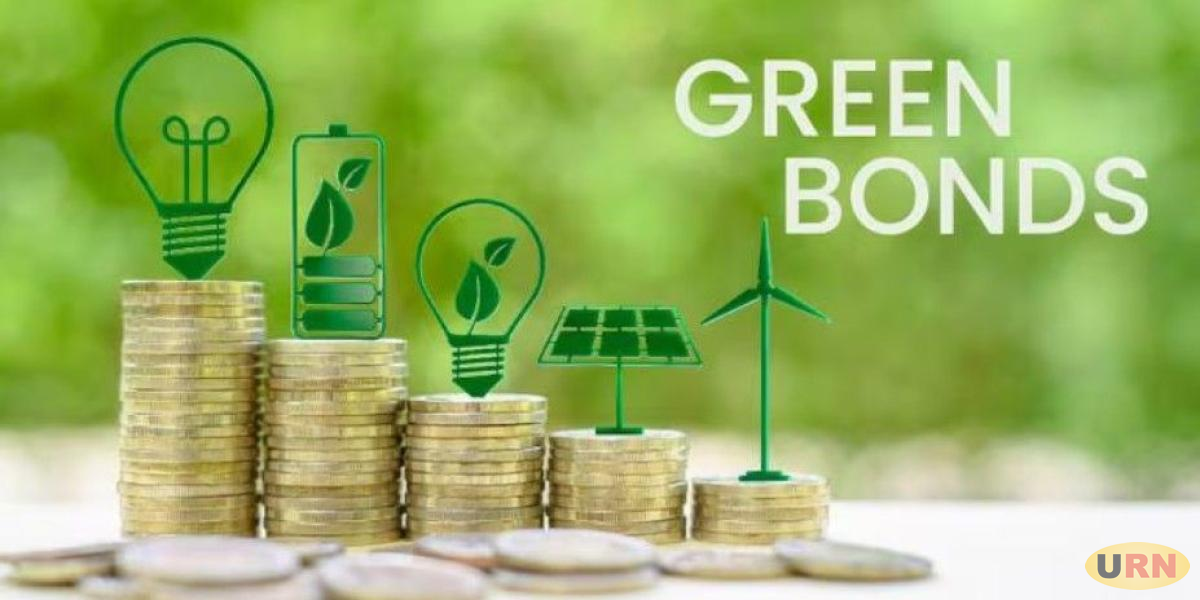
The government is on course to issue its first-ever sovereign green bond early next year, targeting up to 500 million US Dollars, equivalent to about 1.865 trillion shillings. The move, if implemented, would help the country mobilise funding for climate-friendly projects and narrow the large gap in climate financing.
Sovereign green bonds are similar to conventional Treasury bonds, but the funds raised are specifically earmarked for projects with environmental benefits. These include clean energy, climate-resilient agriculture, and infrastructure designed to withstand floods and heavy rainfall.
Dennis Muggaga, head of the Climate Finance Unit at the Ministry of Finance, Planning and Economic Development, says government has been developing a Green Bond Framework and expects to finalise the document by the end of this month. This would pave the way for investor roadshows ahead of the bond’s issuance.

Muggaga said the bond is likely to be split between local and foreign currencies to attract both domestic banks and international investors seeking opportunities in green development.
Asked how the bond would benefit ordinary Ugandans, Muggaga said the impact would be felt in areas already affected by climate change, including longer dry seasons, unpredictable rainfall and rising food and energy costs.
With public resources facing competing demands, government funding alone is insufficient to meet Uganda’s climate financing needs. Green bonds would help attract private investment into projects that create jobs, improve agricultural productivity, expand clean energy and strengthen communities against climate shocks.
Unlike conventional Treasury bonds, whose proceeds go into the Consolidated Fund and support a range of government priorities, green bond proceeds must be ring-fenced for projects that meet strict environmental and social criteria. Government must also report to investors on how the funds are used and the performance of the projects.
The Ministry of Finance is working with the European Union under its Global Green Bond Initiative, which has committed nearly 20 million Euros (approximately 87 billion shillings) to help meet issuance costs and lower the interest rate, or coupon, offered to investors. This discount is known in green finance as a “greenium”.
But experts warn Uganda must have enough projects ready to absorb the funds once the bond is issued. Lamin Trawally, Sustainable Finance Lead for Africa at the Global Green Growth Institute (GGGI), says Uganda needs a “credible pipeline” of projects across energy, roads, water, environment and land.
Muggaga says that several projects have already passed government vetting, but officials are assessing whether they meet the higher readiness standards expected by international investors.
Local commercial banks, which already trade conventional government bonds as primary dealers, are also being brought into the process. Muggaga says the green bond would allow banks to diversify their portfolios while meeting environmental, social and governance requirements. The bond would also be tradable on the secondary market.
“As a Ugandan, I’m not interested in holding a US dollar. I want it in my own currency,” Muggaga said, explaining the plan to offer a shilling-denominated option alongside a dollar tranche.
The move comes as Uganda faces a large climate financing shortfall. While the Ministry of Water and Environment projects that the country requires 28.1 billion US Dollars (approximately 104.84 trillion shillings) by 2030 to achieve its Nationally Determined Contribution (NDC) goals, only 5.1 billion US Dollars (approximately 19.03 trillion shillings) has been successfully mobilized. This leaves an immense funding deficit of roughly 23 billion US Dollars (approximately 85.81 trillion shillings).
“We are not doing very well,” Muggaga said. “That is why we are coming into these innovative financing instruments, where you can bring in a lot of money at the same time.”
The green bond framework follows other measures introduced over the past two years, including a National Green Taxonomy and a Climate Finance Strategy, aimed at building investor confidence and preparing Uganda for the domestic and international green bond market.
Christina Banuta, an EU delegation programme manager, says these measures provide the foundation needed for Uganda to enter the green bond market. She adds that the EU also plans to buy part of the first bond, alongside providing technical support and the coupon subsidy, to encourage other investors to participate.
“These building blocks are a prerequisite to Uganda accessing the international and domestic green bond market,” she said, speaking at a validation workshop on the framework on Tuesday.
The sustainable finance market has grown rapidly into a multi-trillion-dollar global sector. However, Africa continues to lag behind, capturing less than 1% of global sustainable bond issuances. Furthermore, much of the capital that does reach the continent is restricted to development finance institutions rather than commercial private investments.
If issued as planned, Uganda would join a growing number of African countries using green bonds to finance climate-related projects, including clean energy, drought-resistant agriculture, flood-resilient infrastructure and water systems-URN. Give us feedback on this story through our email: kamwokyatimes@gmail.com