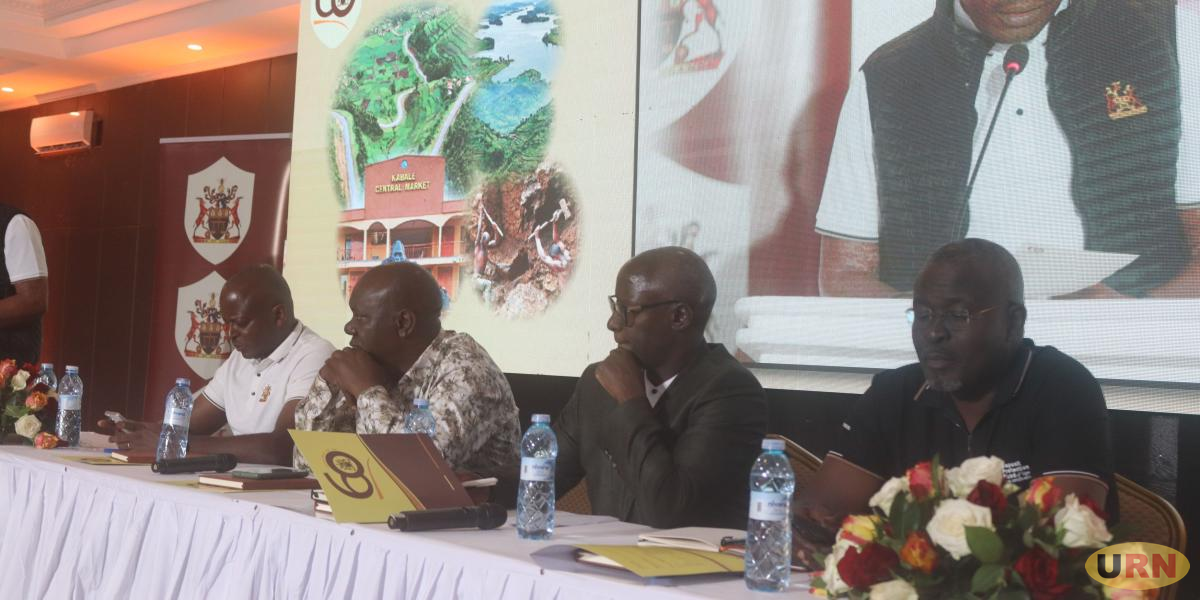
Some Ugandans still lack confidence in keeping their money in banks and other formal financial institutions, banking and economic experts have said. The experts revealed this on Thursday during a town hall meeting held at White Horse Inn Hotel in Kabale District.
The meeting aimed at increasing awareness about the economy, financial services and opportunities for business and agricultural financing in the Kigezi sub-region. It also being held as the bank celebrates 60 years of service in Uganda.
Patrick Onen Ezaga, the Director of Communications at the Deposit Protection Fund of Uganda (DPF), said some Ugandans still do not trust financial institutions despite government efforts to encourage people to use formal financial services.

Ezaga said some people continue to keep their money in places such as under their beds and in pots instead of depositing it in banks and other financial institutions.
Ezaga also expressed concern about Ugandans who rush to money lenders for quick loans to finance consumption, warning that failure to repay such loans can lead to serious financial difficulties and, in some cases, legal consequences.
He advised people against borrowing money for consumption, urging them instead to borrow for activities that can generate income and help them multiply their wealth.
Ezaga was supported by Rodgers Mazim Nagasha, the Manager of Data Management, Analysis and Reporting in the National Payment Systems Department at the Bank of Uganda.
Nagasha said some Ugandans have still not embraced financial services such as mobile money and banking agents, preferring instead to carry large amounts of cash in their bags and pockets.
He said keeping and carrying cash exposes banknotes to damage through poor handling, including exposure to moisture, tearing and excessive folding.
Nagasha explained that, under normal circumstances, a banknote is expected to remain in circulation for about two years after printing, but poor handling can significantly shorten its lifespan.
He, however, warned that carrying large amounts of cash also exposes people to other life and health risks, including theft and the potential spread of diseases like Ebola through contaminated notes.
Hannington Wasswa, the Director of Commercial Banking at the Bank of Uganda, who represented the Governor, Michael Atingi-Ego, urged Ugandans to handle banknotes carefully, saying replacing damaged currency is costly.
Wasswa said keeping money in wet conditions, using banknotes for decoration, tearing them and folding them excessively reduces their durability.
He said money spent on printing replacement notes could instead be used to support other government programmes if Ugandans handled the currency already in circulation with care-URN. Give us feedback on this story through our email: kamwokyatimes@gmail.com