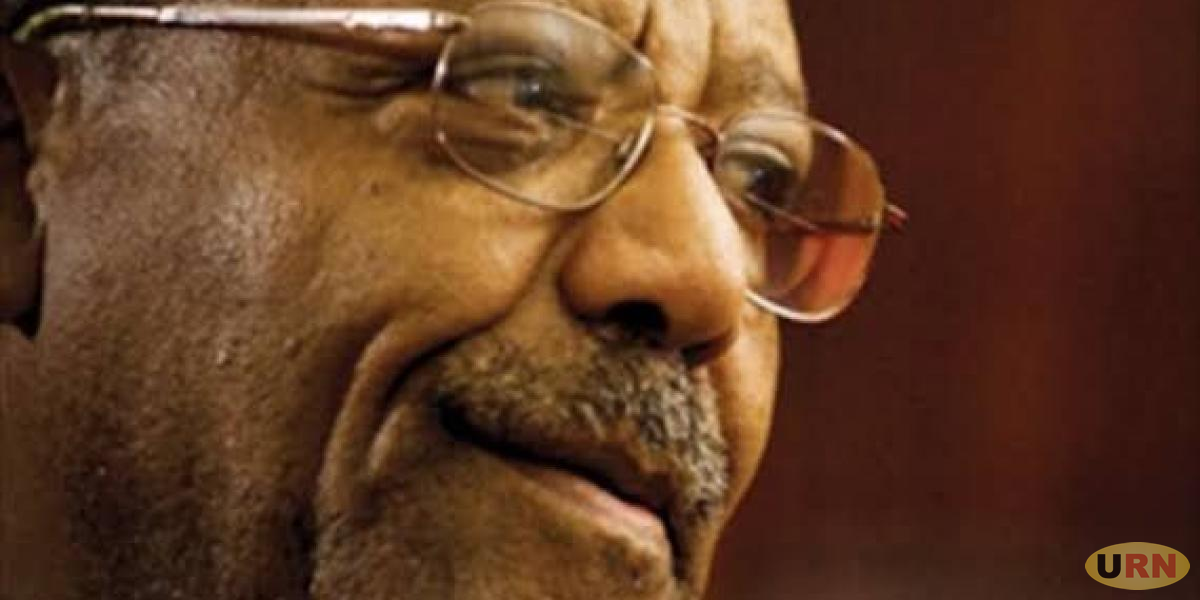
Wake,,a former Chief of Ethiopian Airlines, says the turnaround will require more than acquiring new aircraft. He wants Uganda Airlines to build its own technical and human-resource capacity, develop cargo operations, invest in catering and aircraft maintenance infrastructure, expand domestic and regional connectivity, and use Entebbe as a gateway linking African passengers to international destinations.
“An airline should be able to stand on its own. It cannot continue to beg money from government. Yes, for development, until you become strong, you need the money. But there must be an end to that. Because otherwise you build this mentality that the government would pay for everything. Don’t worry. Whether you work or not, it doesn’t make any difference. We don’t want that to happen,” Wake said.
Wake revealed that he has told the government that the airline should be able to reach break-even by 2030, provided it receives support to strengthen its fleet and infrastructure. “I told the government that by 2030 we should be able to break even. Help us reach there. Get us airplanes. Support us in infrastructure,” he said.

His comments come at a critical time for Uganda Airlines, which has continued to operate at a loss despite growing revenues and route expansion. Parliament’s Public Accounts Committee reported in September 2025 that the airline posted a net loss of 237.9 billion shillings in the 2023/24 financial year, although passenger revenue increased by 58 percent, cargo revenue by 55 percent and excess baggage revenue by 63 percent.
More recently, Wake has spoken of breaking even by the 2030/31 financial year, before Uganda Airlines begins receiving its new Boeing aircraft. The airline’s first direct Boeing order, announced in July, comprises four 737-8 aircraft and four 787-9 Dreamliners.
The thinking within the government is that new planes will modernise the fleet and support expansion across regional and international markets. But Wake says the aircraft are only one component of the turnaround.
When he took over in February, he found an airline with six aircraft, three of which were grounded because of engine and maintenance problems. Although the grounded aircraft represented half of the fleet, Wake says they accounted for almost 85 percent of the airline’s capacity, leaving the carrier operating with only about 15 percent of its potential capacity.
“When I started five months in the end of February, I came here to find that the airline has six airplanes. And out of the six, unfortunately, three were grounded because of a lack of maintained engines. That, in terms of number of aircraft, is 50 percent of the aircraft. But in terms of capacity, it is close to 85 percent of the airline’s capacity that was grounded. So the airline was living on a 15 percent of its capacity,” Wake said.
The airline has since returned one of its A330s to service after transferring an engine from the other aircraft. Wake says the grounded CRJ900 is also expected to return after its engine, which is being maintained in the United States, is brought back and installed. The second A330 could, however, remain grounded until January or February 2027 because its engines are being sent to Singapore for repair.
Wake says Uganda Airlines is using a wet-leased aircraft from Ethiopian Airlines to maintain its schedule while the fleet is restored.As part of the longer-term strategy, however, he wants the airline to reduce its reliance on wet leases and eventually operate aircraft under dry leases, where Uganda Airlines provides its own crew, maintenance and insurance.
A wet lease provides an aircraft together with crew, maintenance and insurance, but Wake says it is expensive because the airline pays for services provided by the lessor. “No matter what you do, it is still expensive. Because nobody will do maintenance at cost for you. Nobody will give you the insurance at cost. There is always an add-on. Nobody will give you the crew at the salary that they pay. They still own. And then you have to pay for a crew hotel also,” he said.
He says dry leasing is cheaper in the long term but requires Uganda Airlines to first develop the technical and regulatory capacity to operate the aircraft itself. Part of his ambition is for Entebbe to become a regional connecting hub. Wake says the airline will initially prioritise regional expansion instead of immediately adding more long-haul destinations. It plans to begin flying to Ghana in West Africa.
He says operating large aircraft on long routes without sufficient passenger volumes would deepen losses, while smaller aircraft can be used to build traffic across the region and feed passengers into international flights through Entebbe.
“What we are trying to do, we are trying to expand within Africa, to start with. That is because if you first start expanding in long routes, the loss will be too much. One, you operate a bigger airplane, which probably costs $20,000 per hour to fly. And you don’t also have the volume that you require to fill that airplane,” he said. He says the airline is therefore targeting regional destinations including Kigali and Accra, with further expansion planned into the Democratic Republic of Congo, Cameroon and other African markets.
“Whereas, if you grow in the region, if you expand in the region, one-hour, two-hour, three-hour flight. First of all, you go there with a lower-capacity airplane, so the cost per hour is much less. And you collect traffic and bring the traffic into Entebbe and feed it into the long one,” he explained.
Wake says Uganda Airlines will not depend solely on passengers travelling between Uganda and a particular destination. He uses Ghana as an example, arguing that passengers travelling from Ghana to India, South Africa, Zimbabwe, Zambia and Tanzania could be connected through Entebbe.
“You have to channel them through Entebbe. That is the way you build the volume that you require. You call that positioning, so you’re positioning yourselves,” he said. He compares the strategy with the model used by major hub carriers such as Emirates and Ethiopian Airlines, where many passengers transit through the hub without travelling to the airline’s home city.
“Why is Emirates strong? They connect people from Australia to North America to Europe to Africa to Asia, everywhere. That is the type of thing that we have to build. Even in our case in Africa, Ethiopian Airlines, over 80 percent of the traffic traveling through Addis does not even see Addis Ababa. That is how we should build,” Wake said.
”Wake argues that African airlines should also stop treating one another as their main competitors when a much larger share of Africa’s international traffic is carried by foreign airlines.
“Today, close to 80 percent of traffic from Africa to the rest of the world is carried on non-African carriers. So we should focus on regaining our share from the big market, not from the 20 market, from the big market. And we should support one another to do that,” he said.
One of the controversial decisions he has made is his insistence on retaining the CRJ aircraft in the fleet despite their history of maintenance problems. He says the regional jets are important for Uganda’s domestic tourism strategy because smaller aircraft can serve destinations where large aircraft would not be commercially viable.
“The first time I came here, we were talking about what to do, which airplane to keep, which airplane to get rid of. Everybody was annoyed with CRJ maintenance, delays, mechanical issues. ,I said, no, no, no, we’ll keep the CRJ because the CRJ is what we need for domestic operation,” Wake said.
He says the aircraft will eventually be dedicated entirely to domestic routes once Uganda Airlines acquires replacement aircraft for regional operations. “These CRJs will gradually be entirely for domestic. That’s our intention. And we’ll do that. As soon as we get a replacement for them in the regional flights, we will use them for domestic,” explained Wake.
He argues that Uganda has significant tourism potential but needs to reduce the amount of time visitors spend travelling by road to attractions. He points to gorilla tourism as an example, contrasting the road access to Uganda’s gorilla habitats with Rwanda’s investment in access infrastructure.“Uganda has more gorillas. But to reach the gorillas, you have to go by surface for 11 hours,” he said.
“In a country that they don’t know, tourists find it difficult to really venture, unless they are really adventurous, for an 11-hour road journey.” He proposes to develop smaller airports closer to major tourism attractions.
“Build an airport in those areas. And we will be the first ones to fly to these places. And you don’t have to build a sophisticated airport. You build a fair-length runway, small, to clean with coffee, with a bathroom,” he said.
“Don’t even imitate an international terminal. Build something local that will look like the place. And you will attract a lot of tourists.” He also wants Uganda Airlines to develop its own pipeline of pilots, engineers and technicians, with Soroti Flying School playing a central role.
He visited the school recently and says the airline wants to work with Boeing to revive and equip the institution.In negotiations over the new Boeing aircraft, Wake says Uganda Airlines sought assistance beyond the aircraft themselves. “We said we are not only buying an airplane. We are buying something more than an airplane,” he said.
“We want support to develop our infrastructure. We need support to build capacity. And we said we want an internal capacity.” Wake says Soroti was selected because of its historical importance to aviation training in the region.“There is a school called Soroti where most of the pilots, most of the technicians in East Africa were trained. Let us revive that. And they agreed,” he said.
According to Wake, Boeing has agreed to provide support for the institution, including equipment, tools, curriculum assistance, and funding. “We even asked them to allocate money for this. They allocated money. Boeing allocated money. Giving them equipment, giving them tools, giving them even curriculum help,” he said.
Wake says he visited Soroti and found eight students graduating, five in flying and three in engineering, and offered to take all eight despite not having a budget allocation for them. “I said I will take all eight even though I have no budget because I need them for tomorrow,” he said.
He aspires to recruit graduates directly from the school and train them within Uganda Airlines. “If everything works for me, the next five years, graduates, all of them, I want Uganda Airlines to take them,” Wake said.
“Because I don’t want to start with people who are already twisted. It’s better for me to get a fresh mind from school. Fresh mind from school. And mold them to build the airline in a way that’s good,” he explained.
He says the model is based partly on his experience with Ethiopian Airlines. Wake says the development of technical capacity must go hand in hand with investment in physical infrastructure.
Although Uganda Airlines already has Ugandan pilots and technicians, he says the airline cannot become technically independent without a proper hangar and equipment. “Having a technician is not enough. The technician will have to have the facility. Where can he maintain an airplane if you don’t even give him a hangar? We don’t even give him the tools. It will be difficult,” Wake said. “ The airline currently relies on external service providers for aircraft maintenance, but Wake wants that gradually changed.
“At the moment, we are using outside service for our airplanes. Gradually, we have to bring it in, train more technicians, bring a facility, build a hangar, and gradually do our own maintenance,” he said.
He says technicians are already making progress on the CRJ aircraft, but the wider objective is to establish an in-house maintenance system. The need to build this capacity is particularly significant as Uganda Airlines prepares for its future Boeing fleet.
The carrier announced in July that it had placed its first direct order with Boeing for four 737-8s and four 787-9s, with deliveries scheduled for 2032 and 2033 respectively. The new aircraft will allow Uganda Airlines to expand its network while improving fuel efficiency compared with the aircraft they replace.
Wake’s plan also extends to services that passengers may rarely associate with the airline itself but which have a direct impact on its costs and revenue. He says Uganda Airlines needs its own catering facility because it currently depends on external providers.
“We need a catering facility. Our passengers eat what others give us,” And these people, fortunately, they are reasonable. But they can just increase the price overnight. And we have no control. We are not in control at all, ” he said.
He also wants Uganda Airlines to gain greater control over cargo handling. Wake says the airline carries significant cargo on its London flights but depends on another company to handle it.
“On every London flight we carry 20 tons, 22 tons, 23 tons every day. But it comes through another company. Civil Aviation controls the price. But it is out of pocket for us. So we need to build this.”
He says the airline is therefore looking at building its own cargo-handling capacity and expanding dedicated freight operations.
“An airline should not make money on flying passengers alone,” Wake said. According to him, the airline is also preparing to introduce dedicated freighter operations, with the first 737 freighter expected in the third quarter of next year.
Uganda Airlines plans to expand it capacity to handle cargo with dedicated cargo aircrafts , including a Boeing 737 converted freighter and a 767 freighter.
Wake says cargo is important not only because of its potential revenue but because of its role in Uganda’s exports. “One of our responsibilities is to improve the export of this country,” he said. For him, the ultimate measure of Uganda Airlines should extend beyond the airline’s balance sheet.
He says a national carrier should stimulate tourism, exports and investment and connect Uganda to markets where it can attract visitors and business. “The important thing about an airline is not the money that it brings on its own. It is not the profitability that it brings. It is being an engine for development for a nation,” he said.
He says Uganda Airlines will examine the tourism potential of new markets when deciding where to expand.
“For example, the biggest tourist to Uganda is from UK. We are flying to the UK. Next, you would see, when you look at the figures, Germany is next. France is number three. So what we are trying to do is see how to really catch these markets to bring them in. Those are the things that we do. We would like to develop tourism, and that is our saviour as an airline. And that is important to build the nation’s economy. That is the responsibility of a national carrier,” he argued.
The ambition comes with an acknowledgment that government support will remain necessary during the airline’s development phase, particularly for aircraft and infrastructure. But Wake says the objective is to end the culture of depending on the government to cover operational shortfalls.
He wants employees to understand that commercial performance and job security are connected. “There must be an end to that. People have to believe they are there to work. And if they don’t work, they have no job. That dependence mentality has to be cleared out of everybody,” he said.
The approach reflects the growing pressure on Uganda Airlines to operate more commercially after years of financial losses.
Parliament has previously acknowledged the carrier’s potential while raising concerns about its losses and operational efficiency. In the 2023/24 financial year, the airline’s net loss stood at 237.9 billion shillings despite significant growth in passenger and cargo revenues. Wake’s strategy is therefore to grow the airline while simultaneously building the systems needed to make that growth sustainable.
The CEO also says the turnaround requires changes within the airline itself.He says he found a divided management team when he arrived and has been pushing staff to work collectively. “I see a completely divided management team. Completely divided. Going in different directions. Suspicious of one another,” Wake said.
“From the very day I said we are a team. We should work as a team. If there is anything we don’t agree with, say it here. Let us discuss it and solve it. But please work as a team.” He also acknowledges that Uganda Airlines needs to improve its communication with passengers and the media, particularly when flights are delayed.
“We are not communicating enough,” he said.“Whenever the media requires information, we have to give an honest explanation. If we are at fault, we should be able to say we are at fault or correct. If we are right, we should explain our point of view.”
He says some delays are caused by mechanical problems or circumstances beyond the airline’s control, including airport operations, but passengers should be told the reason and kept informed. “When we do, we will apologize. We’ll communicate with people and tell exactly the reason for the delay,” he said.
The new Boeing passenger aircraft are not expected until 2032 and 2033, meaning the airline must first stabilise its current fleet, improve reliability, strengthen regional connectivity and develop its internal capacity. That makes his emphasis on Soroti, maintenance, cargo, catering, domestic tourism and regional routes significant: they are intended to build the foundation before the larger Boeing fleet arrives.
Wake says he believes Uganda has the potential to support a strong national carrier, provided government, management and employees work towards the same objective. “I believe with what I have seen in different parts of the world, the opportunity in Africa is much bigger than the opportunities that we see everywhere else. Where we lack is a vision and the commitment to make it work,” he said-URN. Give us feedback on this story through our email: kamwokyatimes@gmail.com