
The Electoral Commission has asked the High Court in Kampala to strike out a petition challenging the election of Kampala Central MP Minsa Kabanda Nabbengo, arguing that some issues raised by the petitioner should first have been handled through the EC’s pre-electoral complaints process.
The petition was filed by former Kampala Central parliamentary candidate David Lewis Rubongoya, who is seeking to nullify the Kampala Minister’s election in the January 15, 2026 election.
Rubongoya alleges that the election was marred by widespread irregularities, including multiple voting, ballot stuffing, voter intimidation, manipulation of results and other illegalities that, he argues, substantially affected the outcome. The EC has raised a challenge to the petition, particularly the aspects concerning matters that arose before polling which it says fell within its mandate to resolve.

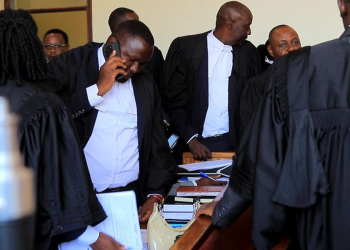
Speaking to Uganda Radio Network after a pre-trial session before High Court Judge Flavia Nabakooza, EC’s lawyer Steven Kalali said the matter came before court for mention and that the Judge mainly considered whether the parties had complied with the required procedures.
Kalaali said the Commission had filed its response to the petition by April 10, 2026, while the petitioner had also filed the petition and supporting documents and served the respondents.
He said the EC had filed an application challenging part of the evidence and issues presented by Rubongoya, as they had been brought before court contrary to the procedure established by law.
At the center of the Commission’s objection are allegations concerning Kabanda Nabbengo’s nomination and eligibility to contest the election.
Rubongoya challenges the validity of Kabanda Nabbengo’s nomination, alleging that she was not properly nominated because of discrepancies in the names appearing in official records. According to the petition, the National Identification and Registration Authority records of June 20, 2025, identified her as “Minsa Kabanda,” while she was subsequently nominated as “Minsa Kabanda Nabbengo.”
Rubongoya further alleges that the NRM which sponsored Kabanda Nabbengo, had submitted her name for nomination as “Minsa Kabanda,” based on the name appearing in NIRA records. He argues that the name used during nomination did not correspond with the voters’ register and was also inconsistent with a deed poll published in 2021.
The petitioner further challenges Kabanda Nabbengo’s academic qualifications, alleging that she did not establish her qualification equivalent to Advanced Level standard within the period required by law. He says Kabanda obtained a Certificate of Completion of Formal Education of Advanced Level Standard or its equivalent on October 7, 2025, only 15 days before the October 22, 2025 nomination date, and submitted the certificate to the Returning Officer on the day she was nominated.
Rubongoya argues that the late submission rendered her nomination invalid. He has also questioned academic documents bearing the names “Nabbengo Minsa Mallicent” and “Mbabali Minsa,” alleging that they were wrongly attributed to Kabanda Nabbengo.It is these nomination-related complaints that the Electoral Commission says should first have been brought before it through the appropriate pre-electoral complaints mechanism.
Kalali argued that some of the matters raised in the petition fall within the Commission’s statutory mandate, including complaints arising from the nomination process.He said such matters should not have been taken directly to the High Court without first being presented to the Electoral Commission.
The EC is relying on Section 14, which gives it powers to receive and determine such complaints. The Commission is thus asking the court to strike out the petition on grounds of non-compliance with the prescribed procedure. But Rubongoya’s petition goes beyond the validity of Kabanda Nabbengo’s nomination and raises numerous allegations concerning the conduct of the election itself.
Rubongoya claims that the Electoral Commission declared Kabanda Nabbengo the winner with 22,280 votes against his 18,211 votes, giving her a margin of 4,069 votes, which results he disputes, arguing that the election was not conducted in accordance with the Constitution, the Parliamentary Elections Act and the principles governing free, fair and transparent elections.The petitioner alleges that results from several polling stations were altered or incorrectly entered on the final tally sheets, contrary to figures contained in authentic Declaration of Results Forms.
He mentions polling stations in Nakivubo, Mengo, Kisenyi, Kamwokya II, Old Kampala and Kololo III and alleges that more than 1,335 votes were illegally added in favour of Kabanda Nabbengo.
Rubongoya also alleges multiple voting, ballot stuffing and intimidation in parts of Kololo II, Nakasero II and Kisenyi I. In Kololo II, he claims Kabanda’s supporters, allegedly with the assistance of security personnel, engaged in multiple voting at polling stations in the Summit View area. He further alleges that people whose names were not on the voters’ register were allowed to vote and that his polling agents were harassed.In Kisenyi I, Rubongoya alleges that groups of Kabanda supporters took control of polling activities at several stations, chased away his agents and prevented some registered voters from freely exercising their right to vote.
He also alleges that some ballot papers were pre-ticked in favour of Kabanda. Rubongoya says he was himself attacked by Kabanda’s supporters during the election period and that the incident was reported at Old Kampala Police Station under CRB 044/2026.
In Nakasero II, he alleges that polling at 14 stations was effectively controlled by members of the armed forces, police and Kabanda supporters, resulting in multiple voting and other irregularities.He also challenges the location of 23 polling stations in Nakasero II and Kololo II, arguing that they were situated in restricted security areas characterised by heavy military presence, checkpoints and limited public access. According to the petition, the security environment intimidated voters and candidates’ agents preventing them from effectively monitoring the polls. Rubongoya estimates that 12,372 registered voters at the polling stations were unable to freely and fairly exercise their right to vote.
He also alleges that the Returning Officer excluded results involving 3,586 registered voters at seven polling stations from the final tally.The affected stations were in Kamwokya II, Kisenyi I, Mengo and Nakasero II, and Rubongoya argues that excluding their results materially affected the final outcome. The petitioner further alleges that Electoral Commission officials failed to properly tally and record results in several areas, including Nakivubo, Mengo, Kisenyi I and II, Kamwokya II, Kololo III and Old Kampala.
He also links the alleged manipulation of results to the arrest of some of his polling agents.According to Rubongoya, his agents in Kamwokya II were arrested on the evening of January 15 and charged before the Buganda Road Chief Magistrate’s Court in Criminal Case Number 0091 of 2026, involving Annet Nakanwagi and 33 others.
He alleges that the arrests were intended to force his agents to surrender their original copies of Declaration of Results Forms, which would have facilitated the alteration of results without detection.
Rubongoya says the criminal case was discontinued on February 23, 2026, although he alleges that other agents continued to be arrested and targeted in connection with their possession of original results forms.He has also raised what he describes as statistical anomalies in voter turnout, particularly in parishes where he says turnout in the parliamentary election was higher than in the presidential and Woman Member of Parliament elections conducted on the same day using the same voters’ registers.
Rubongoya says he lodged verbal and formal complaints about the alleged irregularities during polling and tallying but that his complaints were not acted upon by police or election officials.
He argues that the alleged illegalities and irregularities affected the election both quantitatively and qualitatively and that, once the disputed results are excluded, he emerges as the legitimate winner.
He is asking the High Court to nullify Kabanda Nabbengo’s election and declare that she was not validly nominated and was therefore ineligible to contest or be declared elected.He is also asking the court to declare him the duly elected Member of Parliament for Kampala Central or, alternatively, order the Electoral Commission to conduct a fresh parliamentary election in the constituency.
In addition, Rubongoya wants the court to order the relocation of the 23 polling stations in Kololo II and Nakasero II from restricted security areas. The petitioner’s lawyers also raised the issue of Declaration of Results Forms from several polling stations, saying the documents had been electronically transmitted from the district tally centre to the Electoral Commission.
The documents include results forms for Pioneer Mall Parking, Shauriyako, Nakivubo, Lubaga Road LC Meeting Place, Budonian Club, Kakajo, Bugambaki Road, Greater Evangelist Church, Nabagereka Primary School parking yard, Market View LC I, Martin Road, Church of God, Kitante Primary School and Kisementi B-Village Two.
The petitioner’s lawyers told court that if the Electoral Commission fails to produce the documents, they intend to file a formal application seeking an order compelling their production.
The legal team also sought permission to file two outstanding affidavits, saying one was awaiting a signature that required permission from the Inspector General of Police.
The lawyers said the affidavits contain evidence they consider crucial to the petition, in addition to the affidavit sworn by Rubongoya.
Kabanda Nabbengo and the Returning Officer were not physically present in court during the proceedings. Kalali said the EC would use the period before the next court date to prepare and file its submissions in support of its application.
The judge directed the parties to file their respective submissions and set October 1, 2026, for confirmation of compliance. The court will thereafter determine how to proceed with the petition, including the Electoral Commission’s objection to the matters it says should first have been subjected to the statutory pre-electoral complaints process.
The court has not yet determined the substantive allegations of fraud, intimidation, multiple voting, manipulation of results or other electoral irregularities raised by Rubongoya-URN. Give us feedback on this story through our email: kamwokyatimes@gmail.com