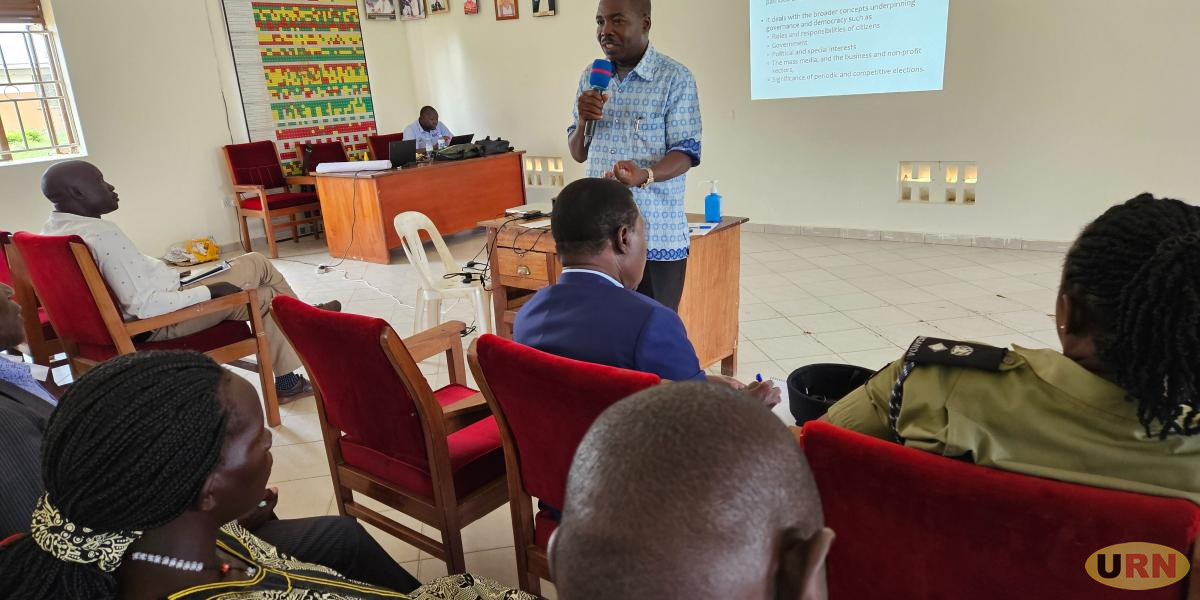
Leaders in Dokolo District have challenged government ministries to strengthen communication and community sensitisation on development programmes, arguing that many local leaders are often left uninformed about initiatives they are expected to help implement.
The concerns were raised during the opening of a two-day civic education and nation-building workshop organised by the Ministry of ICT and National Guidance. The meeting brought together elected leaders, including district councillors and LCIII chairpersons, technocrats, religious leaders, and community representatives to discuss governance, service delivery, and citizen participation.
Throughout the discussions, participants highlighted what they described as a disconnect between central government agencies and grassroots leaders, saying the gap has contributed to the poor implementation of programmes such as the Parish Development Model (PDM), livestock restocking initiatives, and agricultural projects.
A councillor representing Kangai Sub-county expressed concern that local leaders are often left out of sensitisation activities for government programmes, making it difficult for them to effectively explain and support initiatives such as the Parish Development Model (PDM) within their communities.

Another participant, Edward Okuk Oluma, said development efforts often focus on district-level leaders while overlooking Local Council leaders who interact directly with communities on a daily basis.
“LCI and LCII leaders are the real implementers of government programmes at the grassroots. If they do not understand their roles and responsibilities, then development cannot be realised,” he said.
Oluma urged the Ministry of ICT and National Guidance to extend similar training and civic education programmes to lower local government structures.
The workshop also exposed frustrations over what participants described as inadequate community awareness before government interventions are rolled out. One leader cited the distribution of coffee seedlings as an example, saying beneficiaries were not adequately trained on how to manage the crop, which undermines the intended impact of the programme.
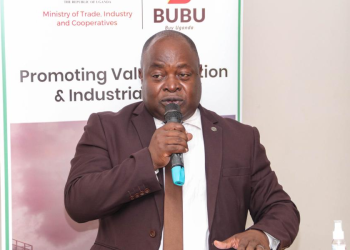
The workshop was facilitated by Jonah Jackson Bakalikwira, Senior Presidential Advisor on Special Duties, who emphasised the importance of civic education in promoting democracy, patriotism, and socio-economic transformation.
“We have been discussing how to protect and promote the democratic space Uganda is enjoying,” Bakalikwira said. “For us to benefit from this democracy, we must mobilise Ugandans to embrace patriotism and socio-economic transformation.” He noted that local leaders are strategically positioned to drive development because they live and work among the communities, they serve.
Addressing the gathering, John Oyambi from the Ministry of ICT and National Guidance acknowledged that information gaps remain a major challenge across the country and can affect the success of government programmes. “For example, people receive Parish Development Model funds for development, but some fail to utilise the money properly because of a lack of knowledge,” Oyambi said.
He explained that the workshop was designed to equip leaders with civic knowledge, strengthen patriotism, and foster collaboration between political leaders and technocrats.
“Our major theme is enhancing nation-building through ideological transformation. We want leaders to focus on development, teamwork, and effective service delivery,” he said. Oyambi added that conflicts between elected leaders and technical staff continue to undermine the implementation of government programmes in some districts.
He pledged that concerns raised during the workshop would be forwarded to the relevant ministries for action. “Where there are gaps, we shall relay the information to the responsible ministries so that services can effectively reach citizens,” he added.
The issue of political divisions also featured prominently during the discussions, with several participants calling for unity across party lines in the implementation of development programmes.
However, Dokolo Resident District Commissioner Barbara Akech challenged leaders to be more proactive in carrying out their responsibilities, noting that effective leadership is critical to ensuring government services reach the people.
Captain Julius Benaguru, a religious leader in Dokolo, said political affiliation should not prevent communities from benefiting from government interventions. “There is a need for a total mindset change if we are to take Dokolo to the next level,” he said. “People should stop viewing development programmes through political party lenses and instead focus on improving livelihoods.”
A former Dokolo District Council executive chairperson echoed the call, saying patriotism and collective responsibility remain essential ingredients for development. “We are responsible to the electorate and must handle issues that promote unity, peace, and development,” he said.
By the end of the first day, participants welcomed the engagement but urged government agencies to institutionalise civic education at all levels of local government. They argued that effective service delivery will remain elusive unless information reaches both leaders and communities at the grassroots-URN. Give us feedback on this story through our email: kamwokyatimes@gmail.com