By KT Reporter
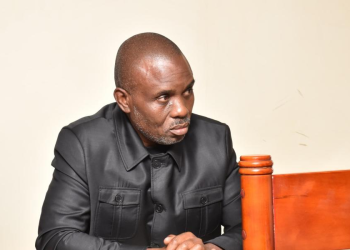
Former Chief Justice Richard Buteera has urged the Executive and Parliament to implement rulings of the Constitutional and Appeals Courts.
He says the delay or failure to implement the rulings of those courts defeats the ultimate purpose. Justice Richard Buteera explained that the courts, especially in the Public Interest Litigation, make judgments which are accompanied by recommendations to ensure mistakes that led to the litigation are not repeated.

He, however, notes that usually the Executive and the Legislature have failed on the implementation bit.
Justice Buteera cited the Amama Mbabazi Vs Yoweri Museveni, which was an election petition in which Mbabazi was challenging the declaration as president of Yoweri Museveni in 2016.
The court recommended several electoral reforms that should have been made before the next (2021) elections. Buteera says as the country heads into another general election, the reforms have not yet been made.
He was delivering a keynote address on the theme “The Constitutional Court as a harbinger of Constitutional Reforms,” at the launch of the first Compendium of Public Interest Litigation cases, a compilation of 25 public interest cases and their judgments.
The cases, recorded between 1995 and 2005, were chosen due to their potential impact on the public, constitutionalism and the rule of law, if the court’s recommendations were also implemented.
Justice Buteera cited the Susan Kigula petition against the death sentence. The outcome of the ruling by the court in the Kigula petition benefited over 400 death-row inmates whose death sentences were commuted to life imprisonment.
The ruling of the Constitutional Court granted discretion to the trial Judge to determine a death sentence or life imprisonment rather than a mandatory death sentence.
Human rights lawyer Eron Kiiza, who has been involved in several public interest cases, says the judiciary cannot run away from responsibility. According to Kiiza, the courts have the power to force the responsible authorities to enforce court orders.
The compendium also uses the cases petitioned by journalists to show that an individual may go to court after his or her right seems to be violated, but the case ends up being for the benefit of many, including Andrew Mwenda and Charles Onyango Obbo and others.
In Andrew Mwenda at another, Vs the Attorney General, in which the Petitioner was challenging the offence of sedition under sections 39 and 40 of the Penal Code Act, Buteera says it was not only journalism which won, but the public and democracy too.
While he welcomes the compendium, Kiiza hopes that it will help change for the better the Public Interest Litigation terrain in Uganda. He is of the view that Public Interest Litigation has not been smooth for the lawyers as it should be.
Kiiza, who was jailed by the UPDF Court Martial, says a lack of true democracy also means a lack or absence of an independent judiciary, which makes it tricky for litigants and the public to expect justice.
The compendium shows that justice is not the work of a single institution but a shared responsibility, where all play a role. The Solicitor General, Pius Biribonwa, expressed commitment that the government will continue striving to uphold the constitution and the notion that no one is above the law.
The 1995 Uganda Constitution provided for Public Interest Litigation, allowing any concerned citizen to file a lawsuit to protect the rights of a large group of people or the public at large, but a group of lawyers says this initiative has not been utilized.
Dozens of cases have been decided by the Constitutional Court under this initiative since the constitution was promulgated, and names of public interest litigants, like Hassan Male Mabirizi, Nicholas Opio, and Ladislaus Rwakafuuzi, stand out.
However, to the Fidelis Leadership Institute (FLI) and Konrad Adenauer Stiftung (KAS), both human rights, good governance-focused organisations, the country has not benefited as much as it should, mainly because the decisions and recommendations from court resolutions are either not implemented, or the implementation processes are not brought to public knowledge.
The Executive Director at FLI, Pheona Nabaasa Wall, said the Compendium offers serious academic value regarding constitutional history and Uganda’s development, strengthening access to justice and advancing governance.
She, however, questions whether the promulgation of the Constitution and the subsequent electoral processes have given the voters and the general public the kind of political leaders that they get.
The Country Director of Uganda at KAS, Anna Reismann, said Public Interest Litigation was born out of the constitution and is important in upholding constitutionalism. Its focus on serving the rights of the public shows how highly democratic it is, as well as its importance in shaping the future of Uganda.
The 24 cases were selected from seven different categories. These are: Constitutional Rights and Freedoms; Administrative Law and Governance; Military Justice and Civil Rights; Gender Equality and Anti-discrimination; Criminal Justice and Due Process; Fair Constitutional Protection; and Election and Electoral Governance. Wall says it is hoped that this initiative will enable more people, not just lawyers, to access justice in courts with PIL cases.
-URN. Give us feedback on this story through our email: kamwokyatimes@gmail.com