For four decades, the National Resistance Movement (NRM) has maintained an unyielding hegemony over Uganda’s political theatre. Once heralded as the vanguard of stability following years of upheaval, the recent NRM primaries have unequivocally unveiled the festering malaise corroding the party’s purported democratic façade. The primaries have become a sordid tableau of perfidy, violence, and abject disregard for the democratic ethos the party claims to uphold.
Rather than exemplifying democratic probity, the NRM’s internal elections descended into a maelstrom of anarchy and subterfuge. A political entity purporting to govern a sovereign nation cannot, paradoxically, administer an orderly and transparent electoral exercise within its own ranks. This is not a mere administrative failing but a manifest testament to the party’s aversion to genuine democracy, a flagrant contravention of its constitutional obligations.
Foremost among the transgressions was the brazen violation of party registers. Across disparate constituencies, electoral stations became conduits for indiscriminate voting. Minors, non-members, and unidentified persons were inexplicably enfranchised, rendering the primaries a chaotic free-for-all, egregiously contravening established electoral protocols. In regions such as Kyenjojo, Kazo, Isingiro, and Bunyoro, electoral tallies were flagrantly manipulated. Victors were proclaimed prematurely, often prior to the completion of vote tabulation. Legitimate grievances were met with state-sanctioned intimidation, arbitrary arrests, and violent suppression, tactics emblematic of the regime’s despotic tendencies.
The NRM Electoral Commission, ostensibly the custodian of electoral integrity, functioned instead as a pliant instrument of the regime’s elite. It abetted the ascendancy of candidates endowed with financial largesse and entrenched connections to the security apparatus rather than those with authentic grassroots support. The so-called flag bearers emerged not as paragons of meritocracy but as beneficiaries of nepotism, patronage, and coercion.
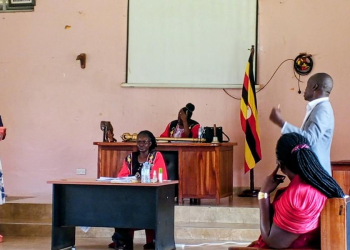
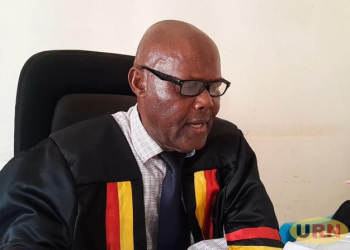
The nadir of this electoral farce was epitomized by the NRM election tribunal. Confronted with over 400 petitions alleging electoral malpractices, the tribunal dispensed justice with perfunctory haste, allocating a paltry five minutes to each case. This cavalier approach was compounded by the appointment of inexperienced legal practitioners, transforming a supposed bastion of adjudication into a laughingstock. The tribunal became a farce so glaring that even habitual prevaricators found the spectacle ludicrous. This grotesque miscarriage of justice not only denied aggrieved parties their due process but underscored the regime’s utter contempt for the rule of law.
This internal dysfunction within the NRM transcends embarrassment; it is symptomatic of a pernicious political malaise. Article 1(4) of Uganda’s 1995 Constitution enshrines the principle that “The people shall express their will and consent on who shall govern them and how they should be governed, through regular free and fair elections.” Yet, the NRM’s conduct starkly contravenes this sacred mandate, revealing elections as mere simulacra designed to perpetuate autocratic dominance under the veneer of legitimacy.
The party’s modus operandi is a cynical calculus of power retention. The leadership has institutionalized a regime where patronage, intimidation, and electoral subterfuge eclipse democratic engagement. The primaries were but a microcosm of the broader national electoral charade, where genuine political competition is stifled, and opposition is systematically marginalized.
The ramifications are grave. If the ruling party cannot conduct transparent internal elections, how can it be entrusted with the stewardship of national electoral processes? The NRM’s blatant disregard for democratic norms portends a continuing erosion of Uganda’s democratic space, imperiling the rights and freedoms of its citizenry.
Therefore, Ugandans must abandon the futile hope that the NRM will self-reform. The rot is systemic, entrenched within the party’s sinews. Its professed ‘democracy’ is a façade masking an insatiable appetite for power at all costs. The time for transformative change is not a distant aspiration—it is an immediate imperative.
The National Unity Platform (NUP), under the inspired leadership of His Excellency Robert Kyagulanyi Sentamu, embodies this transformative vision. NUP advocates for transparency, accountability, and participatory governance, offering an antithesis to the status quo. It envisions a polity where electoral contests are genuine, where the people’s voice is sovereign, and where constitutionalism is sacrosanct.
For Uganda’s disenfranchised youth, marginalized women, and rural constituencies, the choice is unequivocal. Reject the compromised NRM candidates—products of corruption and coercion—and endorse NUP’s cadre of principled leaders committed to service and integrity.
The 2026 general elections transcend routine political cycles; they represent a watershed moment for Uganda’s trajectory. The electorate’s verdict will determine whether Uganda continues its descent into repression and stagnation or embarks on a path toward freedom, equity, and prosperity.
It is imperative to recognize that democracy is not a transient event but an enduring process. It demands robust institutions, vigilant citizenry, and unwavering adherence to the rule of law. The NRM’s internal disarray is a clarion call that the old political order is unsustainable.
The struggle for democratic renewal necessitates collective resolve. As Nelson Mandela profoundly observed, “It always seems impossible until it is done.” Ugandans must marshal this resolve to reclaim governance by the people and for the people.
In summation, the debacle of the recent NRM primaries and the grotesque miscarriage of justice by its election tribunal reveal a regime in panic, desperate to cling to power through any means. The future belongs to those courageous enough to envision and enact a new Uganda—one where democracy is vibrant, inclusive, and just.
The era of hollow promises and sham elections is ending. A new dawn beckons—a Uganda where leaders ascend by merit and mandate, and where the will of the people reigns supreme. Let us seize this moment, united and resolute, to forge a brighter future.