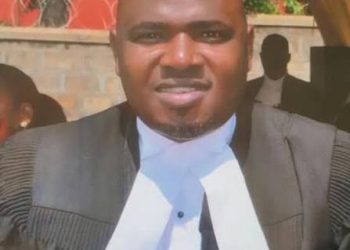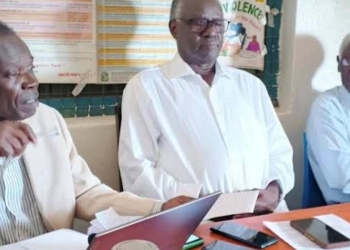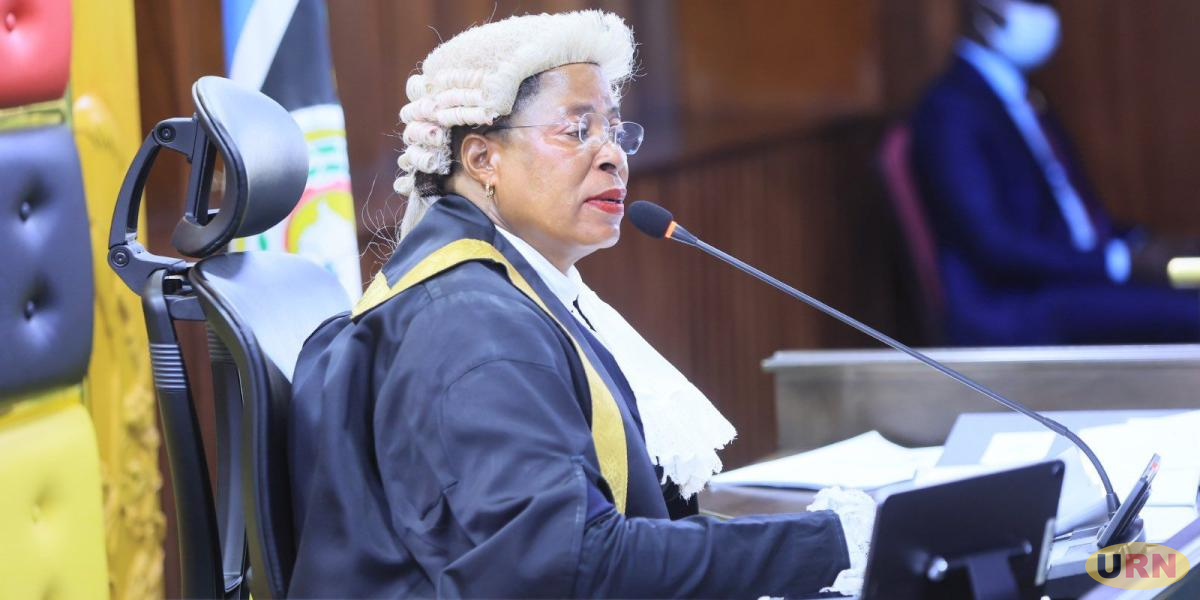
Outspoken historian, Professor Mwambutsya Ndebesa, says the embattled former Speaker of Parliament, Annet Anita Among, had a “License” for corruption that was revoked last week. He argues that Anita Among, who is under probe on suspected abuse of office and self-enrichment, has been a beneficiary of what he described as a system of political protection that determines when corruption allegations are pursued or ignored.
He was speaking during a public lecture on political accountability and corruption under the theme Public and Public Trust: Assessing Accountability in Uganda’s Governance. Ndebesa argued that corruption in Uganda is often governed by informal political protection rather than consistent enforcement of the law. He described this protection as a “license,” saying: “In Uganda, corruption is licensed.”
According to him, individuals accused of corruption may operate freely so long as they retain political protection. “When you are involved in this public corruption, political corruption, be sure that you keep the license. Once it is revoked, you’re in trouble,” he said. He cited Anita Among in explaining his argument on shifting political protection.

“In Uganda, corruption is licensed. And when you lose favour in politics, that license can be revoked. So the one of Anita Among has been revoked. But before that, she had a license. She had a license. She was legally doing that,” said Ndebesa at a Lecture hosted by Uganda Law Society’s Radica New Bar. He cited the AGORA Exhibition last year, which came out with documentary evidence about suspected abuse of public funds at the parliament, including the controversial 1.7 billion shilling shared among the parliamentary Commissioners.
He added that once such a “license” is withdrawn, accountability institutions become more likely to act, while those still protected face little consequence. “Before that, she had a license. She had a license,” he said, adding that under such conditions, “nobody touched her until the license was revoked.”
Ndebesa used the example to argue that anti-corruption enforcement is inconsistent and influenced by political standing rather than purely legal procedures. He said accountability systems often struggle to act against individuals who still enjoy political protection. As part of his broader argument, he maintained that institutions only become active once individuals lose that protection.
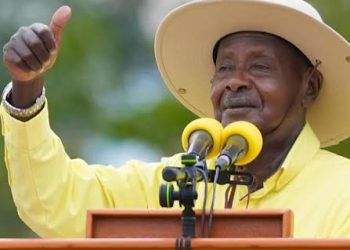
He spoke about what President Museveni termed as budget corruption when he refused to sign the appropriation Bill almost two years ago. He said that while MPS, Yusuf Mutembuli, Paul Akamba, and Lwengo District Woman Member of Parliament, Cissy Dionizia Namujju, were arrested and charged with corruption, they were later set free after the charge was withdrawn by the DPP.
“And then, the Anti-corruption institutions, the IGG, and the State House anti- corruption unit were quiet. They didn’t go there, they didn’t ask those officers to publicly, officially, formally, declare that stealing public resources and sharing with your community is fine, is okay, is approvable. And you say you are fighting corruption. We are not serious,” he remarked.
He then went on to cite what he described as widespread corruption and voter bribery at Kololo ceremonial ground when the ruling NRM was electing members of the Central Executive Committee (CEC). “During elections, let’s start with the most important election, in my opinion, the elections to the central executive of the NRM party, SEC, which is meeting tomorrow, to make decisions for this country. Didn’t you see corruption? Didn’t you see aspirants buying voters? It was public knowledge, it was on the radio, it was on TV, and it was seen that those people were bribing people to vote for them to be members of the CEC.
Mwambutsya Ndebesa’s remarks were delivered within a wider context outlining what he called “political corruption,” which he described as the root cause of financial and bureaucratic corruption. He argued that anti-corruption efforts often focus on lower-level offenses such as bribery and embezzlement while ignoring what he considers the political systems that enable them.
He pointed to wider weaknesses in the country’s anti-corruption framework, arguing that institutions such as parliamentary committees, investigative agencies, and oversight bodies often struggle to act decisively when politically connected individuals are involved. Ndebesa further suggested that accountability tends to be stronger only when individuals lose political backing, rather than being applied uniformly under the law.
He argued that civil society, journalists, whistleblowers, and activists must be allowed to operate freely without intimidation or arrest, noting that public exposure of corruption is often more effective than quiet reporting. He criticized restrictions placed on media and civil society organizations, warning that suppressing them weakens diagonal accountability. He also called for stronger independence of Parliament and the judiciary, arguing that both institutions face pressure that limits their ability to challenge corruption-URN. Give us feedback on this story through our email: kamwokyatimes@gmail.com